Follow Us on Google Discover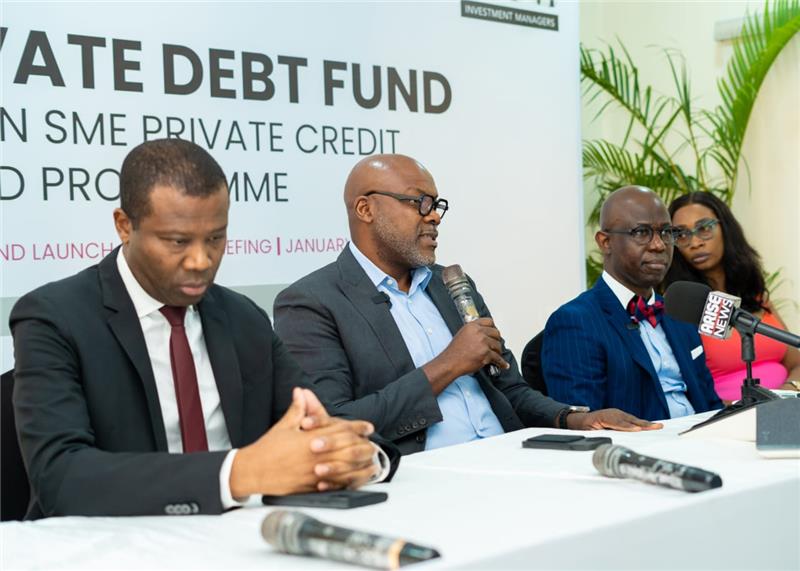
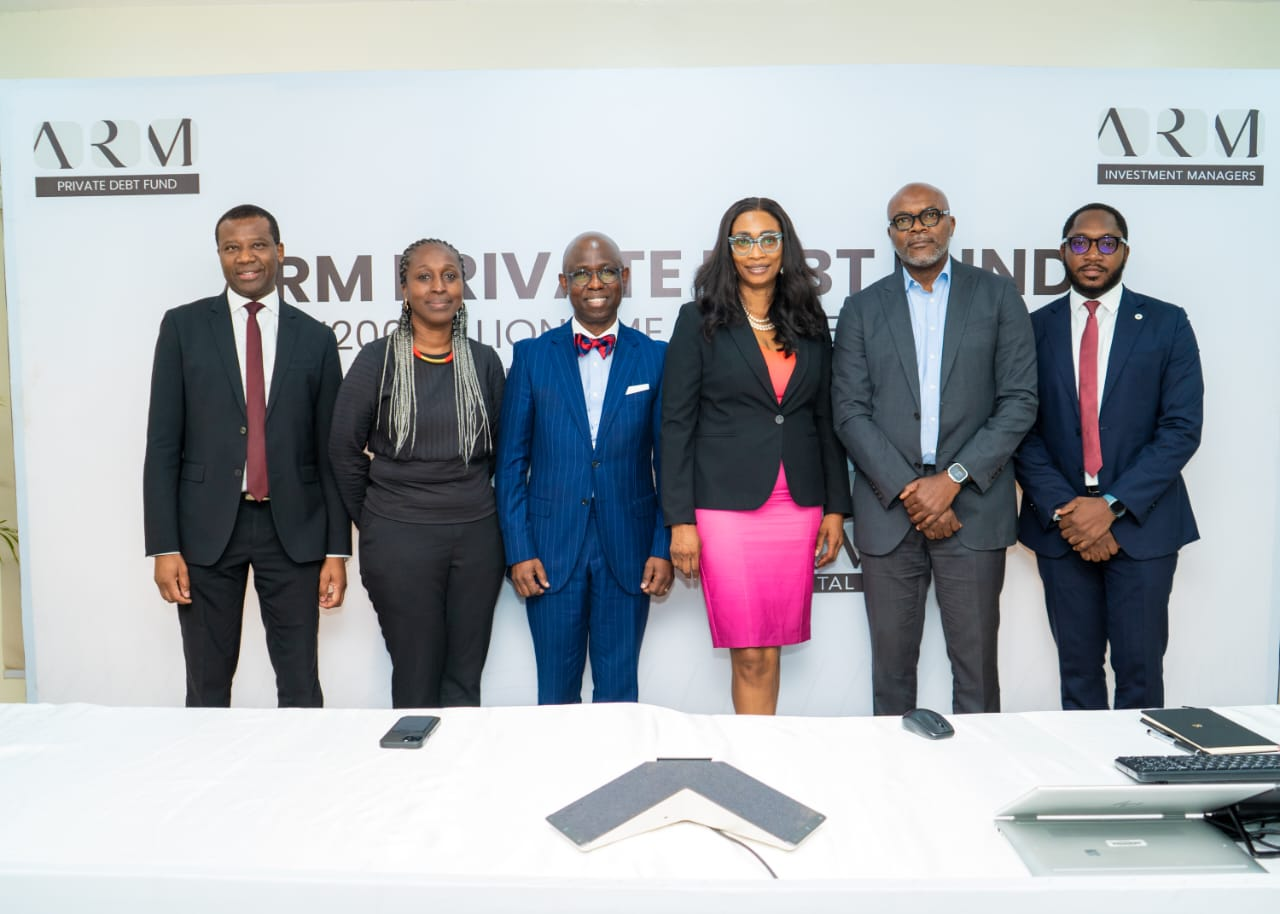
ARM Investment Managers has launched a new N200 billion Private Debt Fund aimed at easing Nigeria’s deep SME financing gap by providing long-term credit at rates below prevailing market benchmarks.
It has an initial Series 1 size of N25 billion and an overall programme target of N200 billion.
Briefing financial journalists in Lagos on Monday during the unveiling, the Fund Manager, Mr. Deji Opeola, said the ARM Private Debt Fund is designed to channel non-bank financing to scalable small and medium-sized enterprises that are typically locked out of affordable credit by commercial banks.
Also Read
The Fund Manager, who was accompanied by the Leadership Team, headed by Group CEO, Mr. Wale Odutola, told news men that the fund is being raised at FGN 10-year bond yield plus 300 basis points, a cost of capital that remains below Nigeria’s current policy rate of about 27%.
While ARM ultimately aims to scale the fund to N200 billion, management said growth will be paced by asset quality and deployment discipline. “The goal is not to raise money and park it in treasury bills,” the ARM Group CEO, Odutola said, adding that additional series will be launched as qualifying loan opportunities are identified.
This, he said, creates room to lend to Small and Medium Enterprises (SMEs) at rates lower than what is currently available in the banking system or informal credit market, even in a high-interest-rate environment.
What ARM is saying
According to ARM, many Nigerian SMEs are currently forced to borrow at rates as high as 4–5% per month due to limited access to formal credit. By contrast, the private debt fund aims to offer longer-tenor loans, typically three to five years, priced on an annualized basis and tailored to the cash-flow realities of each borrower.
“Many SMEs are borrowing at 4–5% per month just to survive,” said Opeola. “Access to funding closer to 20% per annum changes margins, capacity and long-term viability.”
Unlike standardized bank lending, ARM said its private credit model is bilateral and company-specific. Each loan is structured after detailed analysis of the borrower’s operating cycle, customer base, and repayment capacity, with features such as flexible repayment schedules and other accompanying facilities where appropriate.
Loan pricing will be risk-based, using S&P Global’s credit rating framework, and ARM said it would avoid lending to companies that fall outside acceptable risk thresholds.
To manage concentration risk, the fund has set a single-obligor cap of N5 billion, ensuring broad portfolio diversification.
Governance, impact and support beyond capital
The Fund Manager said ARM is positioning the fund not just as a lending vehicle, but as an impact-aligned platform focused on long-term SME sustainability.
In addition to financing, the firm said it will actively support borrowers in improving financial reporting, corporate governance, and strategic decision-making.
“Through partnerships, including McKinsey, ARM works with selected companies to clean up financial records, strengthen internal controls, and prepare them for institutional-grade funding. While founders retain full ownership, borrowers are encouraged to establish independent boards and structured governance frameworks,” said Opeola, pointing out that it is a key barrier to SME growth in Nigeria.
The fund targets SMEs in manufacturing, trade, services, technology, and agro-processing, while excluding primary agriculture due to its higher climate and biological risks. ARM estimates that about 40% of Nigerian SMEs are women-led, positioning the fund as a contributor to gender inclusion, job creation and domestic value creation.
What you need to know
The ARM Private Debt Fund is structured as a multi-currency programme. The naira-denominated fund will lend exclusively to Nigerian companies with naira revenues, while a parallel US dollar fund will target qualifying SMEs across sub-Saharan Africa, excluding South Africa.
Key regional focus areas include West Africa, East Africa and North Africa, as ARM looks to support cross-border trade and production under the African Continental Free Trade Area (AfCFTA).
Importantly, ARM said it will not take foreign-exchange risk at fund level, matching lending currency strictly to borrower cash flows.
While the long-term ambition is to scale the programme to N200 billion, ARM said additional series will be launched only as suitable lending opportunities emerge, emphasising disciplined deployment over rapid fundraising.