
 Follow Us on Google Discover
In the past two decades, Nigeria’s skyline has become an unexpected stage for a drastic rise in private aviation.
What was once a rare symbol of elite mobility has grown into a fleet of well over a hundred business jets crisscrossing domestic and international routes.
According to industry figures, the number of private business aircraft operating in the country climbed from just 44 in 2005 to 157 by 2024, a surge of more than 350% that reflects both expanding wealth and shifting travel habits among the nation’s affluent.
Flying a private jet is not just about convenience; it’s about connecting business faster, offering access where commercial airlines cannot, flexibility, and providing a level of service that combines luxury, reliability, and exclusivity.
Other News
These jets allow business moguls, musicians, athletes, and other high-net-worth individuals to move quickly, either for work or leisure.
Flying a private jet is costly; flights start at around $3,000 and above, depending on the aircraft, distance, and level of luxury, making these jets accessible to only a select group of Nigeria’s economic elite.
The private jet business in Nigeria is built on relationships, trust, and discretion. Most clients come through referrals, with operators rarely advertising broadly.
Every flight is a careful balance of strict safety standards, experienced crews, and regulatory compliance from air operator certificates to international operational approvals.
This article explores the individuals driving Nigeria’s private jet market, investing heavily in one of the most elite forms of personal transport.
Here are the owners of commercial private jet companies in Nigeria
Yemi MacGregor- Stargate Jets Services Limited

Yemi MacGregor is a Nigerian aviation entrepreneur and the founder and chief executive officer of Stargate Jets Services Limited, a Lagos-based business aviation company providing private jet charter and end-to-end aviation support across Nigeria and international routes.
MacGregor holds a Bachelor of Science degree in Civil Engineering from the University of Lagos. He is also the founder and CEO of Stargate Chauffeur Services, a transportation company that complements Stargate Jets’ air charter operations.
He founded Stargate Jets Services Limited in February 2013. Its operations are headquartered in Lagos, with handling capability at all Nigerian airports and partnerships with agents in major global aviation hubs.
The company’s charter and management portfolio includes aircraft such as the Legacy 600, Falcon 900DX, Embraer ERJ-135, Hawker 800XP, and Challenger 605, enabling it to meet different mission profiles for executive, corporate, and special-purpose travel.
In 2018, MacGregor expanded the Stargate brand with the launch of Stargate Chauffeur Services, a luxury chauffeur company based in Lagos. The service operates a fleet of executive Mercedes-Benz vehicles and provides airport transfers, corporate travel, event transportation, and bespoke mobility solutions.
Segun Demuren- Founder, Evergreen Apple Nigeria

Segun Demuren is a Nigerian aviation entrepreneur and the founder and chief executive officer of Evergreen Apple Nigeria Ltd now EAN Aviation/EAN Aero Fleet.
Demuren’s educational background includes a Bachelor of Science in Information Systems from Marist University in the United States. He also completed advanced executive programmes, including the IATA Advanced Management Program in Air Transport at Nanyang Technological University, Singapore, and an Advanced Management Programme at Lagos Business School (Pan-African University). His foundational education began at Federal Government College, Kaduna.
Before founding EAN Aviation, Demuren gathered professional experience in business systems and management. He worked as a Business Systems Analyst with AllianceBernstein early in his career, and later led Evergreen Apple Mining, where he developed and managed mining operations before transitioning fully into aviation services.
Demuren founded Evergreen Apple Nigeria Ltd in 2009, later rebranding as EAN Aviation and EAN Aero Fleet, responding to a clear gap he saw in Nigeria’s corporate aviation sector. The company began by launching the country’s first fixed-base operator (FBO) and aviation service centre adjacent to Murtala Muhammed International Airport in Lagos, offering VIP lounges, hangar services, ground handling, executive dispatch, and a luxury terminal experience for private jet clients services that were previously unavailable in West Africa.
Today, EAN Hangar Jet Centre has become a full-spectrum aviation hub providing aircraft management, sales and acquisition assistance, charter services, finance solutions, and aircraft maintenance, all under one roof.
EAN’s operations are centred at its hangar jet centre at Murtala Muhammed International Airport, Ikeja, Lagos, offer executive flight support, fixed base operations and advanced maintenance services to jet owners and corporate clients.
Chukwuerika Achum- Founder, Falcon Aerospace Limited

Chukwuerika Achum is a Nigerian aviation professional and entrepreneur best known as the founder and chief executive of Falcon Aerospace Limited, the group behind FlyPJX, CharterXE and VivaJets.
He is also the founder of The Adrenalina, a creative workspace venture, and a co-founder of Drone Air Nigeria.
He holds a Master’s degree in Transport Management with a focus on Aviation Management from Ladoke Akintola University of Technology, completed in 2020. He also earned a postgraduate diploma in Transport Management from the same institution and undertook specialised training in Aviation Safety Management at the University of Southern California’s Viterbi School of Engineering in 2014.
Achum began his career deep within the operational side of aviation, starting as a flight dispatcher with Chanchangi Airlines and later Associated Aviation. He moved through technical and instructional roles at the International Aviation College in Ilorin and Landover Aviation School, before taking on management positions that exposed him to flight operations, safety systems and regulatory compliance across Nigeria’s aviation sector.
His most significant achievement came in 2022 with the launch of Falcon Aerospace Limited, a holding company designed to rethink how private aviation services are accessed and managed.
Through VivaJets, the group operates as a full-service business aviation company handling aircraft management, charter operations, leasing and regulatory engagement. CharterXE was introduced as a digital charter booking platform to simplify private jet access, while FlyPJX broke new ground by offering per-seat bookings on business jets, targeting a wider market beyond traditional high-net-worth clients.
In 2025, VivaJets secured a $10 million financing facility to expand operations and fleet capacity, one of the rare structured aviation financings for a Nigerian operator. The company has also received its Air Operators Certificate (AOC) from the Nigerian Civil Aviation Authority, allowing it to operate commercially and support regional connectivity initiatives.
Sam Iwuajoku- Founder, Quits Aviation Services and CEO ExecuJet Aviation Nigeria

Sam Iwuajoku is a Nigerian industrialist and aviation entrepreneur. He is the founder and chief executive officer of Quits Aviation Services, the aviation free trade zone operator that hosts ExecuJet Aviation Nigeria, a leading business aviation service provider at Murtala Muhammed International Airport, Lagos. He is recognised for building one of the most significant private aviation support hubs in West Africa.
He holds a degree in Chemical Engineering from the University of California, a technical foundation that supported his early ventures across capital-intensive industries. Over the years, Iwuajoku has built deep commercial experience spanning oil and gas, steel trading and bulk commodities.
Iwuajoku began his career as an entrepreneur in Nigeria’s industrial and commodities sectors. He is the director and sole owner of several companies, including Steelman Nigeria Ltd., Intercity Commodities Ltd., Corporate Oil and Gas Ltd., and Unigate Investments Ltd. These businesses positioned him as a major player in steel distribution, petroleum products and commodities supply long before his entry into aviation.
His interest in aviation began in the late 1990s following the purchase of a Hawker 800 business jet, a move that gradually expanded from aircraft ownership into aviation services and infrastructure.
In 2008, he founded Quits Aviation Services Ltd., followed by Afri Infrastructure Development Ltd. in 2011. Through these ventures, he developed and now operates the first and only world-class general aviation services facility at Lagos International Airport, in partnership with the global ExecuJet Aviation Group.
Three years ago, ExecuJet Aviation Nigeria became Gulfstream’s first authorised warranty facility in the country, enabling local warranty, maintenance and spare parts support for several high-end Gulfstream jets
Iwuajoku has been featured by Forbes among 10 unknown multi-millionaires in Nigeria.
Atedo Peterside- Founder, Anap Business Jets Limited

Atedo Peterside is a Nigerian entrepreneur, investment banker and economist best known as the founder and chairman of Anap Business Jets Limited (Anap Jets), a private jet operator that specialises in fractional ownership, charter services and aircraft management.
He is also the founder of Stanbic IBTC Bank Plc, one of Nigeria’s most influential financial institutions, where he served as CEO and later chairman.
Peterside’s academic journey began at King’s College Lagos, after which he earned a B.Sc in Economics from The City University, London and an M.Sc in Economics from the London School of Economics and Political Science. He also completed executive education at Harvard Business School’s Owner/President Management Program.
His early career took shape in finance and investment banking. At age 33, Peterside founded Investment Banking & Trust Company (IBTC) in 1989, serving as its pioneer CEO. Under his leadership, IBTC navigated regulatory changes and capital expansion, merging with Chartered Bank and Regent Bank to become a universal bank in 2005. The institution later merged with Stanbic Bank Nigeria to form Stanbic IBTC Bank Plc, where Peterside served as chairman until 2017.
Peterside entered aviation with a vision to make private flying more accessible and efficient in Africa. He founded Anap Jets FZE, which began operations through Anap Business Jets Limited on 1 January 2015. The company introduced innovative solutions like fractional ownership and Legacy Jet Card plans, allowing clients to enjoy the benefits of private jet access without shouldering full ownership burdens.
Since its launch, Anap Jets has grown both in fleet size and service capability. The company’s fleet includes industry‑leading aircraft such as the Embraer Phenom 300, Legacy 600 and Embraer ERJ‑145MP, enabling services from regional travel within Africa to intercontinental flights to Europe, the Middle East and South America. It marked a significant expansion in 2021 with the acquisition of an Embraer ERJ‑145, broadening its charter and fractional ownership offerings.
Samuel Salihu – CEO Private Business Jet Charter
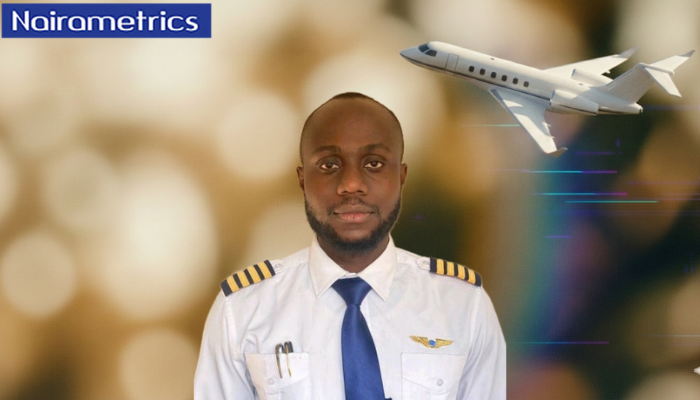
Samuel Salihu is a Nigerian corporate pilot, aircraft broker and aviation entrepreneur with over 15 years of flying experience. He trained as a pilot in South Africa and has built his career around both the technical and business sides of aviation.
Salihu is the founder and CEO of Private Business Jet Charter, the aviation services arm of Kosdor Exporters International Limited that provides bespoke private jet travel solutions within Nigeria and beyond.
Salihu began his flying career in operational cockpit roles. He has served as Senior First Officer with Bristow Helicopters (International) Limited, adding rotary‑wing experience to his fixed‑wing expertise, and previously flew as First Officer with Air Peace Limited and Sky Jet Aviation, including on Embraer ERJ‑135/145 aircraft.
In June 2020, he founded Private Business Jet Charter, building a service that combines his passion for flying with aviation entrepreneurship. Salihu also collaborates with government bodies, airlines and aviation agencies to ensure PB Jet Charter operates to international standards.
PB Jet Charter markets a range of bespoke aviation services out of its headquarters at Nnamdi Azikiwe International Airport, Abuja, with additional operations in Lagos and an international branch in Cotonou, Benin.
PB Jet Charter caters to clients seeking flexible scheduling, discrete travel and tailored aviation solutions, enabling travellers to set their own departure times, select preferred airports and access on‑demand flights without the hassles of commercial airline processes.
PB Jet Charter’s fleet includes a mix of luxury business jets commonly used in private charter environments, such as Legacy 600/650, Hawker Beechcraft 800XP, Bombardier Challenger 604/605, Falcon 900DX, Embraer 135 and Phenom 300 aircraft, providing a broad range of options for domestic and international charter clients.
Wisdom Ntoto – CEO Jetlyfe Aviation Ltd

Wisdom Eseme Ntoto is a Nigerian aviator and entrepreneur known as the chief executive officer of Jetlyfe Aviation Ltd, a private jet charter and lifestyle aviation company that blends luxury travel with digital innovation.
Ntoto’s formal education and early professional background are less widely documented in public sources, but he is recognised within Nigerian aviation circles as both a pilot and a visionary leader passionate about innovating the delivery of private jet services.
Jetlyfe Aviation Ltd was created under his leadership as a private jet charter company that also integrates technology to reduce friction in booking and flight‑sharing. One of the company’s early milestones was the 2019 launch of the Jetlyfe platform, promoted as a mobile solution for private jet sharing and on‑demand jet charter.
The platform was intended to give users access to a network of over 50 private jets in Nigeria and enable booking of single seats without the full cost of chartering an entire aircraft.
Beyond flight services, Jetlyfe has sought to position itself as a lifestyle brand within African aviation. In 2023, the company hosted The Jet Gala, a high‑profile private jet lifestyle event aimed at bringing together private jet owners, flyers and industry stakeholders to foster community and promote broader engagement in aviation.
Jetlyfe has also championed social impact within the aviation sector. In early 2023, the company launched its “Future Aviators” programme, designed to inspire and educate the next generation of pilots and aviation professionals.
Captain Ahmed Borodo- CEO Flybird Aviation

Flybird Aircraft Management Services Limited, commonly known as Flybird Aviation, is a Nigerian private aviation company specialising in aircraft management, private jet charter, maintenance oversight, flight crew support, sales and acquisition advisory.
The company was founded by Captain Ahmed Borodo, a Nigerian commercial pilot and aviation entrepreneur. Before establishing Flybird, Borodo built substantial industry experience as a commercial pilot with carriers such as Virgin Nigeria Airways, Gyro Air and Azman Air Services, grounding his leadership in frontline aviation operations as well as management and strategic growth.
Borodo’s educational background includes a Bachelor’s degree in Accounting and a Master’s degree in Development Studies from Ado Bayero University, Kano. He also holds a Federal Aviation Administration (FAA) Private Pilot Licence (PPL) earned in 2007 and Commercial Multi‑Engine Certifications from FlightSafety International in the United States.
Founded in 2023, the company’s services cover domestic and international charter flights, tailored aircraft management solutions, flight crew staffing, maintenance oversight and custom advisory for sales and acquisition of aircraft. From its base in Abuja, Flybird has marketed itself on responsiveness, reliability and safety, including a guaranteed one‑hour response time for domestic bookings.
In 2025, the Nigerian Civil Aviation Authority (NCAA) granted Flybird an Approved Maintenance Organization (AMO) certification, authorising it to carry out comprehensive maintenance, repair and overhaul work to rigorous national and international standards. In the same year, the company received UAV/RPAS certification from the NCAA, authorising operations of unmanned aerial vehicles and expanding the company’s expertise into drone technology applications such as infrastructure inspection, mapping, environmental monitoring and security services.
Dr. Ernest Azudialu Obiejesi -CEO Nesto Aviation Services Limited

Dr. Ernest Azudialu‑Obiejesi is a Nigerian business magnate, entrepreneur and philanthropist best known as the chairman and CEO of Nestoil Group, one of West Africa’s leading indigenous engineering and oil services conglomerates.
He is the founder of Nesto Aviation Services Limited (NestAv), the aviation arm of the Obijackson Group and has built a diversified industrial empire spanning oil and gas, aviation, energy, infrastructure and telecommunications.
Obiejesi began his formal education at Government College, Owerri, before earning a Bachelor’s degree in Accounting from the University of Benin and an MBA from the same institution. He was later awarded an honorary Doctorate in Business Administration by the University of Nigeria, Nsukka, for his contributions to business and industry.
He is also an Honorary Fellow of the Nigerian Society of Engineers and an alumnus of executive business programs including Harvard Business School’s executive education.
He began his entrepreneurial journey in the early 1980s, working in his father’s trading business before establishing his own company, Obijackson West Africa Limited, in 1983. He later founded Nestoil Limited in 1991.
In August 2013, Azudialu‑Obiejesi established Nesto Aviation Services Limited (NestAv) as the aviation division of the Obijackson Group to provide safe, high‑standard air transportation for fixed and rotary‑wing operations within Nigeria and internationally.
NestAv serves VIP and corporate charter clients as well as non‑scheduled operations, and plays a strategic role in offshore oil and gas logistics support services for the upstream and downstream sectors.
Captain Edward Boyo –CEO Landover / Overland Airways
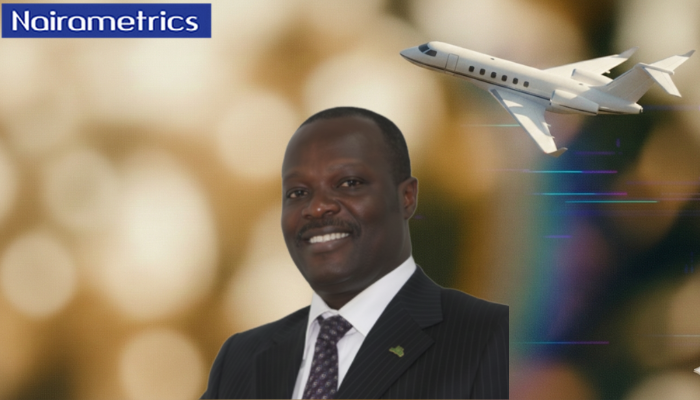
Captain Edward Boyo is the founder and CEO of Overland Airways, one of Nigeria’s oldest scheduled and charter airlines and the Managing Director of Landover Company Limited, a leading aviation services provider.
He is a Nigerian aviation leader, entrepreneur and pilot with more than 30 years of hands‑on experience.
Boyo holds a degree in Business Administration from the University of Lagos and is a current and active pilot, holding an Airline Transport Pilot Licence, a Flight Engineering Licence from the United States Federal Aviation Administration (FAA) and a Pilot Instructor’s Certificate from Oxford Air Training School in the United Kingdom
He is also the publisher of Aviation & Allied Business Africa Journal, Africa’s leading aviation development publication in circulation since 1993, and the organiser of the annual Aviation & Allied Business Leadership Conference, a high‑level forum focused on translating aviation activities into tangible socio‑economic benefits for the continent.
Boyo serves as Director of Studies at the Landover Aviation Business School (LABS), an International Air Transport Association (IATA) Regional Training Centre, and as chairman of the board of the International Aviation College, Ilorin, Nigeria’s first private professional pilot training institution.
Boyo’s airline, Overland Airways, was established in 1998 and began operations in 2002 with the aim of increasing connectivity between Nigeria’s remote regions and major urban centres. The carrier has grown into a respected scheduled and charter airline operating turboprop and regional aircraft to domestic and West African destinations.
Boyo has also served on government committees aimed at improving Nigeria’s aviation industry, including the Federal Government Committee on the Aviation Intervention Fund, and has moderated and facilitated major international aviation events organised by ICAO, IATA, AFCAC, AFRAA and the Nigerian Civil Aviation Authority.
Dr. Elizabeth Jack-Rich- Founder, Elin Group Limited

Dr. Elizabeth Jack-Rich is a Nigerian entrepreneur, business leader, and aviation innovator, best known as the founder and CEO of Elin Air and Elin Group Limited, a diversified company operating across aviation, logistics, energy, and real estate. She is also the founder of the Elizabeth Jack-Rich Aid Foundation
She holds a Bachelor of Science in Banking and Finance from Le Cours Sonu University Institute, Republic of Benin, and is pursuing a Master’s in Economics at The George Washington University. She has also completed Entrepreneurship Essentials and Strategic Management programs at Harvard University, equipping her with advanced business and leadership skills relevant to managing complex enterprises.
She also established the Elizabeth Jack-Rich Aid Foundation to support education, health, and empowerment initiatives in Nigeria.
She founded Elin Air to address the growing demand for private aviation services in West Africa. Launched under the Elin Group umbrella, Elin Air provides bespoke private jet charter, aircraft maintenance, repair and overhaul (MRO), and executive travel solutions. The company operates a skilled maintenance platform in collaboration with global manufacturers including Embraer, Pratt & Whitney, Rolls-Royce, and Eurofly Service S.p.A., delivering technical services with a combined institutional experience exceeding 100 years.
Last year, the company executed a 7,800-landings maintenance check on a Bombardier Challenger CL604 entirely within Nigeria. This milestone, equivalent to a full commercial “D check,” marked the first time such a complex technical procedure was completed in Africa without external support.
Great Job.
The Aviation sector in very important for economy growth and among the few internationally regulated sectors.
We need to focus on how well to serve both the indigenous and foreign own private jets companies/owners as they are among the 1% world elite that their influence shape how a country or it people are viewed.
Airport is a gate way what this 1% experience is how they perceived and report above the people of the host nation.
We can serve better.