Follow Us on Google Discover
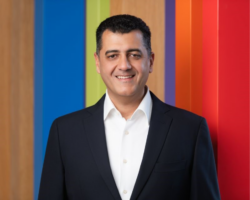
Saeed Ibrahim, Director of Sustainable Impact at the Private Infrastructure Development Group (PIDG), says Nigeria remains a priority market for the organisation despite the country’s economic and foreign exchange challenges, with opportunities to scale infrastructure financing, deepen domestic capital mobilisation and expand local manufacturing.
In an interview with Nairametrics, Ibrahim discussed PIDG’s more than two decades of investment in Nigeria, including its partnership with the Nigerian Sovereign Investment Authority (NSIA) and InfraCredit, which he said has helped mobilise more than N300 billion in domestic investment across 24 transactions.
He also spoke on Nigeria’s infrastructure financing gap, the need to attract more stable foreign investment rather than short-term portfolio flows, and why the country should encourage foreign investors to work with strong local institutions and build domestic capacity.
Ibrahim highlighted agro-processing as a key area for future investment, arguing that moving from the export of raw commodities to processed and higher-value products could strengthen foreign exchange earnings, create jobs and deepen industrialisation.
Also Read
He further explained how PIDG has navigated periods of naira volatility, high interest rates and other investment challenges, while outlining why the organisation remains bullish on Nigeria’s long-term growth prospects.
Nairametrics: In your recent investment report on Nigeria, you have rightly noted that Nigerian market focuses more on the extractive and raw material exportation. Now, what sector(s) of the economy do you invest in? Has Nigeria been able to meet part of the things that you as investors envisaged?
Saeed Ibrahim: There is a series of investments we’ve made on manufacturing, for example. But I think from the report that we have shared with you. We can see that we’ve had a very big impact on the infrastructure finance market. Yes, of course, Nigeria as a country can be seen as a market. But within that, there are certain sectors and markets that are, you know, operating and need to be developed and improved in how they’re functioning over time. And I think the infrastructure finance market itself has been one of the clearest impact stories that we have taken from this report.
So as I mentioned, you know, we partnered with the Nigerian Sovereign Investment Authority to create Infra Credit Nigeria.
And the idea was that Nigeria has significant pools of domestic capital that can be mobilized for productive investment in Nigeria. This has many benefits if this can be successfully harnessed. One of them is that, as you know, there are often some challenges around foreign exchange risk and currency risk. And also, there’s a lot of local knowledge, local understanding that can be enhanced if you can mobilize domestic investment, domestic capital.
Now, traditionally, those pools of capital, though they exist, have been relatively reluctant to finance the infrastructure needs of Nigeria. So, together with the Nigerian Sovereign Investment Authority, we partnered with the regulators as well, and we created or helped to establish Infra Credit Nigeria as a local Nigerian-based financial institution whose job is ultimately to help to enhance the creditworthiness of those infrastructure projects in Nigeria, such that the domestic capital providers would be comfortable investing in those projects. And over the last, you know, years that it has been operating, they’ve completed 24 transactions. They’ve helped to mobilize over N300 billion in domestic investment into those projects. So, I think that’s a very strong example of us having helped to build that market.
Nairametrics: When people look at the Nigerian economy, they talk about a lot of challenges, issues here and there. And then from what you have said, it shows you have strong confidence in the market. So, I would like to know what are the attractions for you in the Nigerian market?
Saeed Ibrahim: Thank you, it’s a good question. I think there are three big attractions for us, or three levels of attraction. First, structurally, I think we have a good experience in Nigeria. We have extensive experience in Nigeria, having invested in the country for more than 20 years, building experience and delivering impact. The report covers the full breadth of that experience, so I won’t go through it blow by blow here.
But I think clearly we’ve had some successes and a lot of momentum there. And I think the first big attraction for us is that the opportunity now is for us to take the successful models that we have already experienced to a much greater scale. If you look at the current situation in Nigeria, it still faces an estimated $3 trillion infrastructure financing gap over the next 30 years.
This is one of the figures that the study also has helped to establish. PIDG has demonstrated that we have certain models that are capable of mobilizing domestic capital and supporting industrial value creation at scale.
So, the next step is really to replicate and see if we can scale these models and approaches much further to mobilize ever more amounts of capital and significantly increase the amount of financing going into Nigerian infrastructure and ultimately have the kind of impacts that we want to have.
Second, agri-processing in particular is an increasing focus for pitch in Nigeria and actually across the region more broadly. In 2025, we provided around N30 billion guarantee to Robust International to support the development of a sesame processing facility, hoping to shift production from the export of raw seeds towards higher value processed products. We’ve since built on this through a similar transaction, actually in Côte d’Ivoire in the West African region. So we’ve completed a second transaction with robust building on the model that we had in Nigeria.
I think these investments reflect a broader PIDG priority, which is using infrastructure finance to help Nigerian companies move beyond export of raw commodities towards local processing and manufacturing, and then export of higher value exports. And lastly, I’d say, you know, the other attraction is that we’re broadly quite bullish about Nigeria’s growth prospects. You know, I think there’s a lot of figures out there that you don’t necessarily need me to go through all of them. But I think the recent reforms are beginning to deliver greater macroeconomic stability, at least from what we can see.
There was very strong economic growth in 2025, and the major international organisations are still projecting strong growth for 2026 and beyond. Inflation has also fallen substantially from the very high levels we saw in 2024, while several other macroeconomic indicators are trending positively for investors.
Of course, challenges remain, particularly around poverty, inflation and infrastructure. But these challenges also present huge opportunities, particularly for an investor like us that is focused on infrastructure and development impact.
So, overall, we remain very bullish about Nigeria’s growth prospects.
Nairametrics: So, you said you’ve been here for over 20 years. At the time when the market became so tough with forex instability and all those macroeconomic challenges, did you at any point contemplate exiting the market?
Saeed Ibrahim: It’s a very good question. So I think here I’d maybe emphasize a couple of points. One is that we are providers of patient capital. We are impact investors. We are focused on infrastructure development and investment, but it’s for the purpose of having an impact by partnering with countries like Nigeria to achieve their sustainability and development goals.
Therefore, I think for investors, we should work within Nigeria’s constraints rather than waiting for the perfect investment environment.
And that also means that when the environment becomes slightly more challenging at times, we are there and continue to work within those challenges to help to achieve or bring about the type of impacts that we are working towards.
You mentioned the devaluation, for example, as well as high interest rates, power constraints and regulatory challenges. There are several factors that can make the Nigerian market difficult for foreign investors. But working within those constraints can ultimately bear fruit.
In our experience, instruments such as guarantees, local-currency financing and patient, long-term debt can help address some of these challenges. They put us in a better position to weather periods of volatility, remain committed and stay patient in the face of those challenges.
The second point, in terms of how we have been able to survive those challenging periods, goes back to the first major area I mentioned. We are not looking at Nigeria purely on a transaction-by-transaction basis. We are really there to see if we can help the market function better, with a strong focus on mobilising domestic capital.
In the case of InfraNigeria, for example, which is the partner we are working through in Nigeria, when those foreign exchange changes occurred and many investors were facing challenges, our focus on working with a local partner and mobilising domestic capital meant that, to some extent, we were sheltered from some of the turbulence and volatility that other investors—particularly those focused on individual transactions and foreign investment—may have faced. So, we were in a better position because of the focus that we have in these two areas.
Nairametrics: There have been talks about hot money, because if you look at the capital importation data for the last two, three quarters in Nigeria, most of them have been portfolios; about 60 per cent of them have been based on portfolio investments. So what is your company doing in this regard to ensure that we have more stable investment rather than just this hot money phenomenon that the people have been talking about, especially in the area of capital importation?
Saeed Ibrahim: Well, thank you. In terms of the issue of hot money, I would say that, to some extent, we are part of the solution through the way we operate.
If you look at the majority of the impact we have had, according to the study, it has come through the 24 to 25 transactions that we have helped to guarantee and complete through InfraCredit Nigeria.
These are Nigerian infrastructure projects or companies raising naira-denominated debt in Nigeria, with Nigerian domestic institutional investors providing the investment into that debt. Those characteristics are almost the opposite of what you would associate with hot money.
Hot money typically comes from external investors looking for short-term returns. When volatility increases, or higher returns are offered somewhere else, that capital can quickly depart the country.
But because of the aims that we’re looking for is helping to plug those gaps in the infrastructure needs of Nigeria and mobilising investment that is better suited to those long-term development needs. Then I will say that the types of solutions and approaches we are bringing to the market can actually help address some of the challenges associated with hot money.
It’s almost the other side of the ledger compared to what is happening with the hot money.
Secondly, I think we have shown the importance of what we call patient and flexible capital in markets that can be challenging. The suite of investment tools and instruments that we have is not typical of the capital providers that might fall into the hot-money box.
Nairametrics: So, what should Nigeria demand more deliberately from foreign investments? Is it capital? Is it technology transfer? Is it supply chain development?
Saeed Ibrahim: I think all of those points are relevant. I can only speak from the experience we have had here at PIDG and use that as the basis for making this recommendation.
I think encouraging foreign investors to work with strong local institutions and locally embedded teams is critical. We have shown that by doing that, you can withstand more challenges, achieve much greater impacts, build partnerships that grow over time and ultimately deliver significant results.
I think this also has a positive impact on Nigeria more broadly. Locally based teams gain expertise and capacity, and they can then transfer that knowledge throughout the economy. Over time, that creates positive synergies.
So, that is one area where we have definitely seen a really good impact, and I think encouraging other foreign investors to adopt a similar approach would be positive for Nigeria.
The second point is around sectors. As I mentioned earlier, Nigeria has huge infrastructure investment needs over the next few years, and these needs are not concentrated in any particular sector. They span the economy and cover many different areas.
But one sector where, based on our experience, we believe there is significant potential is agriprocessing. I think this is an area that we are prioritising and that will become an increasingly important priority for Nigeria more broadly.
The idea is to support Nigeria move up the agricultural value chain and its exports. This can bring lots of benefits to the country, not only through increased foreign exchange earnings, but also through greater productive capacity, job creation and many other economic benefits.
The work we have done with Robust, for example, is a good illustration of what this can look like, and it is an approach we would encourage other investors to consider.
In that case, we are helping to move from the export of raw sesame seeds towards building domestic processing and manufacturing capacity, ultimately resulting in higher-value exports for the country.
I think that is one sector that could potentially end up extrapolating that lesson to a few other sectors. But agriprocessing is certainly one area we see as a priority, and we hope to do much more work in this sector over the next few years.
Nairametrics: How much longer do you think PIDG can continue to invest in Nigeria? Given that you’ve spent 22 years already, how has the impact been so far?
Saeed Ibrahim: Yeah, I think we’re in—I mean, our track record shows that we are here for the long term. And the study that we have just commissioned was covering that period in the past. But Nigeria continues to be a priority country for us. As I mentioned to you, some of the sectors that we’re looking at and hopefully looking to expand on.
And we’re bullish more broadly on Nigeria’s growth prospects. So, I mean, I can’t give you a specific time, but what I can say is that we are going to be investing in Nigeria for the very long term. And that’s our plan, and it’s a priority market for us for future deployment over the coming years.