
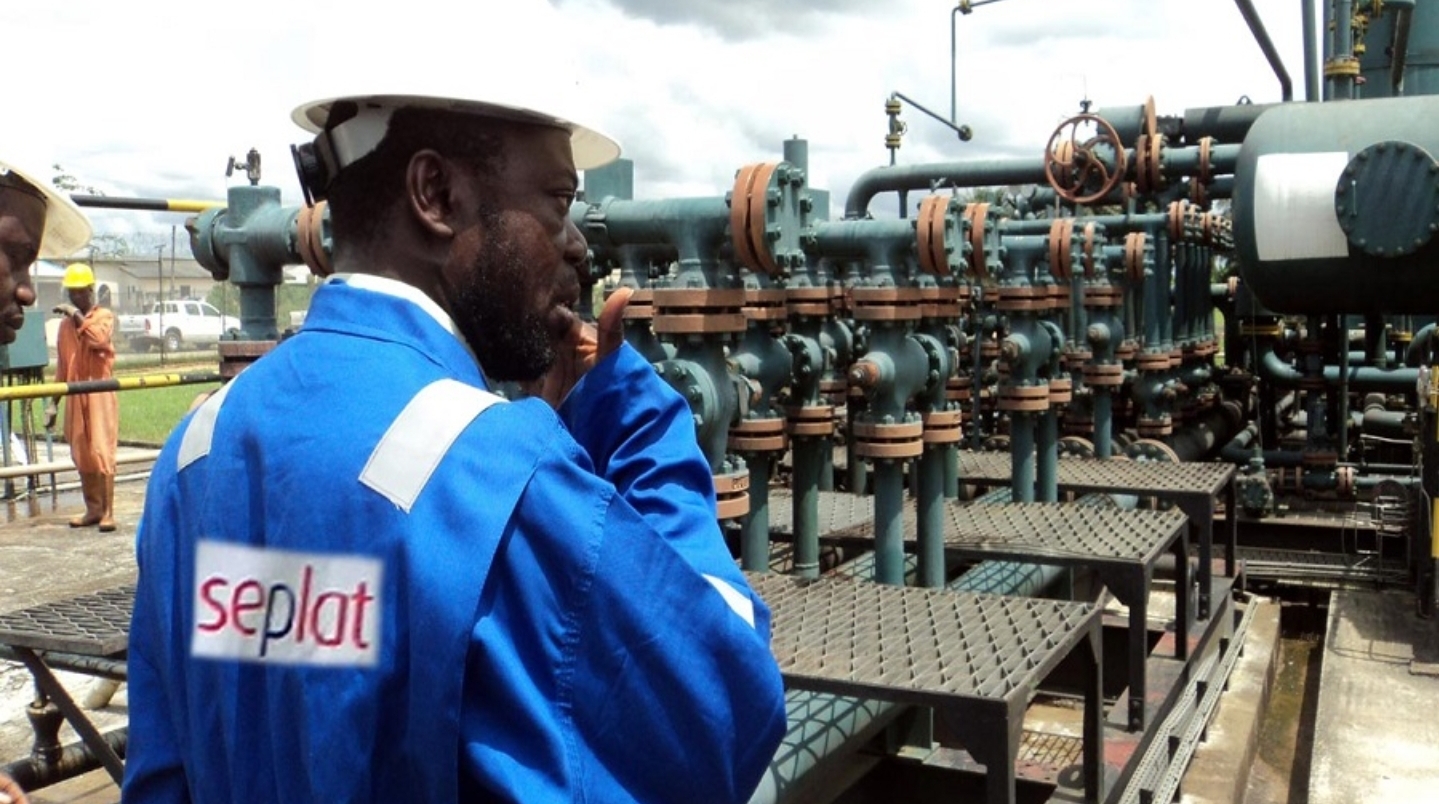
Seplat says its subsidiaries, Seplat West and Seplat East, have switched their onshore oil assets to the new Petroleum Industry Act system, replacing the old Petroleum Profit Tax regime.
This was disclosed in a corporate filing on the Nigerian Exchange on 23 December 2025, signed by CFO Eleanor Adaralegbe.
The switch covers assets formerly under OMLs 4, 38, 41, and 53, which produced an average of 42,591 barrels per day in the first nine months of 2025, roughly 31% of the company’s total output.


What the company is saying
Roger Brown, Seplat’s CEO, said converting to the PIA fiscal regime has been a key focus.
He added that the company, with its JV partners, completed the switch within the timeline shared at the recent Capital Markets Day in September 2025.
“We see the extra value opportunities after the conversion. The PIA switch was included in our recent medium-term guidance and sets the stage for better profitability and cash flow,” he stated in the disclosure.
The disclosure also revealed that after signing the Conversion Contracts in February 2023 under the PIA, Seplat and its JV partners completed all technical and regulatory requirements with the Nigerian Upstream Petroleum Regulatory Commission (NUPRC).
- It added that the PIA is designed to boost investment, increase production, and improve operational efficiency, all in line with Seplat’s strategy.
New Petroleum Mining Lease (PML) and Petroleum Prospecting License (PPL) numbers have also been issued, and operations under the PIA are expected to start from 1 January 2026, depending on regulatory guidance.
About the PIA
In July 2021, over a decade after it was first introduced, the National Assembly passed the Petroleum Industry Bill (PIB) into law.
- Former President Buhari signed it in August 2021, officially turning it into the Petroleum Industry Act (PIA) and deregulating the sector.
- The PIA sets out the legal, governance, regulatory, and fiscal framework for Nigeria’s petroleum industry.
- It also includes provisions for developing host communities and other related matters.
Seplat said the PIA conversion benefits were already included in its medium-term guidance shared at the September 2025 Capital Markets Day, as the company targets its five-year goals.
Seplat’s 5-year growth plan
At its Capital Markets Day on 18 September 2025, Seplat Energy announced new 2026–2030 targets, aiming to grow production to about 200,000 boepd by 2030, a 50% increase from mid-2025.
The company expects to generate US$5–6 billion in cash flow over the period, supported by higher capital spending and ongoing operational and financial efficiencies, representing 2.5–3 times growth compared with the previous five years.
Seplat plans to invest US$2.5–3 billion, including drilling 120–150 new wells and sanctioning up to three gas projects, while aiming to reduce operating costs from $12.5/boe to $10/boe.
- A strong balance sheet supports the plan, with net leverage expected to stay between 0.5x and 1.5x, assuming oil prices remain above $50 per barrel.
- All targets assume long-term prices of $65/bbl for crude, $39/bbl for NGL/LPG, and $2.75/mcf for gas, positioning Seplat for disciplined growth over the next five years.