Follow Us on Google Discover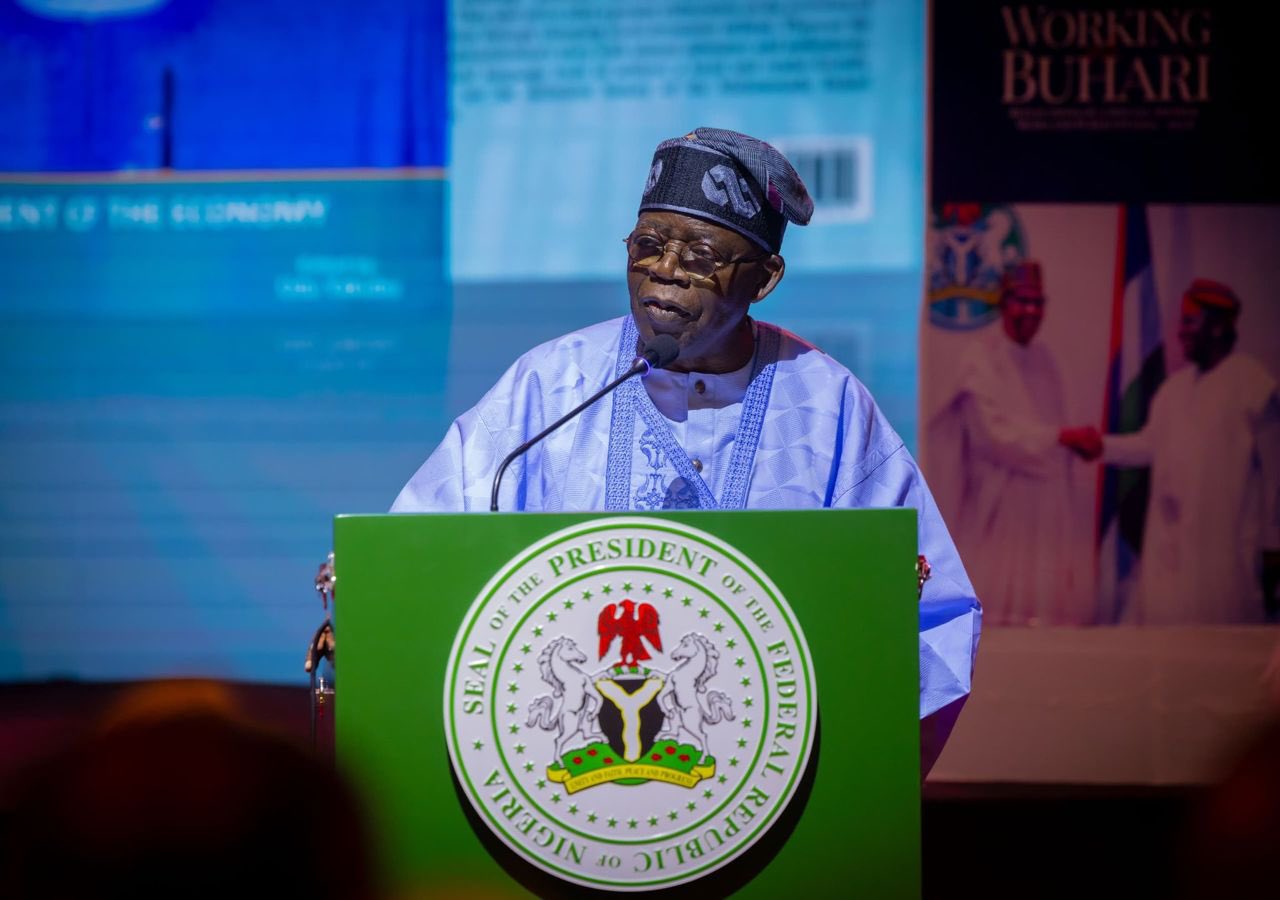
The world is moving at the speed of innovation. General-Purpose Technologies (GPTs) such as artificial intelligence (AI), robotics, renewable energy, biotechnology, advanced materials, quantum computing, and space technologies are no longer optional tools – they are the engines redefining global power, productivity, and prosperity.
History is clear: nations that master transformational technologies shape the future; those that hesitate are shaped by others.
Nigeria – Africa’s most populous nation and one of its largest economies – cannot afford to be a spectator in this race. Yet today, despite our vast talent, entrepreneurial spirit, and natural resources, Nigeria remains largely a consumer of GPT-driven solutions rather than a creator, integrator, or exporter of them.
What Nigeria urgently needs is a Comprehensive National General-Purpose Technologies (GPTs) Strategy – one that aligns innovation, governance, education, infrastructure, finance, trade, security, and industrial policy into a single, coherent national agenda.
Also Read
Understanding GPTs: A Brief Historical Perspective
The term GPT is often confused with “ChatGPT,” where GPT means Generative Pre-trained Transformer. But General-Purpose Technologies refer to something far more profound: foundational innovations that reshape entire economies over decades.
Think of the steam engine, electricity, railways, mass production, and the internet. These technologies didn’t just improve efficiency – they created new industries, disrupted old ones, and redefined global leadership.
In the 21st century, a new wave of GPTs – AI, machine learning, quantum computing, biotechnology, blockchain, robotics, clean energy, advanced data systems, and space technologies – is rewriting the global development playbook.
Countries like the United States, China, the United Kingdom, India, and Singapore have placed GPTs at the heart of their national strategies. Nigeria, however, still lacks a coherent, actionable GPT framework aligned to its economic and development ambitions.
Instead, what we see today is fragmentation: duplicated budget lines, siloed MDAs, weak coordination, limited accountability, policy inconsistency, and mixed national messaging. The cost of this disjointed approach is enormous – wasted resources, missed opportunities, and growing technological dependency.
A Moment of Reflection: Lessons from Scotland
Last month, I read a thought-provoking speech by the Governor of the Bank of England, Andrew Bailey, at the Scotland Global Investment Summit 2025. His message was simple but powerful: nations that succeed in the future do not wait for change – they engineer it.
Scotland’s strategy stood out not because of unlimited capital, but because of clarity of purpose – deliberate investment in digital infrastructure, AI capability, green innovation, and data systems, all anchored to a national vision built around GPTs.
As a proud Nigerian in the diaspora, working across data, technology, governance, and innovation ecosystems from Edinburgh to London and engaging regularly with Abuja, that speech reignited a lingering question:
Where is Nigeria’s comprehensive strategy for General-Purpose Technologies?
Beyond Frustration: A Call to Action
It is easy – especially in the diaspora – to express frustration about Nigeria’s slow pace of reform, weak institutions, or missed opportunities. But frustration without action achieves nothing!
Transformation does not come from rhetoric, lavish policy launches, or conference hall photo opportunities. It requires strategy, structure, discipline, and execution.
Nigeria already understands the importance of GPTs – often without naming them as such. Our most successful industrialists operate in sectors deeply dependent on GPTs: oil and gas, banking and finance, energy, manufacturing, telecommunications, refining, pharmaceuticals, logistics, and transportation.
The challenge is not awareness. The challenge is coordination, intentionality, and national leadership.
Nigeria must move from lamentation to action – and from fragmented initiatives to a unified national strategy.
Why GPTs Matter for Nigeria’s Future
General-Purpose Technologies are economy-wide force multipliers. They cut across agriculture, health, education, finance, energy, defence, transport, and governance.
Today, AI is becoming infrastructure, just like electricity or roads. Countries that embed GPTs into governance, public services, education, and industry achieve exponential gains in productivity, inclusion, and resilience.
Without a clear GPT strategy, Nigeria risks falling into a digital dependency trap – importing technologies we do not control, cannot secure, and struggle to adapt to local realities.
That is a risk Nigeria cannot afford.
The Case for a Presidential Task Force on GPTs
To break this cycle, President Bola Ahmed Tinubu should establish a Presidential Task Force on General-Purpose Technologies (PTF-GPTs) – a high-powered, cross-sector body with real authority, not symbolic influence.
The Task Force should be mandated to:
1. Conduct a national GPT capability assessment
Evaluate Nigeria’s strengths, gaps, risks, and opportunities across AI, data, renewable energy, biotechnology, advanced manufacturing, digital infrastructure, cybersecurity, trade, and space technologies.
2. Develop a National GPTs Strategy
Built on four pillars – governance, investment, capability, and implementation – aligned with Nigeria’s industrial policy, economic goals, youth empowerment agenda, and national security priorities.
3. Coordinate execution across government and society
Bring together key ministries, MDAs, the private sector, academia, startups, diaspora expertise, and international partners under one strategic framework.
4. Set measurable national targets
Including local innovation benchmarks, IP and patent generation, technology exports, skills development, and domestic value creation.
5. Embed transparency and accountability
Through periodic public reporting to the National Assembly and the Nigerian people.
Crucially, this Task Force must report directly to the President, with executive authority to act – not merely advise. Existing ministers should support this effort, not control it, to avoid conflicts of interest, institutional ego, and policy capture.
A Generational Decision
Mr President, this is a defining moment.
Nigeria’s future cannot be built on oil and gas or outdated economic models. It must be powered by knowledge, innovation, and technology.
We cannot realistically aspire to a one-trillion-dollar economy without first closing the gaps across the 18th, 19th, and 20th-century GPTs – and decisively positioning ourselves for the 21st century.
The global race for GPT leadership is already underway.
The future is not coming – it is already here.
Nigeria must decide whether to shape it or remain shaped by it.
This is not just a policy choice; it is bringing the renewed hope alive.
It is a generational decision – one that will define Nigeria’s place in the world for decades to come.
Nigeria cannot afford to remain a passive observer in the GPT revolution.
About the Author
Abel Aboh is a UK-based Data and AI Leader, governance board member of The Data Lab Scotland. He serves on the Nominations and Technology Law and Practice Committees of the Law Society of Scotland. Abel has over two decades of experience in data management, technology, human resources, and governance. He advises UK critical institutions and organisations on data, AI, innovation, technology, and transformation, and regularly writes for NairaMetric.
Abel was a finalist for British Data Leader of the Year 2021 and inducted into the UK Data Leader Hall of Fame 2024.
A proud Nigerian from the Niger Delta (Delta and Bayelsa States), Abel is passionate about inclusive leadership, data, AI, education, finance, technology, trade, and empowering the next generation of African innovators and change makers.