

For many immigrants, including Nigerians, Europe remains one of the top four global destinations for migration, offering opportunities for education, employment, and the prospect of long-term settlement.
A 2024 report from the EU’s migration‑policy platform estimates that over 260,000 Nigerians currently reside in the European Union, highlighting the continent’s growing appeal to those seeking new prospects abroad
For many, obtaining the citizenship of these countries is the ultimate goal, a milestone that promises greater security, mobility, and access to opportunities.


Yet, in some EU nations, achieving this goal is complicated by strict dual‑citizenship restrictions.
These rules prevent individuals from holding multiple nationalities, meaning that migrants may be required to renounce their original citizenship to acquire a new one. Dual‑citizenship restrictions are designed to ensure clear lines of allegiance and accountability, addressing concerns such as taxation, military service, and political rights.
In some nations, culture plays a role, as citizenship is closely tied to national identity and social cohesion, and allowing multiple nationalities is seen as potentially weakening that unity.
Understanding which countries enforce these restrictions and the limitations at stake is therefore crucial for anyone planning to migrate.
Here are the 12 EU countries that restrict or do not allow dual citizenship
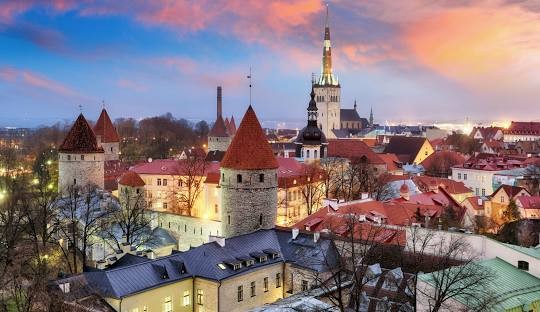
Under Estonia’s current legal framework, dual nationality is largely prohibited for people who naturalise. The reasoning is rooted in the logic that citizenship implies exclusive allegiance; accepting an additional nationality is treated as a voluntary renunciation of Estonian citizenship.
For a foreigner to become an Estonian citizen via naturalisation, they must meet several conditions: being at least 15 years old, having legally resided in Estonia for at least eight years (with the last five years as a permanent resident), proving competence in the Estonian language, passing a civics exam, and demonstrating stable means of support. Crucially, as part of the process they must also provide proof of renunciation of any previous citizenship.
However, there are some exceptions to it; individuals who acquire Estonian citizenship by birth (for example, because at least one parent is Estonian) are treated differently. Legally, the Estonian constitution says birthright citizenship cannot be involuntarily revoked.
In practice, this means a child born with dual nationality may hold both, at least until adulthood. But under current legislation, once they turn 18, they are expected to choose one nationality.