Follow Us on Google Discover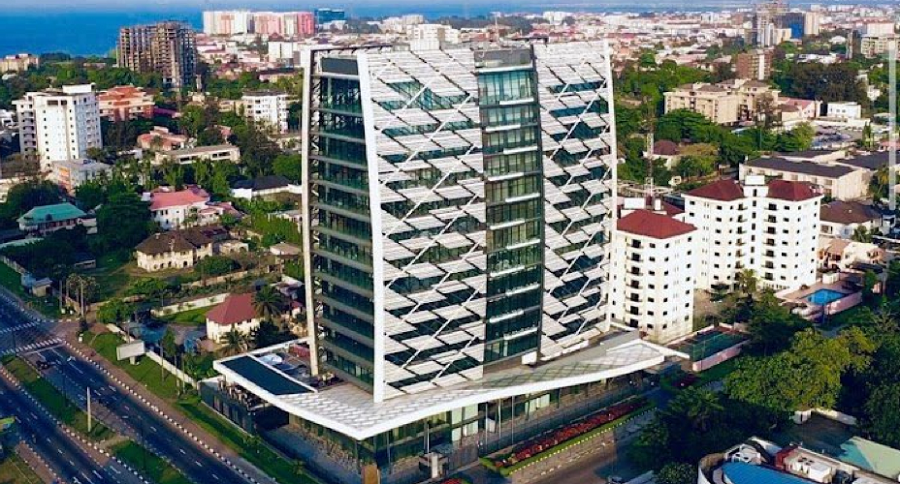
Lagos, Nigeria’s commercial nerve centre, continues to command significant investor and occupier interest in its prime office segment, with emerging data pointing to notable divergences across the city’s leading business districts.
Ikeja and Victoria Island remain the strongest performers, buoyed by resilient tenant demand, while traditionally upscale markets such as Ikoyi and Banana Island are recording comparatively slower absorption.
Multiple data sources, including Estate Intel and Knight Frank, indicate that Lagos’ prime office environment is now shaped by evolving tenant priorities; modern amenities, flexible floor plans, and growing interest in ESG-aligned developments, forcing landlords to balance competitive rents with occupancy-focused strategies.
These shifts highlight broader patterns playing out in Abuja and other African markets, where institutional demand, sustainability benchmarks, and development pipelines continue to redefine prime office standards.
Also Read
Divergent performance across Lagos’ commercial nodes
Findings obtained by Nairametrics from Estate Intel show a wide spread in vacancy rates across key Lagos office locations in H1 2025.
- Banana Island posted the highest vacancy at 41.79%, underscoring a notable slowdown in absorption of ultra-premium spaces.
- Ikoyi followed with a vacancy level of 31.78%, reflecting ongoing adjustments in tenant preferences and rental expectations.
- Conversely, Ikeja GRA and Victoria Island stood out with some of the lowest vacancy rates in the city; 3.88% and 9.84%, respectively, underlining their appeal to corporates seeking strategically located, well-serviced offices at comparatively stable rates.
Knight Frank’s assessment of the broader Lagos prime market reinforces this trend. Overall occupancy rose from 65% to 73% over the 12 months leading to H1 2025, signalling deepening tenant interest despite evolving rental structures.
The firm also reported that average Grade A rents in Ikoyi softened by 3.5%, declining from $57 to $55 per square metre per month.
This adjustment, despite improving occupancy, suggests a concession-driven approach among landlords prioritising long-term stability over immediate rent escalation.
Rental adjustments and shifts in dollar-denominated pricing
Estate Intel further noted that while Naira-denominated rents, especially in Yaba and Ikeja, have trended upward, several prime office buildings have experienced declines in dollar-denominated rents over the past 24 months.
The firm attributed this to the impact of currency volatility and pre-existing long-term leases that have constrained upward price revisions.
“When measured in USD terms, rental performance has declined steadily, even as occupancy remains stable, driven by landlord concessions and long-term leases secured prior to currency shocks,” Estate Intel explained.
These adjustments highlight an increasingly tenant-led market in Lagos, where flexibility, value retention, and long-term commitments shape negotiations.
Development Pipeline Reshapes Lagos’ Supply Dynamics
Lagos’ prime office pipeline features a combination of owner-occupied headquarters and leasable Grade A assets designed to meet evolving occupier expectations.
Completed projects include The Pantheon in Ikoyi—a nine-floor office complex offering 9,125 sqm of modern workspace—and The Phoenix Office Park in Ikeja.
Under-construction assets are set to reinforce supply between 2025 and 2027. Notable projects include:
- Dangote Industries HQ – 17,000 sqm, expected completion Q3 2026
- Ulesh Ikoyi – 16,390 sqm, completion projected for Q4 2026
- Crystal Tower, Victoria Island – 12,000 sqm, due in Q2 2026
Knight Frank’s Africa Offices Market Dashboard projects that approximately 94,931 sqm of new prime office space will be delivered across Lagos within the period, shaping availability and competitive dynamics.
Abuja’s prime office market driven by institutional demand
In Abuja, office environment continues to be anchored by government and institutional occupiers, with Estate Intel’s data showing that public-sector projects account for over 73% of ongoing developments. This pipeline is expected to expand the capital’s prime office stock by up to 45% by 2030.
Abuja-based realtor ESV Saba Chidi noted that the newly completed TY Danjuma Foundation Building in the CBD commanded rents of about $1,200 per square metre annually, while the Afreximbank Headquarters leased at around $565.
He added that occupancy was progressing steadily, with Seplat, Oando, and Afreximbank already occupying multiple floors.
The TrustFund Pension Headquarters, which rents at about $350 per square metre yearly, remained roughly 50% occupied.
Knight Frank reported average rents of $46 per square metre monthly for Grade A offices in H1 2025, though major dollar-denominated buildings currently record occupancy of 30%–40%, reflecting ongoing absorption of recently delivered supply.
Vacancy levels stand at 14% in Maitama and 25% in the CBD as of H2 2025, suggesting measured but stable take-up.
Key developments shaping Abuja’s pipeline include the FIRS Headquarters (36,660 sqm), the African Reinsurance Corporation tower (13,000 sqm), the NUPRC-led Barrel House (48,400 sqm), and the Development Bank of Nigeria’s office tower in Wuse II.
Major institutional expansions continue in Maitama and Lugbe, including the INEC Headquarters Annex and the National Defence College Headquarters.
ESG adoption gains ground but faces structural challenges
Sustainability has become an integral component of Nigeria’s prime office narrative, although implementation varies across markets.
Babatunji Adegoke, a Registered Civil Engineer and Infrastructure Strategist, told Nairametrics that international frameworks such as LEED, BREEAM, and EDGE remain widely cited, but their applicability to African conditions is limited.
He noted that financial constraints, weak regulatory enforcement, and superficial adoption by some developers hinder the full realisation of ESG benefits.
“Creating local sustainability benchmarks tailored to the African context, alongside stronger regulatory oversight, will ensure ESG compliance delivers tangible benefits for tenants and the environment,” he said.
Lagos and Abuja stand out in continental comparisons
Within Africa’s prime office landscape, Lagos and Abuja remain among the continent’s most expensive markets.
Lagos leads with rents around $55 per square metre monthly, supported by high-spec buildings and improving occupancy levels. Abuja follows at approximately $46, though its dollar assets continue to rely heavily on landlord concessions.
Other African cities including Cairo ($37), Lusaka ($18), Kampala ($16.5), and Johannesburg ($15) remain significantly below Nigerian benchmarks. Across these markets, however, a common theme persists: tenants increasingly prefer flexible, ESG-aligned Grade A spaces, prompting landlords to focus on occupancy retention, concessions, and adaptable leasing models.