Follow Us on Google Discover
Nigeria’s oil and gas sector shows a widening gap in debt sustainability across industry players, with a few companies demonstrating prudent balance sheet management, while others remain deeply burdened by high borrowings and negative equity.
The top five most indebted listed oil and gas companies—led by Oando Plc, Seplat Energy Plc —highlight contrasting financial realities, from strategic leverage to severe solvency stress.
While some firms have leveraged debt to drive expansion and maintain liquidity buffers, others face mounting repayment challenges, underscoring the importance of disciplined capital structure management in a high-interest-rate environment.
Below are the most indebted listed companies in the oil and gas industry.
Other News
Eterna Plc

- Current Debt: N29.28 billion
- Non-Current Debt: N10.13 billion
Eterna Plc though indebted, recorded an improvement in its debt position in June 2025. Its total borrowings by 17.6% YoY to N39.41 billion in June 2025, though its leverage remains high.
The company held only N2.45 billion in cash and cash equivalents, leaving a net debt position of N36.97 billion. This suggests that while borrowings have eased, liquidity remains thin relative to debt exposure.
Eterna’s debt ratio of 0.63x indicates that 63% of its assets are financed through debt, a high proportion by industry standards. The debt-to-equity ratio of 11.52x and the debt-to-capital ratio of 0.92x highlight a balance sheet heavily dependent on borrowings. A debt-to-EBITDA ratio of 12.61x points to limited earnings capacity to cover debt, though the interest coverage ratio of 2.99x suggests the company still generates enough operating income to meet interest obligations.
The company’s high gearing and weak liquidity position highlight the need for sustained earnings growth and disciplined debt management to strengthen financial stability in the medium term.
TotalEnergies Marketing Nigeria Plc
- Current Debt: N116.21 billion
- Non-Current Debt: No non-current debt reported
The company’s total borrowings rose to N116.21 billion in June 2025, a 40.47% increase from N82.73 billion in the same period of 2024. The company’s entire debt balance is classified as current, suggesting short-term funding reliance or upcoming maturities.
TotalEnergies holds N82.49 billion in cash, reducing its net debt to N33.72 billion and offsetting much of its borrowings.
The company’s debt ratio of 0.26 shows that about 26% of its assets are financed through debt. A debt-to-equity ratio of 7.66x and debt-to-capital ratio of 0.88x reveal significant leverage, though still supported by a stable asset base. Meanwhile, a debt-to-EBITDA ratio of 7.35x signals moderate repayment capacity, and an interest coverage ratio of 0.74x points to tight earnings relative to interest expenses.
While TotalEnergies’ balance sheet reflects notable short-term leverage, the company’s strong cash reserves and diversified energy operations provide some resilience.
Aradel Holdings Plc

- Current Debt: N98.87 billion
- Non-Current Debt: N40.07 billion
Aradel Holdings Plc’s total borrowings rose to N138.94 billion in June 2025, a 72.52% year-on-year (YTD) increase from N80.54 billion in the same period of 2024.
Despite the higher debt load, Aradel remains in a net cash position of N213.46 billion, supported by N352.40 billion in cash and cash equivalents. This indicates that the company’s liquidity comfortably outweighs its borrowings, offering a strong cushion against short-term obligations.
Aradel’s debt ratio of 0.08x suggests that only 8% of its total assets are financed through debt, reflecting conservative leverage. With a debt-to-equity ratio of 1.25x and a debt-to-capital ratio of 0.55x, the company maintains a balanced capital structure. Its debt-to-EBITDA ratio of 0.79x signals that operating earnings are sufficient to cover debt obligations, while the interest coverage ratio of 10.70x highlights strong capacity to service interest payments.
Aradel’s rising debt appears strategic rather than distress-driven, likely tied to expansion or operational financing. The company’s strong liquidity position, manageable leverage, and high interest coverage collectively underscore a healthy balance sheet and sound financial management.
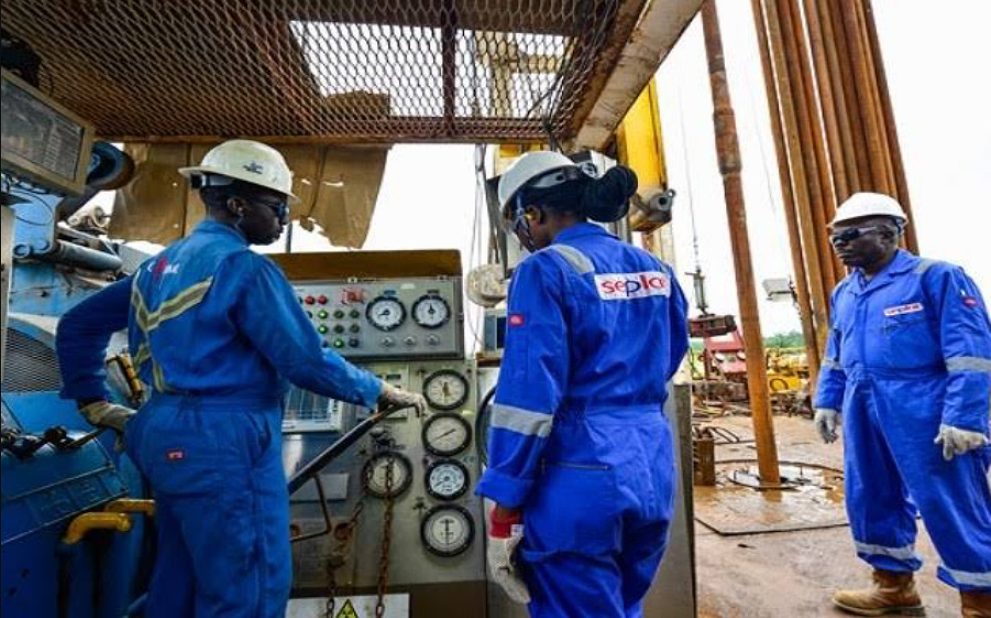
Seplat Energy Plc
- Current debt: N171.47 billion
- Non-current debt: N1.50 trillion
Seplat’s debt rose by 54.47% YoY, to N1.68 trillion in June 2025 from N1.08 trillion in June 2024.
The company maintains a moderate and well-managed leverage position within the oil and gas sector. As of June 2025, the company’s total borrowings was N1.68 trillion, supported by N641.28 billion in cash and cash equivalents, resulting in net debt of N1.03 trillion, a level consistent with funding capital-intensive exploration and production projects.
Its debt-to-equity ratio of 0.60x and debt-to-capital ratio of 0.38x show that just under 40% of its funding is sourced from borrowings, with the majority supported by shareholders’ equity. A debt ratio of 0.18x underscores its relatively low reliance on debt, while an asset-to-equity ratio of 3.38x indicates a healthy balance between equity and liabilities, typical for a capital-intensive upstream operator.
The company’s debt-to-EBITDA ratio of 1.45x suggests that Seplat could repay its borrowings in under a year and a half of operating earnings, comfortable for an exploration and production company with substantial cash flow generation. Its interest coverage ratio of 3.99x signals solid earnings capacity to service debt obligations.
Seplat’s leverage profile reflects prudent financial management, the combination of moderate gearing, healthy cash flows, and sound interest coverage positions Seplat as financially resilient and well placed to pursue growth while maintaining balance sheet stability.
Oando Plc
- Current debt: N1.12 trillion
- Non-current debt: N2.08 trillion
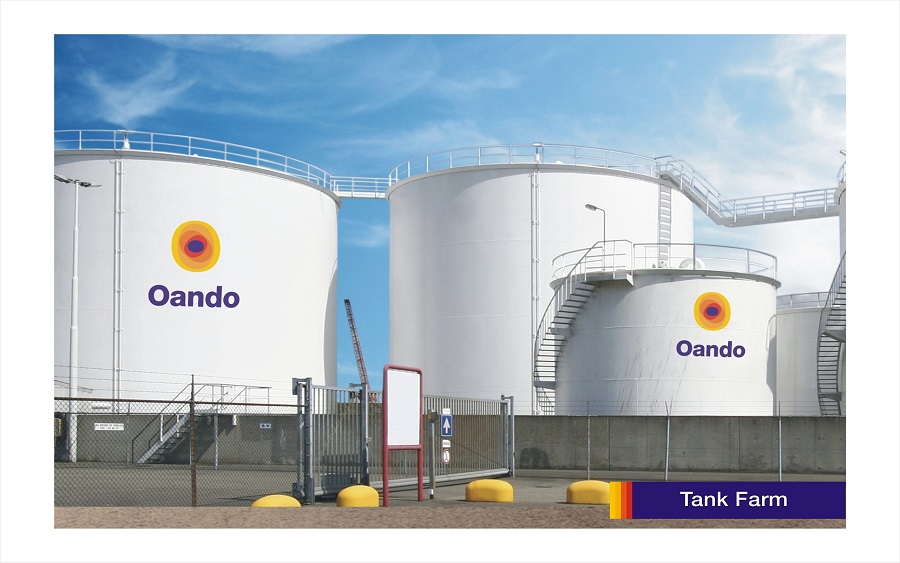
Total debt of N3.19 trillion in June 2025, almost doubling from N1.61 trillion a year earlier (+98.54% YoY). Oando Plc presents a highly distressed leverage position. As of June 2025, the company’s total borrowings of N3.19 trillion, offset by only N227.71 billion in cash and cash equivalents, resulting in a net debt position of N2.97 trillion.
Its debt-to-equity ratio of -10.44x and asset-to-equity ratio of -22.10x reflect a negative equity base, meaning the company’s liabilities significantly exceed shareholders’ funds. A debt-to-capital ratio of 1.11x confirms that its capital structure is almost entirely debt-driven, leaving little to no equity buffer. The debt ratio of 0.47x indicates that nearly half of its total assets are financed through borrowings.
The company’s debt-to-EBITDA ratio of -27.90x suggests that operating earnings are negative, making its borrowings unsustainable under current performance levels. Additionally, an interest coverage ratio of -1.41x shows that Oando is not generating enough earnings to cover its interest obligations, underscoring significant financial strain.
Oando’s leverage profile signals severe balance sheet pressure and elevated financial risk. While its heavy borrowings have supported capital-intensive upstream operations and restructuring efforts, the negative equity and inability to cover interest costs highlight the urgency to restore financial stability.