• Login
  • Register
Nairametrics
  • Home
  • Exclusives
    • Financial Analysis
    • Corporate Stories
    • Interviews
    • Investigations
    • Metrics
    • Economy
    • Nairalytics
  • Markets
    • Currencies
    • Cryptos
    • Commodities
    • Equities
      • Company Results
      • Dividends
      • Public Offer & Right Issues
      • Stock Market News
    • Fixed Income
    • Market Views
    • Securities
  • Sectors
    • Agriculture
    • Aviation
    • Company News
    • Consumer Goods
    • Corporate Updates
    • Corporate deals
    • Corporate Press Releases
    • Energy
    • Entertainment
    • Financial Services
    • Health
    • Hospitality & Travel
    • Manufacturing
    • Real Estate and Construction
    • Renewables & Sustainability
    • Tech News
  • Business News
    • Budget
    • Public Debt
    • Funds Management
    • Tax
  • Financial Literacy
    • Career tips
    • Personal Finance
  • Lifestyle
    • Billionaire Watch
    • Profiles
  • Opinions
    • Blurb
    • Op-Eds
    • Research Analysis
  • Recapitalization
    • Access Holdings Offer
    • Fidelity Bank Offer
    • GTCO Offer
    • Zenith Bank Offer
  • Home
  • Exclusives
    • Financial Analysis
    • Corporate Stories
    • Interviews
    • Investigations
    • Metrics
    • Economy
    • Nairalytics
  • Markets
    • Currencies
    • Cryptos
    • Commodities
    • Equities
      • Company Results
      • Dividends
      • Public Offer & Right Issues
      • Stock Market News
    • Fixed Income
    • Market Views
    • Securities
  • Sectors
    • Agriculture
    • Aviation
    • Company News
    • Consumer Goods
    • Corporate Updates
    • Corporate deals
    • Corporate Press Releases
    • Energy
    • Entertainment
    • Financial Services
    • Health
    • Hospitality & Travel
    • Manufacturing
    • Real Estate and Construction
    • Renewables & Sustainability
    • Tech News
  • Business News
    • Budget
    • Public Debt
    • Funds Management
    • Tax
  • Financial Literacy
    • Career tips
    • Personal Finance
  • Lifestyle
    • Billionaire Watch
    • Profiles
  • Opinions
    • Blurb
    • Op-Eds
    • Research Analysis
  • Recapitalization
    • Access Holdings Offer
    • Fidelity Bank Offer
    • GTCO Offer
    • Zenith Bank Offer
Nairametrics
No Result
View All Result
Home Economy

FAAC: Nigeria’s 36 states share N4.43 trillion in 7 months 

Kelechi Mgboji by Kelechi Mgboji
October 14, 2025
in Economy, Spotlight
FAAC: Nigeria’s 36 states share N4.43 trillion in 7 months 
Share on FacebookShare on TwitterShare on Linkedin

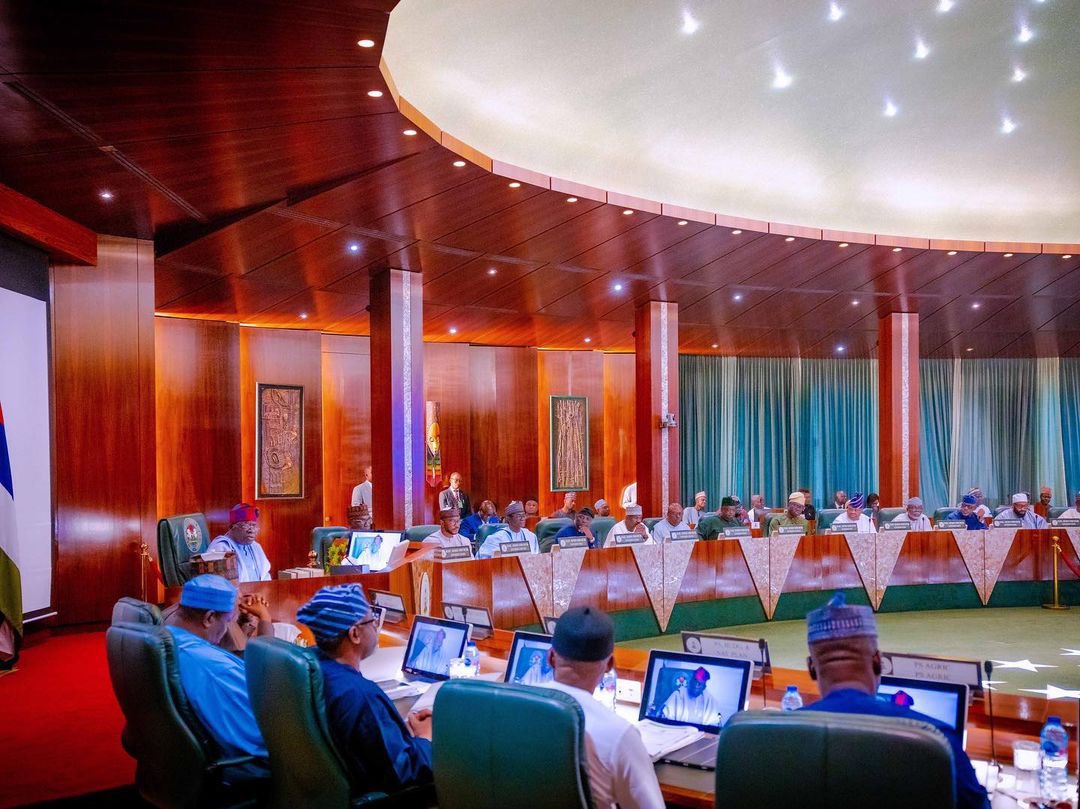
Nigeria’s 36 states shared a cumulative N4.43 trillion from the Federation Account Allocation Committee (FAAC) between January and July 2025, with receipts of oil-rich states accounting for about 35% of total disbursements.

Data from the National Bureau of Statistics (NBS) and FAAC reports show that Delta State received the highest net allocation during the period—N361.23 billion—followed closely by Rivers (N301.18 billion), Lagos (N279.03 billion), Akwa Ibom (N278.11 billion), and Bayelsa (N274.81 billion).

These top five states alone accounted for nearly 35% of the total FAAC disbursement to all states within the seven-month period.

MoreStories

Ogun targets N500 billion IGR for 2026 fiscal year 

Ogun targets N500 billion IGR for 2026 fiscal year 

November 13, 2025
Top 10 African Countries with the highest borrowing rate as of October 2025 

Top 10 African Countries with the highest borrowing rate as of October 2025 

November 13, 2025

At the bottom of the distribution were

  • Ekiti (N70.83 billion).
  • Ogun (N67.20 billion).

Oil revenue is still the lifeline 

The dominance of the oil-producing states in FAAC allocation reflects Nigeria’s continued reliance on petroleum revenue as the main source of government funding.

The derivation principle, which grants 13% of oil and gas revenue to producing states, has kept states like Delta, Rivers, and Bayelsa consistently ahead of others in monthly allocations.

While Delta’s N361.23 billion leads the pack, analysts note that the state’s high receipts are largely tied to oil derivation payments, not internally generated revenue (IGR).

Similarly, Rivers and Akwa Ibom, both key crude-producing states, benefited heavily from derivation inflows and value-added tax (VAT) returns from industrial activities within their jurisdictions.

Lagos retains edge among non-oil states 

Lagos State, Nigeria’s commercial nerve centre, stood out as the highest-earning non-oil-producing state, receiving N279.03 billion in seven months.

  • The bulk of its FAAC receipts came from VAT and statutory allocations, in addition to its own robust IGR base estimated at over N400 billion annually.

Economists say Lagos’ performance reinforces the importance of economic diversification at the subnational level.

According to Dr. Muda Yusuf, CEO of the Centre for the Promotion of Private Enterprise (CPPE), Lagos demonstrates that

“Fiscal independence and competitiveness are achievable through strategic investments in infrastructure, urban productivity, and governance efficiency.” 

Northern States lag behind 

Despite its huge population, northern states collectively received smaller shares of the FAAC pie.

Kano, the most populous northern state, ranked sixth overall with N149.81 billion, while Katsina (N109.31 billion), Borno (N110.00 billion), and Jigawa (N106.87 billion) trailed far behind the oil-rich southern states.

Most northern states rely almost entirely on federal transfers to fund their budgets.

Analysts warn that the gap between resource-rich and resource-poor regions could further widen with the implementation of government new fiscal reforms.

“FAAC formula, to a great extent, rewards resource control, rather than fiscal efficiency,” Lagos-based legal practitioner, Barrister Ralph Udo, noted. “For me, that should serve as a sufficient incentive for states to explore strategies to boost their IGR. Until states embrace the intelligence of fiscal independence, boost IGR, and reduce waste, Nigeria will remain stuck in a rent-sharing economy,” said Barrister Udo, the Principal Partner of Ralp Udo Chambers. 

Middle-Belt and Southeastern States show modest gains 

States in the Middle Belt, notably;  

  • Benue (N104.58 billion).
  • Niger (N97.38 billion).
  • Kogi (N95.20 billion),

These states maintained mid-range allocations, driven by their contributions from solid minerals and agriculture.

Meanwhile, southeastern states such as Anambra (N111.85 billion), Enugu (N92.71 billion), and Abia (N98.12 billion) received moderate disbursements.

The Southeast’s relatively lower allocations highlight low federal allocation and the need to increase IGR

Fiscal imbalance and the case for restructuring 

The NBS data bring renewed attention to Nigeria’s long-standing debate over fiscal federalism.

Critics argue that the current model promotes fiscal laziness, as most states rely on Abuja for monthly disbursements rather than building sustainable local economies.

“States continue to behave like administrative outposts rather than economic entities,” observed Chief Blakey Ijezie, the Convener of Blakey’s National Tax Conference as well as the Blakey’s National Economic Conference.  

Toward sustainable subnational economies

The distribution of FAAC funds has rekindled the argument for economic restructuring and resource control.

Allowing states to retain a higher share of revenues from local resources could spur competition, innovation, and accountability.

Experts believe such steps are critical if Nigeria is to break free from the cycle of dependency. An analyst at BudgIT Foundation noted that,

“The future of Nigeria’s fiscal stability lies not in how much FAAC distributes but in how efficiently states manage and grow their economies.” 

Ultimately, achieving sustainable subnational economies will depend on how well states diversify their revenue bases, strengthen governance, and reduce overreliance on federal allocations.


Follow us for Breaking News and Market Intelligence.
Kelechi Mgboji

Kelechi Mgboji

Kelechukwu Mgboji is a Bloomberg-certified (BMIA) financial journalist with a wealth of experience covering Nigeria’s financial markets. He provides expert analysis on financial market trends and corporate performances in Nigeria’s evolving economy. A graduate of Literature, he is known for analytical depth and clarity in translating complex economic and fiancial markets data into actionable insights for investors, policymakers, and business leaders across Africa’s financial and investment landscape.

Related Posts

BUA Cement
Dividends

BUA Cement vs. Dangote Cement: Who is executing better and pays more dividends? 

November 13, 2025
Ogun targets N500 billion IGR for 2026 fiscal year 
Budget

Ogun targets N500 billion IGR for 2026 fiscal year 

November 13, 2025
Weekly Stock Update: Nigerian Exchange Group record growth w-o-w, up by 0.48%
Equities

Brewers, FUGAZ stocks propel All-Share Index to 1.08% gain

November 13, 2025
Securities and Exchange Commission (SEC) building
Breaking News

Nigeria’s SEC to commence T+2 Settlement Cycle on November 28 

November 13, 2025
Federal Competition and Consumer Protection Commission (FCCPC) Logo
Financial Services

FCCPC sets January 5, 2026 deadline for compliance with new digital lending regulations 

November 13, 2025
CSR: Nigerian Breweries donates 2-Ton/Day cassava processing facility to Awo-Omamma community
Companies

CSR: Nigerian Breweries donates 2-Ton/Day cassava processing facility to Awo-Omamma community

November 13, 2025
Next Post
Noella Foundation launches series of Impact Initiatives to celebrate Seyi Tinubu at 40  

Noella Foundation launches series of Impact Initiatives to celebrate Seyi Tinubu at 40  

Leave a Reply Cancel reply

Your email address will not be published. Required fields are marked *

tajbank
arco
access bank
nairametrics
first bank


DUNS

Recent News

  • BUA Cement vs. Dangote Cement: Who is executing better and pays more dividends? 
  • Ogun targets N500 billion IGR for 2026 fiscal year 
  • Brewers, FUGAZ stocks propel All-Share Index to 1.08% gain

Follow us on social media:

Recent News

BUA Cement

BUA Cement vs. Dangote Cement: Who is executing better and pays more dividends? 

November 13, 2025
Ogun targets N500 billion IGR for 2026 fiscal year 

Ogun targets N500 billion IGR for 2026 fiscal year 

November 13, 2025
  • iOS App
  • Android App
  • Contact Us
  • Home
  • Markets
  • Sectors
  • Economy
  • Business News
  • Financial Literacy
  • Disclaimer
  • Ads Disclaimer
  • Copyright Infringement

© 2025 Nairametrics

Welcome Back!

Login to your account below

Forgotten Password? Sign Up

Create New Account!

Fill the forms below to register

All fields are required. Log In

Retrieve your password

Please enter your username or email address to reset your password.

Log In
Social Media Auto Publish Powered By : XYZScripts.com
No Result
View All Result
  • Home
  • Exclusives
    • Financial Analysis
    • Corporate Stories
    • Interviews
    • Investigations
    • Metrics
    • Economy
    • Nairalytics
  • Markets
    • Currencies
    • Cryptos
    • Commodities
    • Equities
      • Company Results
      • Dividends
      • Public Offer & Right Issues
      • Stock Market News
    • Fixed Income
    • Market Views
    • Securities
  • Sectors
    • Agriculture
    • Aviation
    • Company News
    • Consumer Goods
    • Corporate Updates
    • Corporate deals
    • Corporate Press Releases
    • Energy
    • Entertainment
    • Financial Services
    • Health
    • Hospitality & Travel
    • Manufacturing
    • Real Estate and Construction
    • Renewables & Sustainability
    • Tech News
  • Business News
    • Budget
    • Public Debt
    • Funds Management
    • Tax
  • Financial Literacy
    • Career tips
    • Personal Finance
  • Lifestyle
    • Billionaire Watch
    • Profiles
  • Opinions
    • Blurb
    • Op-Eds
    • Research Analysis
  • Recapitalization
    • Access Holdings Offer
    • Fidelity Bank Offer
    • GTCO Offer
    • Zenith Bank Offer
  • Login
  • Sign Up

© 2025 Nairametrics