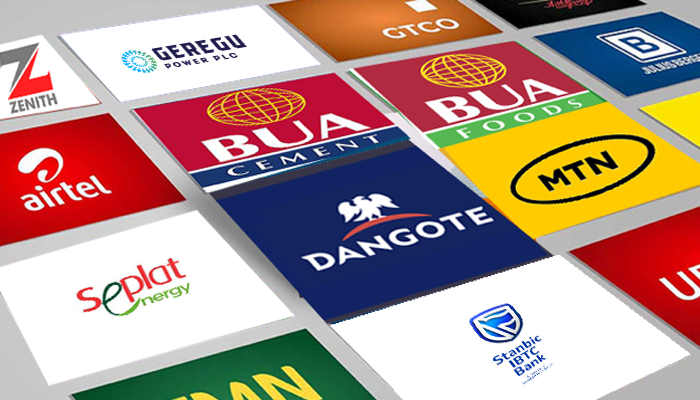
Debt levels among Nigeria’s listed corporates showed mixed patterns in the first half of 2025.
Some companies aggressively expanded leverage to fund growth and operations, while others reduced borrowings in response to margin pressures and higher finance costs.
Nigeria’s corporate debt landscape in H1 2025 reveals a sharp divergence between aggressive borrowing by some firms and strategic deleveraging by others.

Total borrowings across key listed companies highlight both sectoral pressures and growth-driven capital deployment.
Oil and gas operators like Oando Plc and Seplat Energy Plc expanded their debt significantly to fund upstream projects and restructuring, while Dangote Cement maintained high leverage to support capacity expansion.
In contrast, consumer-facing giants like Nigerian Breweries and Nestlé Nigeria scaled back borrowings to preserve margins amid inflationary and foreign-exchange headwinds.
The debt ratios provide further insight: negative equity positions at Oando, Nestlé, and MTN Nigeria flag balance sheet risks despite strong or improving operating cash flows, while firms like BUA Cement, Transcorp, and Beta Plc display disciplined leverage and robust interest coverage.
This mix of aggressive borrowing, conservative funding strategies, and balance-sheet recalibration underscores the varied approaches Nigerian corporates are taking to navigate volatile macroeconomic conditions, high interest rates, and capital-intensive growth plans.
Below is a breakdown of each company’s debt position, growth trend, and structure.
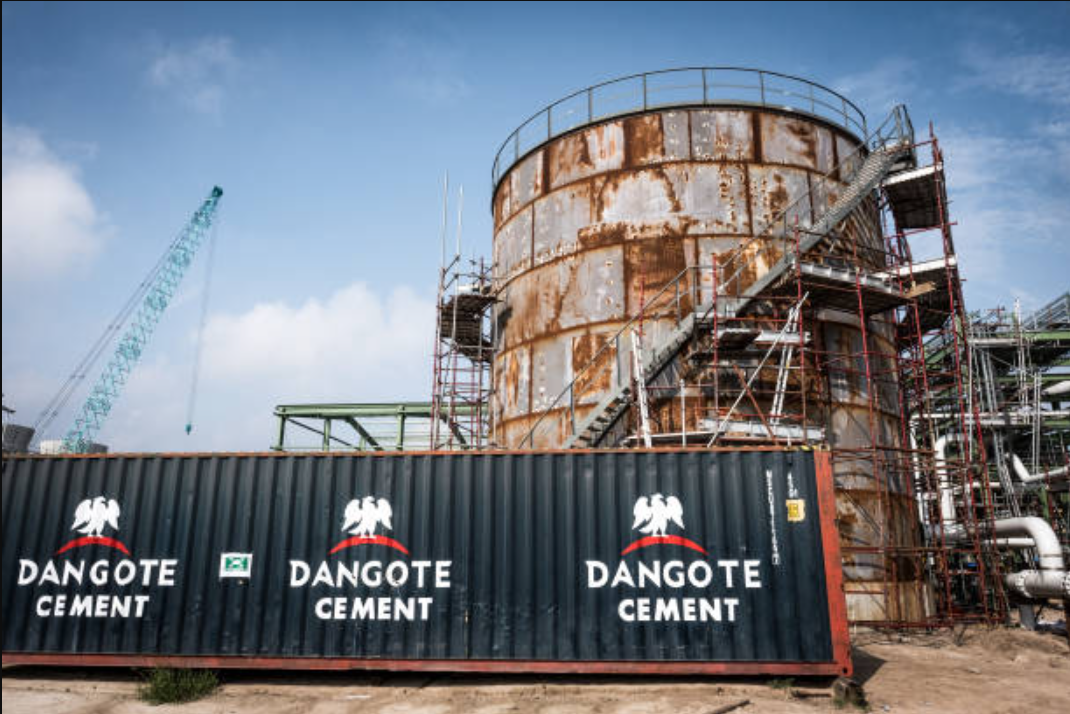
Dangote Cement reported total borrowings of N2.53 trillion, up 59.25% YoY from N1.59 trillion.
- Current debt: N1.13 trillion
- Non-current debt: N1.40 trillion
Dangote Cement Plc demonstrates a relatively high but manageable use of debt within its capital structure. As of H1 2025, the company reported total borrowings of N2.53 trillion, supported by N383.90 billion in cash and cash equivalents, leaving net debt of N2.15 trillion, a significant level that reflects its ongoing capacity expansion and regional growth projects.
Its debt-to-equity ratio of 1.14x indicates that borrowings exceed shareholders’ equity, while a debt-to-capital ratio of 0.53x shows that slightly more than half of its capital base is funded through debt. A debt ratio of 0.38 confirms a significant, though not excessive, reliance on borrowings. The asset-to-equity ratio of 2.98x suggests a geared but still stable balance sheet typical for large-scale, capital-intensive operations.
The company’s debt-to-EBITDA ratio of 2.68x means it would require nearly three years of operating earnings to fully repay its borrowings—higher than some peers, but within a tolerable range for an infrastructure-heavy industry. Its interest coverage ratio of 3.75x indicates that Dangote Cement generates almost four times the earnings needed to meet interest payments, signaling adequate but not abundant earnings headroom.
Overall, Dangote Cement’s leverage profile reflects a strategic use of debt to finance capacity expansion and regional projects, balanced by sufficient cash flow to cover obligations. While its debt load is higher than many peers, the company’s scale, operating strength, and industry positioning support its ability to manage financing costs and maintain financial stability.