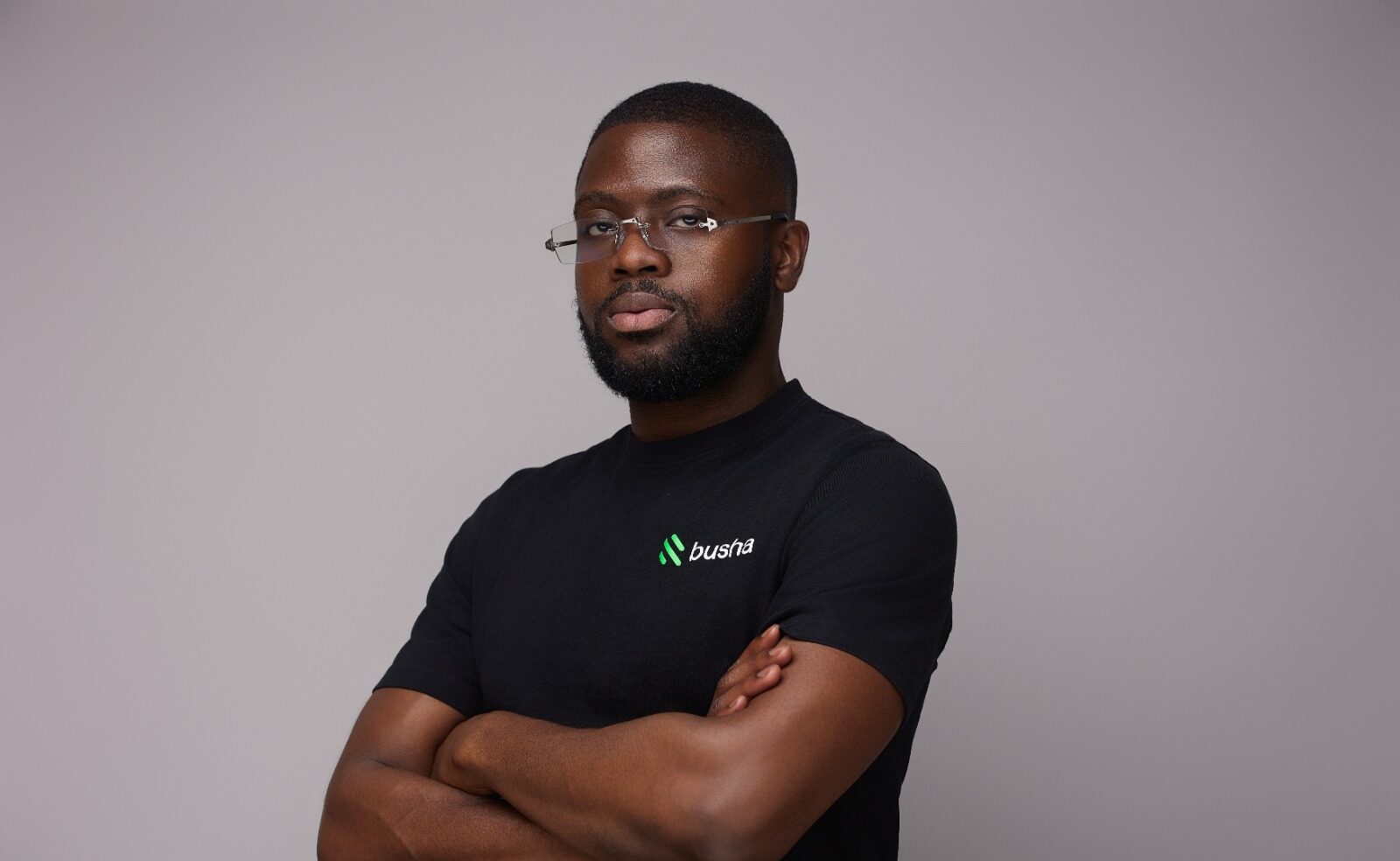
Co-founder and Chief Operating Officer of Busha, Moyo Sodipo, says Nigeria’s inclusion in the Financial Action Task Force’s (FATF) grey list has been a persistent stumbling block affecting cross-border transactions.
Nigeria was placed on the FATF grey list in February 2023 due to rising capital inflows and shortcomings in combating money laundering, terrorism and arms financing.
The grey list, also known as the “Jurisdictions under Increased Monitoring” list, is a list of countries that the FATF says have a higher risk of money laundering and terrorism financing. The grey listing signifies increased monitoring and can lead to higher compliance costs and more scrutiny for businesses operating in or with Nigeria.

In February, the CEO of NFIU, Ms. Hafsat Bakari, says Nigeria is expected to exit the FATF grey list by late 2025.
While this is yet to come into fruition, Sodipo, in this interview with Nairametrics, speaks to many issues around the crypto ecosystem, including cross-border payments.
Nairametrics: Looking back this one year, what would you say has changed or what has remained unchanged?
Moyo Sodipo: I would say it’s been a year of learning. It’s been a year of collaboration. It’s been a year of understanding as well.
What has changed? The first thing I’ll say has changed is finally we are able to once again access the formal banking network in Nigeria.
So, prior to 2021, we had bank accounts that were operating when the CBN placed the restriction on individuals and entities affiliated with crypto in 2021. That was distorted. After the licensing last year, we’re now seeing the green light again where banking institutions, financial institutions that were somewhat scared in the past of working with us are now happy to welcome us into their offices again.
And it’s a nod in the right direction where we no longer have to be in the shadows. Like you said, we no longer need to be using P2P or different innovative models to walk around the roadblock that the restriction caused. But now we’re able to come out with our full chest and educate people and provide crypto and digital asset services to Nigerians.
Nairametrics: How has this reshaped the way you engage with your users? I’m sure a couple of things must have changed.
Moyo Sodipo: Yes, yes, definitely. So, a couple of things have changed. For example, with our users today, we’re able to put our hand on our chest 100% and say anywhere you go, let them know you’re dealing with a licensed player in the space. And what this means is in the past, if a user had issues, they didn’t have anyone to run to and say, hey, help me with this issue.
Or if a user was confused, they didn’t have any regulator. A couple of people that just wanted to deal with crypto or digital assets did not have any regulator that they could run to and say, in this regulator world, these guys are accountable. But today, it’s indicated on our website, on our mobile application, that you’re licensed by the SEC.
So, what this means is it has boosted user confidence where if there’s any issue, if there’s any confusion, if there’s any doubts, they can easily send a message to the SEC. They can easily send an email to the SEC to verify our legitimacy. And the SEC will also respond to them and also let us know that, okay, the SEC customer said they need a clarification on this.
And there’s full transparency. So, for customers, it has boosted their confidence that they have the regulator behind them, and their funds are secure.
And every transaction that they are doing on our platform, they know that it is lawful in the eyes of the law.
Nairametrics: Is there a similar change with your partners and the regulators? I mean, what has changed in dealing with them?
Moyo Sodipo: In terms of the regulators, before we were just operating in the wild west, now we have reports where we send to the SEC about trades. We have calls with them every now and then.
In fact, we’ve had instances where we collaborated with the SEC last year. I think that was in October last year. There was an Investor Week or so, where we were also invited by the SEC to be part of that week-long program.
So there’s been constant collaboration both on their side and our side as well.
What we have is constant collaboration with players in the space where they’re learning from us, we’re learning from them as well. And what the long-term goal for us and for them as well is ensuring that all participants are protected, all participants have confidence in this new and evolving industry.
Nairametrics: Some critics argue that regulation can stifle innovation. How has Busha balanced regulatory compliance with the need to remain innovative in product development?
Moyo Sodipo: I’d say from day one, even before the formal licensing, Busha has always been compliance-based in the sense that we’ve always done global-grade KYC. We’ve built our systems in such a way that if the regulator decided to come in the middle of the night and say, hey, we’re not regulating you, but tomorrow you need to be regulated, we already have systems in place.
So regulatory clarity coming last year was more of a tick on the box for us because prior to that, from 2018 when we started building, we already had all these processes in place, we already had the systems in place to ensure that we’re not operating in a way that when regulation comes, it affects the business. So, there was no drastic change into the process between our customers. There was only improvement into the processes.
Even when we didn’t have a license from the SEC, we were doing KYC, we already had KYC, we already had transaction monitoring tools that multiple exchanges use globally. We already had KYC processes that were acceptable by regulators, not just in Nigeria, but also other jurisdictions globally. So the regulator in Nigeria giving us that nod was also on our side.
We saw it as some sort of testament to the groundwork that we had done prior to them coming to regulate us. And for our users also, there was no drastic change for them. So it was not like a case of them feeling like the SEC started regulating us and then we made their lives more difficult. No, it was still the same thing. The only difference is the processes became better. It became more improved.
Now they have access to direct banking accounts unlike before where they had to jump maybe two, three hoops. Instead of making a deposit and jumping one, two, three hoops that they were doing in the past, now they can make a direct bank withdrawal from their wallets to their bank accounts. They can use their crypto.
They can deposit crypto or digital assets in minutes as well. The transaction process used to take five, 10 minutes in the past. Now we’ve been able to cut that down to 30 seconds to two minutes, barring any unforeseen circumstances from the general banking network.
Nairametrics: What role do you see exchanges like Busha playing in deepening financial inclusion and attracting more Nigerians into the formal crypto economy?
Moyo Sodipo: For players like us, over the next couple of months and next year, our core focus is being able to let people see crypto beyond just speculation, beyond something that there’s this notion with crypto that, it’s gets rich quickly. You put one dollar today, by next week you get another.
That’s the main reason why initially before price regulation, there was a lot of stigmas or a lot of bad notion that people lose money there because a lot of people just use crypto to promise unrealistic returns, unrealistic benefits that people don’t even sit down and think twice.
For us, it’s about educating the users to let them know that you can apply crypto to your daily life. You can apply digital assets to your daily life and also sort of incorporating it into things that you apply.
Today if you’re trying to buy airtime, we want you to be able to do that directly from your digital assets. You’re trying to pay for something at the grocery store, we want you to be able to do that directly from your digital assets. You see that this digital asset or this cryptocurrency that you are holding, you don’t necessarily need to think it is arbitrary. It’s something that you can use to go to spa and say, I don’t have money around me, I have crypto, I have digital assets, and you’re able to find a way. We find a way for you to just pay directly with your crypto at that location.
And eventually we’ve managed to be able to partner with other traditional players in the space, other traditional players in the stock market and see a way where there can be some sort of synergy between digital assets and the traditional stock markets. That way, even normal people that are buying traditional stocks will now be able to buy cryptocurrencies just using our platforms with one or two integrations with traditional players.
Nairametrics: Talking about partnership, you’re partnering with the SEC and Cambridge University for an executive course. What impact do you think this initiative will have in shapping the cryptocurrency ecosystem in Nigeria?
Moyo Sodipo: Yes. If you recall, I mentioned the fact that we need to educate a lot of people. So there are two aspects of education.
There’s educating the general public, there’s educating the consumers and there’s also the aspect of educating the decision makers, educating the regulators and the like. This executive program is targeted at educating those that we believe will be very, very pivotal into how digital assets are shaped over the next couple of years.
We want to get to where regulators or key executive leadership in different institutions, different walks of life are able to get first hand knowledge on what digital assets are about.
We want to, with this executive course, lay the foundation where different executives and leaders in Africa are able to pass through this course and realize or understand what digital assets are about, understand how to navigate it, understand the entry cases and pretty much go back to their day to day lives and be able to say, okay, I’ve learned something that’s true.
Digital assets is not something that’s negative. It’s something that we can find a way to incorporate into our own businesses and see how we’re not left out of the future of finance.
Nairametrics: One year after the SEC began licensing exchanges, how would you assess the overall impact of regulation on the Nigerian crypto ecosystem?
I would say the SEC has been very helpful. There’s been a lot of collaboration in terms of us learning from them. And I would say also a bit of the learning from us as well.
It’s not a big hammer approach that they’re using or a hostile approach. We discuss this is the standard that we expect from you in terms of regulatory reporting. We come to the table with discourse.
We explain how things work in this fast-paced world of digital assets and how we can both come to a common ground in terms of, okay, how should this table? What’s the global standard? What do we want in Nigeria? And then we’re able to come to a consensus of how we think that this thing should work, and then they also approach.
I would say the benefit is that prior to this regulation, certain large corporates, certain businesses, certain corporate clientele that were interested in this industry would not have touched us with a long stick. But as soon as this happened, we started getting those inbounds.
We started getting more interest from people that want to sort of formalize their interest in digital assets. And they’re happy to do it now because they know that they have the comfort of confidence from a prestigious regulator like ours.
Nairametrics: The ISA 2025 was signed into law this year, what impact has this played from your point of view?
Moyo Sodipo: Yeah. I would say on the retail side, the interest has always grown because the retail clientele, they’re mostly of a younger demographic.
They have more risk appetite compared to the corporate. So the retail side has always been slow, steady, progressive. But on the corporate side in the last one year, especially I also expect that the signing of the ISA 2025 by the president will drive growth.
There’d be more requests for partnerships, like strategic partnerships with traditional players in the space, be it in the stock market, be it with traditional banks, be it with microfinance banks, all the likes. There’s been more interest in fact, with certain FMCGs and normal players in other industries that are just looking to diversify their portfolio and add digital assets to their portfolio or use it as a means of just diversifying.
On the corporate side, we’ve definitely seen more green lights, more approval, more interest because unlike two years ago, they can actually now say, okay, we want to go into the world of digital assets.
But two years ago, even though there was no outright ban on digital assets, that blankets gray area that was created by lack of access to banking and restriction meant that certain companies were just very, very skeptical about creating. But today and over the next couple of months, I’m sure you’ll start seeing when we start announcing strategic partnerships with certain players that you classify as traditional players in the places like the stock markets and the likes. And then you’ll see what I mean when I say that there’s definitely been an uptick in the acceptance from traditional players.
Nairametrics: Beyond the retail adoption, what other opportunities exist for crypto to drive a broader economic growth?
Moyo Sodipo: I think the other opportunities to drive growth would be, for instance, remittance, cross-border payments, financial inclusion.
I know cross-border payments remittances is a bit of a sensitive area that I don’t like to touch. But of course, in all fairness with the adoption of stablecoins, what we’ve seen is that it has made transactions faster. It has made the world more, more borderless today.
You’re trying to go from Nigeria to Nairobi, or you’re going from Nairobi to Ghana with stablecoins. It’s sort of limitless where you just need to get to that new country, convert your stablecoin to the local currency, and you’re able to carry about your daily life. That’s what I mean by saying the synergy in digital assets, between players like us and traditional finance is what is going to take the future of money to the next level where the banks or the traditional players should not see us as competitors.
We should rather be seen as the new players in the space that can collaborate with them to make life easier and also make the life of consumers or make processes faster and more similar. So as long as there are proper KYC, AML, CTF processes in place, we can ensure that we’re increasing adoption. We’re making businesses smile.
We’re making processes simpler by collaborating with each other. And yeah, everyone’s talking about stablecoins today, how there’s things for cross-border transfers, there’s things for remittances. We’re seeing the adoption go all on a very, very exponential scale globally.
We want Nigeria to be part of that conversation. We don’t want to be left behind. And then five years down the line, 10 years down the line, when this is a very, very pivotal or very important part of the global financial economy, we’ll now try to play catch up.
The good thing is in Nigeria as well, we’re already working towards that thing where we can see the regulators are also warming up to the idea. So, I would say it’s a work in progress, but we’ll definitely get there.
Nairametrics: I know that the SEC has scaled in the past one year in terms of licensing, and in terms of the ISA 2025, what other areas that need to be improved for us to be able to stand shoulder to shoulder with global competitors?
Moyo Sodipo: I think one thing that’s sort of a stumbling block for us in Nigeria is that we’ve been on the FATF grey list since February 2023. And that’s one thing that has been a very, very big stumbling block.
Even though we’ve made significant progress, there’s been conversations with the Nigerian Financial Intelligence Unit (NFIU) trying to work on this, even the CBN, the SEC, all hands are on deck, to get Nigeria off that list.
But I would say the first step towards getting us in a better position globally is us getting off that list because us being on that list means that every transaction that originates or is being transfered to Nigeria is going to go through a higher level of scrutiny compared to those that are not on that grey list.
That would be the first step. And for this to happen, all the regulators and also stakeholders like us in the space, we all need to work hand in hand to do what is required by the financial action taskforce to ensure that we’re taken off that list. And then we can now focus on competing equally on the global stage.
But us being on that list today means that when we’re trying to compete or we’re trying to be on the same stage as everybody else globally, we always keep encountering a very big stumbling block.
Nairametrics: Lots of funds have gone missing in crypto. I mean, this year over $1 billion were lost in Bybit, even though they claim that they were able to recover some of them. What should exchanges do to protect traders’ funds?
Moyo Sodipo: Well, the truth is, as the world is evolving in terms of security, that’s the same speed with which the bad actors are also evolving and trying to catch up with the new trends. But what stakeholders like us can do is ensure that we are employing or implementing very, very high level of security standards, ensuring that not just one person, not just two people, there are like multiple layers of approval that are in place to ensure that customer funds are secure.
There are multiple checks that we have in place. And we routinely go through different security checks. We do different internal audits.
Of course, I can’t speak about the process, but just internal audits to ensure that, okay, at every point in time, customer funds are safe, customer funds are secure and also have like insurance in place against unfortunate scenarios like what happened with Bybit that you mentioned. So, it’s ensuring that, okay, you cover all bases in terms of your processes, in terms of the security of funds, security of customer funds and all that.
And also, after doing that, you also have insurance policies in place to ensure that in the events that the unfortunate happens, customer funds are not affected and you have a way to make sure that all customers are made whole because at the end of the day, if the customers are made whole, then that trust that they’ve given you is not broken if something bad happens.
And if you’re able to stay afloat in the unfortunate events that something like that happens, it means that customers will retain their trust in you
Nairametrics: Looking ahead, what does the next phase of growth for Nigeria’s crypto ecosystem look like for you?
Moyo Sodipo: The next phase is a combination of regulatory clarity. And by that, I mean where in Nigeria, the CBN, the SEC, the NFIU, EFCC, everyone speaks with one voice, where everyone comes to realise that crypto is here to stay, digital assets are here to stay.
And the SEC cannot be walking positively while another regulator, another player is walking to the left side. The SEC cannot be walking to the right side, to the positive direction while another regulator or stakeholder in the same space is doing something that will be counterintuitive for the industry. So, everyone will need to speak with one voice.
And if everyone speaks with one united voice, issues like the FATF grey list would easily be sorted out. Things like doubts from certain people or certain risk teams in certain institutions would be out of the way as well, because of course we’ve had licensing for a year, but there are still some compliance officers that will say, no, I’m not interested in crypto or digital assets. No, I cannot touch this with a 10-foot pole.
We still have all those blockers in little, little places here and there. And that’s simply because all the regulators or all the important stakeholders are not speaking with one uniform voice yet. I would say the future for us is still a lot of learning in terms of on the regulatory and the stakeholder engagement part.
And after that we’ll now be further educating the space on the pros and cons of this, on the different intricacies that have to do with digital assets. And then after that, we’ll now be proper, proper adoption, proper application of digital assets to your everyday life.
Imagine if you go to your mechanic tomorrow and the mechanic says, how do you want to pay for this service? You say you can pay with your digital assets and then he’s able to accept that thing from you.
You can probably go out without your debit card, and you go somewhere, you make payments with your bank transfer, or you can go out without cash 100% confidently because you know that you’ll be able to pay for that service either with your bank transfer or with your debit card. So, the future for me is a day where I’m able to go out without cash, without your debit card, and you know that you’ll be able to pay for a service with digital assets.