Follow Us on Google Discover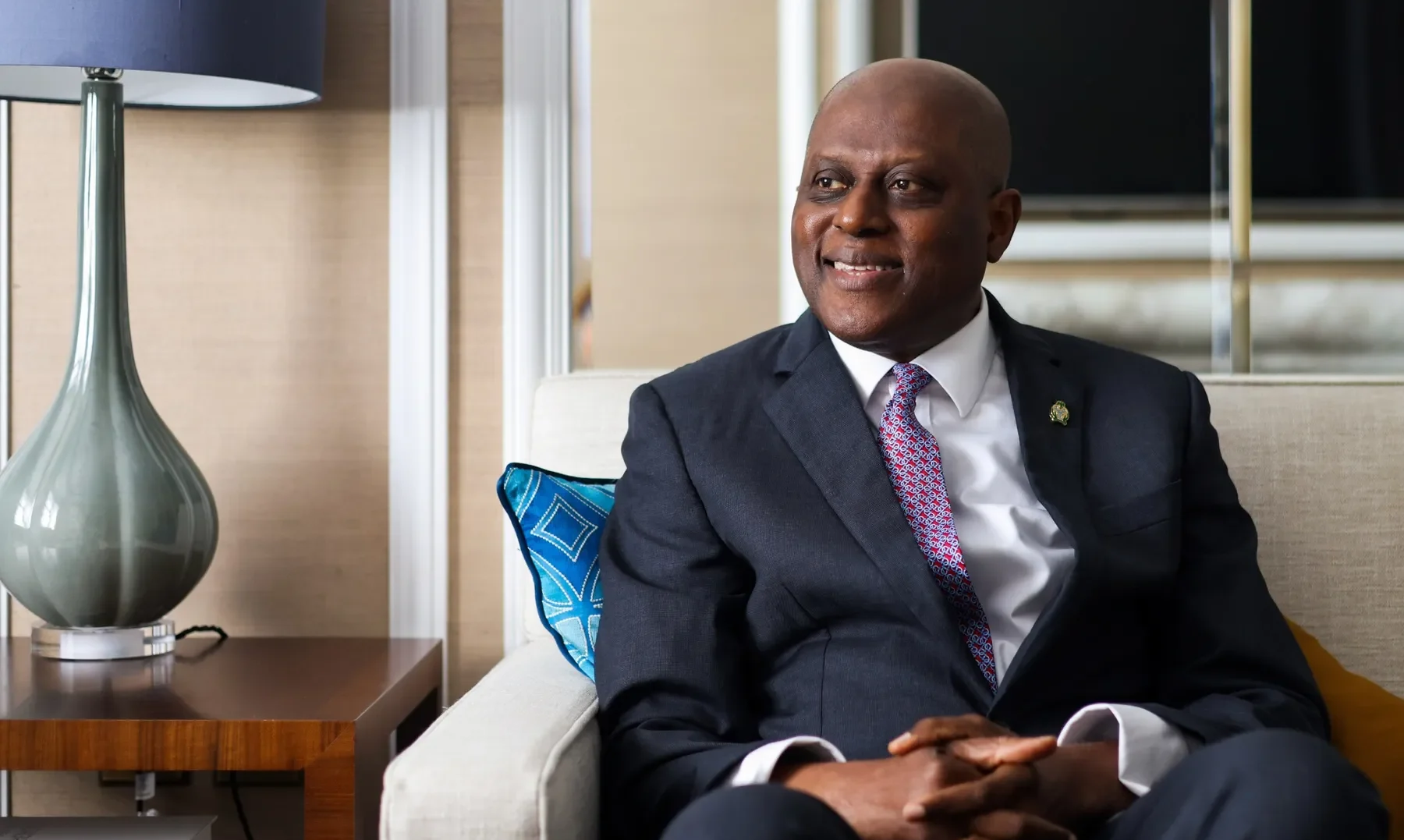
The Central Bank of Nigeria (CBN) has confirmed that eight Nigerian banks have met the minimum regulatory requirements under the current forbearance regime.
This was disclosed by CBN Governor Yemi Cardoso during the Monetary Policy Committee (MPC) briefing held on Monday, July 22, 2025.
“Eight banks have surpassed the minimum required,” Cardoso said in response to questions from journalists, while also revealing that one of the banks (GTB) successfully raised capital from the London Stock Exchange (LSE).
The CBN Governor also commended Guaranty Trust Holding Company (GTCO) for its recent capital market activities, noting that the bank had raised a “significant amount of money” through its public listing.
Speaking further, Cardoso explained that the forbearance measures introduced by the apex bank are temporary and aligned with global standards under Basel II.
He emphasized that such steps are neither new nor unique to Nigeria, as they are designed to help banks create buffers during transitional periods.
He reiterated that the banking sector remains “fit for purpose,” citing current data that shows Nigeria’s Capital Adequacy Ratio (CAR) stands at 13%, while Non-Performing Loans (NPLs) are within the regulatory threshold of 5%.
He reiterated that the Nigerian banking sector remains “fit for purpose,” citing key industry indicators. As of the latest data, the Capital Adequacy Ratio (CAR) stands at 13%, the liquidity ratio is at a healthy 50%, and Non-Performing Loans (NPLs) are comfortably within the regulatory threshold of 5%.
Cardoso noted that these figures reflect a sound and stable banking system that has continued to withstand economic shocks, maintain investor confidence, and support ongoing reform efforts.
“The banking system has really come of age and can only get better,” he said. “This view is not just based on what we see internally, but also on discussions with international market participants who have been tracking Nigeria’s financial system for many years.”
According to the CBN Governor, these international investors are not newcomers. “They’ve seen Nigeria at its peak and during downturns—and now, they believe this is the right time to re-enter the market. They see opportunity.”
The combination of strong capital metrics, proactive regulatory support, and growing foreign interest points to a banking sector that is not only resilient but also increasingly attractive to global capital.
The remarks come as the CBN held the Monetary Policy Rate (MPR) steady at 27.5% during the same MPC meeting, alongside maintaining:
- An asymmetric corridor of +500/-100 basis points
- A Cash Reserve Ratio (CRR) of 50% for Deposit Money Banks and 16% for Merchant Banks
A liquidity ratio of 30%
“The decision was premised on the need to sustain disinflation,” Cardoso stated, while expressing the MPC’s cautious optimism over recent economic indicators.
Analysts were split ahead of the meeting, with some anticipating a marginal rate hike to bolster the naira and anchor inflation expectations, while others anticipated a rate cut amid concerns over weak economic growth and the risk of overtightening.
Ultimately, the decision to hold key policy parameters reflects the CBN’s focus on still stabilizing prices, although inflation has shown signs of moderation.
Also, the retention of elevated MPR and CRR levels signals the Bank’s intent to further tighten liquidity, and support the naira, even as concerns linger over restricted credit growth and slower economic expansion.
Looking ahead, market participants will be watching closely for further economic data and FX developments that may influence the CBN’s next policy move in September.
These decisions highlight the apex bank’s commitment to price stability, inflation control, and exchange rate management—all critical to safeguarding financial system integrity.
As the CBN continues to walk the line between tight monetary policy and financial sector stability, attention now turns to the next MPC meeting in September and the market response to ongoing reforms.