
 Follow Us on Google Discover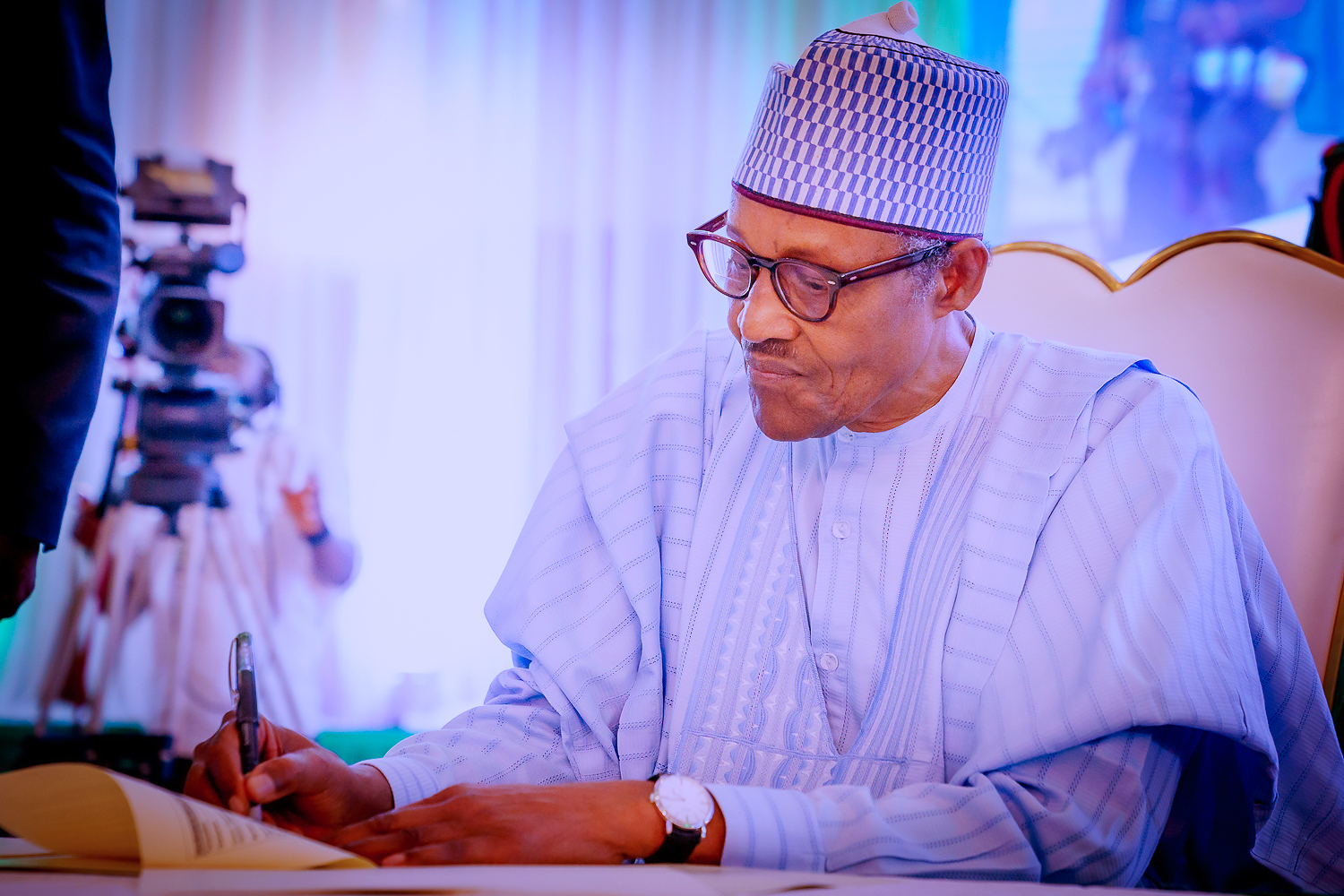
It was 2022, Nigeria was in the middle of one of its worst economic crisis in decades.
The country was neck-deep in the so-called Next Level economic doctrine: a policy thrust heavily promoted by the ruling APC government as the pathway to a prosperous future. But that future seemed distant, if not entirely out of reach.
Foreign investors were pulling out in droves, driven away by a forex policy many described as heterodox. Inflation was galloping, GDP growth was sluggish, poverty was rampant, and the naira was weaker than ever against the dollar, especially at the parallel market, even though it seemed stable at the official foreign exchange market.
For many, including members of the ruling party, President Muhammadu Buhari will remain an economically and politically divisive figure.
Also Read
The current administration has distanced itself from most of his policies, reversing many of the doctrines that defined his years in office.
And yet, Buhari should still be remembered as one of Nigeria’s most consequential figures. He served as minister and governor in the 1970s, established the NNPC, ruled as both a military and civilian president, and chaired the Petroleum Trust Fund (PTF). In his 82 years, he touched nearly every major institution in Nigeria’s post-independence history.
Critics often described him as clueless, unintelligent, even inept. But how does one lead a country twice and rack up such a record of service without some degree of capability? You may disagree with his style or decisions, but to call him stupid is to ignore the facts. If you’re smarter, go rule a nation twice.
That said, it is also true that Buhari governed Nigeria during a period that redefined economic hardship in the worst possible way.
From his early years in the 1980s with import substitution and closed-border policies, to his second coming in 2015 marked by currency controls and unsustainable subsidies, the outcomes were almost always economically destructive.
To be fair, his first stint came during a difficult time. The 1980s were marred by alleged corruption at the tail end of Nigeria’s oil boom. There wasn’t much in the treasury to work with. Still, the policies his regime implemented lacked economic rationale, a point even his supporters reluctantly admit.
When he returned to power in 2015, after winning on the back of a campaign to root out corruption, the global oil market had crashed, and a new wave of economic uncertainty was sweeping across the world. His response? Policies he felt were “pro-people”, but which many viewed as misguided. He refused to remove fuel and electricity subsidies even when it seemed the sensible thing to do. He kept the naira artificially fixed despite mounting pressure.
Many of his critics believe his regime was one of the most corrupt, even though many didn’t think he was a person.
By 2018, under CBN Governor Godwin Emefiele, Nigeria adopted an aggressive monetary policy; offering high interest rates in exchange for dollar inflows. The strategy worked briefly: foreign investors poured in over $20 billion, and the naira stabilized. But it was unsustainable. Eventually, the economy buckled, and devaluation returned.
Meanwhile, insecurity worsened. Parts of the country were engulfed in insurgency. Buhari had promised to move the “seat of war” to the terrorists’ strongholds. Instead, the terrorists seemed to move closer to Abuja.
Then there was his health. He spent long periods (presumed to be between 152 days to 225 days) abroad for medical treatment, sparking conspiracy theories that he had died and been replaced by a body double; a theory fueled by his sudden reappearance, looking healthier than he had in years. Yet by 2019, he was back and won re-election in a near-landslide.
In 2020, just as his Next Level reforms were getting underway, COVID-19 struck. The global and Nigerian economies were brought to their knees. Once again, Nigeria had never had it this bad.
Oil prices collapsed, revenues dried up, and the government, still clinging to its subsidy addiction, began bleeding fiscally.
The CBN, with Buhari’s approval, extended over N20 trillion in Ways and Means; essentially creating and printing money to fund government operations. His brilliant chief of staff, Abba Kyari, died during the pandemic, leaving a vacuum in leadership and execution of his policy ideas. The economy tanked, and Buhari’s critics found more ammunition.
He didn’t cause the pandemic, nor did he engineer the global oil crash. But under his watch, Nigeria’s economic misfortunes seemed endless.
By 2023, the country had become an economic pariah. The naira redesign debacle, just months before the general election, summed up how chaotic his final months in office were.
Yet, true to form, Buhari stayed aloof, refusing to interfere, only offering a muted endorsement of his party’s flag bearer and retiring quietly to his Daura farm.
Whatever you think of Muhammadu Buhari, there’s one truth on which all sides agree: he was a man of principle. He commanded respect, had a loyal following, and left a significant footprint in Nigeria’s political and institutional history.
He came. He saw. He conquered, in his own way. But as with all things, death conquers all, except history. Buhari’s legacy will be debated for years to come. May he rest in peace.
It is a fair Editorial reflection focusing on issues and not emotions
An objective one
The analyst who did this work did not do any research at all. Very poor. Riddled with errors and gaps. Let me point out just a few for the records
1- Ways and Means allocation was N 7.7 trillion. Not N 20 trillion. Check Cable News for the report. That’s why the investigation was abandoned by senate.
2- Overall, the world’s top security trackers indicated gradual improvements. Nigeria went from number 3 globally to Number 8 according to the terror index, with a 85% reduction in attacks, deaths and almost totally ending of bombings.
3- The Nigerian Bureau of Statistics is currently rebasing Nigeria’s economy. The NBS says 13 new economic sectors were added between the last rebasing in 2014 and 2023. Sectors like modular refining, fintech etc. So eventually, the economy will be shown to have grown, not shrunk.
4- Along with the economic rebasing, the readjusting of the CPIX data will show historical lyrics lower inflation rates.
5- After Buhari left, the NBS data showed that actually in Dec 2022, unemployment when calculated according to modern global standards was 4.1%. Lowest on record.
6- Nigeria experienced it’s highest non oil exports on record in 2022, only recently surpassed by the 2024 figure.
7- Nigeria has experienced World Bank international recognition for economic reforms only twice in its history. Both times were under Buhari.
8- He oversaw the construction of the largest industrial complex in Nigerian history – Dangote refinery from 2017 to 2023.
9- He oversaw the construction of the largest seaport in Nigerian history, even bigger than the combined total of all other seaports – Lekki seaport.
10- He oversaw the development of an international airport gateway and an inland or coastal port in every zone.
11- He commenced the largest gas projects in Nigerian history- Train 7 and Akk.
12- Akk pipeline is the largest ever project handled by a local company.
13- under Buhari, the aviation sector recorded the highest traffic on record in history. At the same time, there were more cars registered than any time in Nigerian history.
14- In dollar terms, the Nigerian stock market hit $ 64 billion. The highest ever.
15- The most significant oil sector law, the PIA was done by Buhari. It has since earned Nigeria $ 16 billion.
16- In blocking the P&ID case, Buhari saved Nigeria over $ 11 billion. It is by far the biggest economic win for Nigeria and it is the fifth biggest win in human history.
17- Under Buhari, candidates he backed won more international leadership positions than anytime in history, UN, AU, ICC, afrexim, WHO, OPEC, etc.
18- In 2015, Nigeria was ranked among the bottom 20 worst places to do business on earth, by the World Bank. No 170 out of 190.
Buhari raised it to 131. Above the worlds bottom 50 places to do business.
19- The world economic forum ranked Nigeria among the bottom 20 least competitive countries on earth, at 125 out of 140.
Buhari raised it to 114, out of the bottom 20.
20- Nigeria was the top piracy spot on earth in 2015. Under Buhari, piracy came to zero. Nigeria was removed from the piracy list.
21- The United Nations exited Nigeria after being bombed. Buhari rebuilt their headquarters in Abuja.
22- Nigerias rice production was the highest in history under Buhari. That’s according to the FAO.
23- Corn Production in Nigeria hit the highest level ever since Nigeria. That’s according to the FAO and USDA.
23- Generally, agriculture production was the highest ever under Buhari.
24- In 2021, Non oil income surpassed oil income for the first time since 1973.
25- Nigeria grew from one billion dollar ICT unicorn in 2015 to six in 2022. Under Buhari.
26- A Nigerian manufacturer, Innoson, exported vehicles overseas for the first time ever.
27- A Nigerian manufacturer PROFORMA, exported arms for the first time ever to a European country, under Buhari.
28- The highest foreigm portfolio investments on record in Nigerian history are under Buhari- 2019, 2018, etc.