
 Follow Us on Google Discover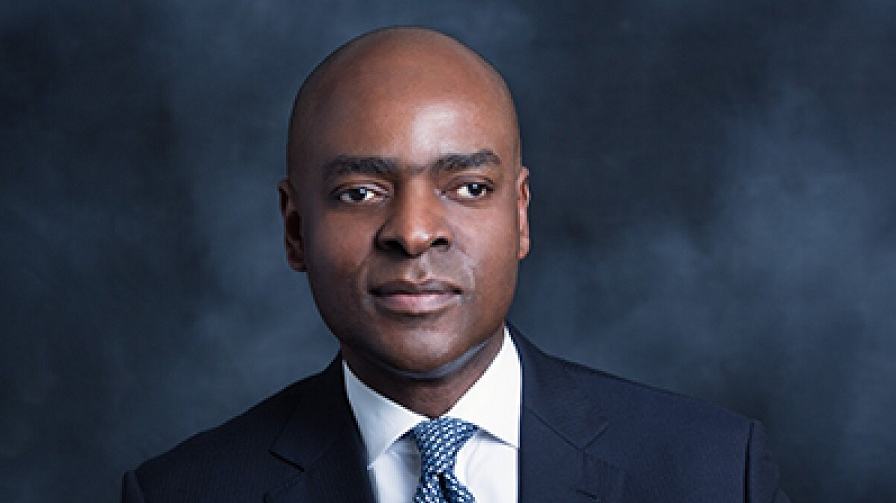
The Chief Executive Officer (CEO) of Chapel Hill Denham, Mr. Bolaji Balogun has said that the Nigerian economy is worth around $600 to $650 billion.
This is contrary to conventional estimates which puts the value of the economy at almost $400 billion.
Mr Balogun stated this while delivering the keynote address at the Annual Enterprise table and the 5th-anniversary celebration of Deal HQ Partners. The theme of the event was Economic Reset: Rethinking the Role of Nigeria’s Private Sector.
In his words,
Also Read
- “If you believe my thesis that population drives economic activity and economic growth and if you also believe my thesis today that this is not a $400 billion economy.
- This is probably today already a $600 or $650 billion economy because quite a lot of what happens in the real economy, in the Instagram economy, in the illicit economy- and not everything illicit is drugs and weapons. All of that is not measured today when you measure Nigeria’s economic activities.”
Nigeria and Africa’s unique advantages
He also spoke about Africa’s unique demographic advantages in terms of the young populace and how it will spur growth in the continent, especially Nigeria.
Speaking further, the Investment veteran enumerated industries that will catalyse Nigeria’s economic growth. For him, agriculture, solid minerals and the creative economy.
On what Nigeria has to do to ensure it takes advantage of these resources, Mr Bolaji explained that investment in infrastructure is key.
He said,
- “If you are going to deliver that potential, we are going to have to build the infrastructure to process, preserve and be able to transport and deliver value out of our agriculture.
- We need power and transportation infrastructure to bring value out of our mineral resources”
He alluded to the rapid acceleration of the SDGs as critical in realizing not just the potential of Nigeria but Africa in general.

Bolaji’s analysis holds no water. He is probably trying to justify future borrowings by this government. The solution he is recommending after Bihari borrowed trillions to develop supposed infrastructure is insulting.
Please professionals giving lectures should apprise us of new ways of solving Nigeria s development problems. Reason; we are fed up with the repetition of our challenges and the archaic solutions proffered over the years by professionals.
Buhari, I remember vividly, canvased the cooperation of the Nigerian higher institutions in solving Nigeria development problems, through research and discovery. He spent 8 good years and nothing good came out of the woods from the universities as research and discovery. All they’ve been consistently complaining about is funding. Funding is a sine qua non for the growth of not just the universities, but what the end products are- development.
To whom much is given, the wise saying affirms, much is expected. If over the years, government has been consistently budgeting, irrespective of the magnitude of earmarked allocations to the Nigerian higher institutions, it’s only fair that there’s commensurate results to show for it..
Save us these pedestrian theories. Let’s see innovation.
On the contrary, I think his guesstimate is actually on the CONSERVATIVE side and Nigeria’s GDP is closer to the TRILLION DOLLAR mark.
The reality is that the MAJORITY of economic activity in Nigeria is informal and thus largely not captured or haphazardly guesstimated in Nigeria’s GDP numbers. For example, even a housemaids/houseboys are service providers but doubtful that such services are captured in Nigeria’s GDP calculations – just as the roadside buka operator or Akara seller is an un-captured small business.
Furthermore, the reaction of virtually all Nigerian GDP calculators is to devalue Nigeria’s GDP figures in line with exchange rate devaluation – when the correct reaction should be REVALUATION!
A very good understanding of the Nigerian Economy. Wasn’t surprising though, coming from a wonderful Investment Professional. Well done Mr Bolaji.
Africa must use more of youth for political positions and stop putting the aged people in power.The Bible said old people dreams and young people have vision.
Good analysis. All we need is new innovation that we work in our environment.
Mr Bolaji lecture is highly professional and impressive..
But assumption of $600 GDP, based on Nigeria population is to me nebulous
Nigeria undoubtedly has a huge population with high percentage of youths but, with high unemployment
among youths,their contribution in the GDP, is not likely to be incremental.. Nigeria potential in this direction is high, but our youths need to be employed and that requires industrilisation and development..
The analysis given by Mr..Bolaji and his proposals
could open ways toward Nigeria economic recovery… Nigeria problems lie not in policies, ideas or funding but lack of political will in policies execution to
their conclusive logical ends- and this is highly inevitable for develooment.
I actually happen to think that Mr. Balogun’s think his guesstimate is on CONSERVATIVE side and that Nigeria’s GDP is closer to the TRILLION DOLLAR mark.
Reality is that the MAJORITY of economic activity in Nigeria is informal and thus largely not captured or haphazardly guesstimated in Nigeria’s GDP numbers. For example, even housemaids/houseboys are service providers but doubtful such services are captured in Nigeria’s GDP calculations – just as the roadside buka or Akara seller is an un-captured small business.
Furthermore, the reaction of virtually all Nigerian GDP calculators is to precipitously decrease Nigeria’s GDP figures parri passu with exchange rate devaluation – when the correct reaction should be REVALUATION – a decrease in some cases and an increase in several others!