
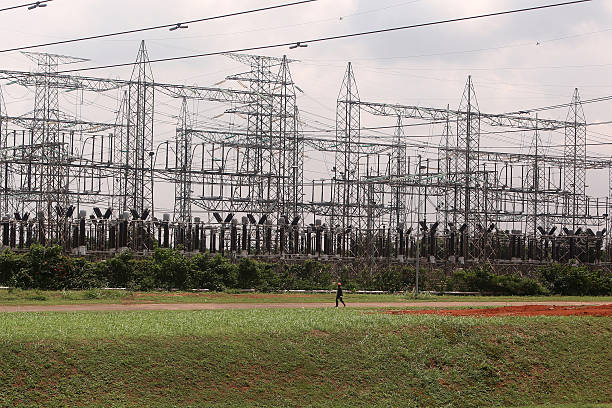
- The Nigerian Electricity Regulatory Commission (NERC) warns that a decline in crude oil production in Nigeria will result in reduced availability of natural gas for power plants, leading to an impact on electricity production.
- The latest quarterly report from NERC highlights that 75% of Nigeria’s available power generation capacity relies on gas-based sources, making it vulnerable to fluctuations in gas availability.
- The report emphasizes that most power plants in the Nigerian Electricity Supply Industry (NESI) depend on associated gas, which is produced alongside crude oil exploration.
The Nigerian Electricity Regulatory Commission (NERC) has said that a significant drop in Nigeria’s crude oil production means reduced natural gas availability for power plants, which will in turn impact electricity production.
The Commission stated this in its latest quarterly report where it addressed power generation risks in the country. According to the report, 75% of the available power generation capacity in Nigeria is gas-based.
It was also highlighted in the report that most of the power plants in the Nigeran Electricity Supply Industry (NESI) are dependent on associated gas, which is produced during crude oil exploration.


A part of the report stated:
“In addition to the seasonal variability affecting the hydro plants, the NESI also has significant challenges with gas availability with 75% of available generation capacity being gas-based. Most of the power plants in the NESI are dependent on “Associated Gas” that is, gas produced during crude oil exploration.
“This puts the plants at an added level of exposure because significant drops in crude oil production will also mean reduced gas availability to run the plants.”
Data from the Nigerian Upstream Petroleum Regulatory Commission (NUPRC) shows that Nigeria’s crude oil production has improved a little from the rate recorded in 2022 during the height of crude oil theft.
However, the country still needs to produce more oil to meet the revised OPEC quota of 1.3 million barrels per day.
Data from NUPRC shows crude oil production from January to May 2023 aside from condensate production as follows:
January 2023 – 1,258,150 barrels per day (bpd)
February 2023 – 1,306,304 bpd
March 2023 – 1,268,202 bpd
April 2023 – 998,602 bpd
May 2023 – 1,183,691 bpd
More Insights
The NERC report also pointed out gas transmission infrastructure as another potential vulnerability affecting thermal plants.
- The report stated further that since most of the plants are not co-located with gas production facilities, they obtain their gas from the national gas transmission infrastructure.
- Meanwhile, in the past, the national gas transmission infrastructure has faced challenges of insecurity as well as supply quality, specifically, gas purity and gas pressure.
According to NERC, these challenges point to a need for further diversification of Nigeria’s electricity supply mix.
NERC’s regulatory review and grid integration efforts
NERC says that it is reviewing its regulations and designing green power initiatives to mitigate these risks, including working with the Transmission Company of Nigeria (TCN) to evaluate Nigeria’s national grid’s ability to integrate grid-scale renewable energy sources such as wind and solar.
- It is important to note that the country has already taken action in making this a reality.
- In May 2023, Nairametrics interviewed Edwin Enwegbara, the Managing Director at Eauxwell Nigeria Limited, the developer of the 10-megawatt Kumbotso solar farm in Kano state.
- According to Enwegbara, Kumbotso is Nigeria’s first and largest grid-connected solar power plant.
In addition, measures during design as well as the operation and maintenance program have been put in place to ensure that the Kumbotso plant will remain active for the next 25 years.