
 Follow Us on Google Discover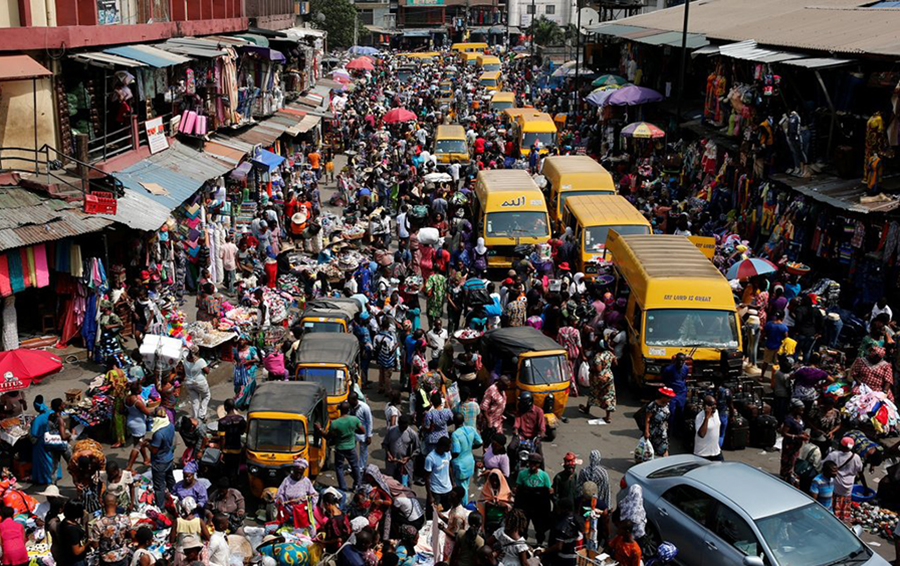
Key highlights
- A census is an official tally of people living in a specific geographic area, used to gather information on demographic, social, and economic aspects of the population.
- Nigeria’s population has been a subject of debate with varying figures, including disputes and cancelled census counts in previous years.
- The upcoming census in Nigeria is important for national development and will help harmonize the population, providing data for decision-making and planning purposes.
A census is an official tally of people living in a specific geographic area, usually a nation or region. A census is intended to gather information on a range of demographic, social, and economic aspects of the population, including things like age, gender, education, job status, income, and ethnicity. Governments, businesses, researchers, and other organizations utilize census data to help them with key choices. Typically, every family or person within the specified geographic area is given a questionnaire or survey to gather census data, in recent times and different countries across the world, the effects of the Internet have come to play and as such, this process has been digitized.
The population of Nigeria has been a subject of debate over the years with varying figures from different quarters and organizations. The United Nations Population Fund (UNFPA) puts the population of Nigeria in 2022 at 216.7 million. On the other hand, the World Bank puts it at approximately 202 million people. These varying figures have been a subject of debate among netizens as some think that the population of the country is above 200 million, while some believe that it’s well below 200 million.
Since independence, Nigeria has had four population censuses. The first was conducted in May 1962. However, the figures were disputed and later cancelled. A recount was ordered in 1963, but the figures were also rejected due to inflated from certain parts of the country. Another census was held in 1973 putting the country’s population at 79.8 million people. In 1991, another census was conducted, with the country having a population of 88.5 million people. The last census that was held in the country was in 2006, under President Olusegun Obasanjo. The 2006 figures put the country’s population at 140 million people. Nigeria has over the years had different bodies for the population census, the body currently responsible for this is the National Population Commission (NPC).
The Nigeria Population Conundrum
The Nigerian population number has been a subject of debate especially among social media users, after the 2023 general elections. Many have argued that Nigeria truly does not have the figure it will estimate to have. The credibility of the 2006 Census last held has also been questioned due to Nigeria’s population still following the template from the pre-colonial era. All census ever held in the country has been marred with irregularities.
Also Read
After the 2006 population census which put the country’s population at 140 million people set the stage for the 2007 general elections. The 2007 general elections had 61.5m registered voters and 35.3m voters at the election. The 2011 election had 73.5m registered voters and 39.4m vote cast. The 2015 election had 67.4m registered voters and 29.4 vote cast. The 2019 election had 82m registered voters and 28.6m vote cast. However, the 2023 general elections had 93.4m registered voters, 87.2m PVCs collected, but 24.9m vote cast, which makes it the lowest turnout at any election since the start of the fourth republic. This has been attributed as a reflection of the true population of the country, as the Bimodal Voter Registration System (BVAS) was used to accredit voters, making it not to be business as usual.
Also, the National Identification Number (NIN) shows a glimpse of what Nigeria’s actual population could be. The National Identify Management Commission (NIMC) is the organization vested with the power to capture the country’s data. It was established by the NIMC Act No 23 of 2007. The NIN has details such as fingerprint, facial recognition, and sex, among others of Nigerians that register. As of January 2023, the total registration for NIN in the country stood at 95m. The top five state includes Lagos with 10.5m, Kano with 8.3m, Kaduna with 5.6m, Ogun with 3.9m, and Oyo with 3.7m. The NIN is important to the average Nigerian as almost nothing can be done in the country as regards data capturing without the NIN.
Is the Northern population a means of political power?
One of the controversial debates is the true number of the population of northern Nigeria. The population of the north since time immemorial has always been much more than the south. Across the world, it’s noted that deserts and semi-arid regions like the North are less populated compared to the south. However, the Nigerian case is different. Also, during general elections, the votes from the “K or Kardashian” states (Kano, Kaduna, and Katsina) are used to determine the winner of the election. Many are sceptical of this due to reports of the north having reports of underaged voters.
One of the questions cynics have asked is, despite having a huge turnout of votes during the electioneering campaign, the north struggles with economic development. Interestingly, there are more bank branches in Lagos than in the whole of the North West and North East combined as of 2020. Add the bank branches in the North Central, Lagos still edges it out.
The United Nations (UN) recommends that a population census should be conducted at least every decade. Nigeria last had one 17 years ago, and with a census scheduled for the coming months, this is what it means for the country.
Planning for National Development
Asides from the fact that the upcoming census will harmonize Nigeria’s population, it will also help in different ways from social to economic and development roles. One characteristic of a population census is that it is used to elicit data such as population, age, sex, and religion, among others. Nigeria as at different times has different national development plans. With a varying population, the government of the day cannot effectively plan for the citizens as they do not have an accurate figure of the citizens. The standard of living and social and economic status of citizens is important for the government to effectively plan the social amenities that each region, state, or area needs.
Also, it could help accelerate the country’s plan for restructuring as the criterion needed to achieve this and more will be gotten from the census.
The political landscape
The population census could change the political landscape and dynamics of the country. In Nigeria, there are 774 Local Government Areas (LGA) spread across 36 states with varying numbers based on the states. Asides from the state’s House of Assembly, each state elects three members with one from the FCT to make up the 109 senators in the upper chamber of the country’s legislature. However, for the house of representatives, the number varies as there are 360 members elected during national elections. For instance, Lagos and Kano State have the highest federal constituencies with 24 each. A population census after 17 years could change the country’s political landscape as more numbers might be needed after the conduct of the census due to development within some areas and the number of individuals living there.
Stimulate economic growth
Economic growth is one of the bedrock of every successful government. With citizens of the country divided into age groups, the government of the day can build on this to create economic policies that I’ll stimulate growth across the country. One of these is that individuals who are of taxable age will be determined and this can help the government properly have a robust tax system. Also, it will help in attracting investors into the country and setting up businesses across the different parts of the country.
Plan for the future
The current estimate used for Nigeria’s population is based on the projections from the last population census. According to reports and projections, Nigeria is expected to be the third most populated country in the world by 2050. The population census will serve as a measure for the government and successive ones to properly plan to ensure that the country’s resources are well utilized, and the economy is improved upon.
The NPC should ensure that it does not allow irregularities to mar this process as it is crucial to the country’s growth. Also, the president and also stakeholders should ensure that measures are put in place to not have a repeat of waiting for more than the recommended number of years for a population census to hold.

how does a person sees himself or how does a person on how does another person see himself/herself, a person is made up ,many part,if a person does not utilizes,his political power.IT MEANS, HE HAD OTHER MEANSOF UTILIZING HIS INDIVIDUAL POWER
Nature abhor vacum,for a registered voter of 93.4 millions voter,and only 24.9 million voters was used,it means,they have another means of using power,they used economic power.the major problem is that young nigerians are too angry,they wants changes very rapidly