• Login
  • Register
Nairametrics
  • Home
  • Exclusives
    • Recapitalization
      • Access Holdings Offer
      • Fidelity Bank Offer
      • GTCO Offer
      • Zenith Bank Offer
    • Financial Analysis
    • Corporate Stories
    • Interviews
    • Investigations
    • Metrics
    • Nairalytics
  • Economy
    • Business News
    • Budget
    • Public Debt
    • Tax
  • Markets
    • Currencies
    • Cryptos
    • Commodities
    • Equities
      • Company Results
      • Dividends
      • Public Offer & Right Issues
      • Stock Market News
    • Fixed Income
    • Funds Management
    • Securities
  • Sectors
    • Agriculture
    • Aviation
    • Company News
    • Consumer Goods
    • Corporate Updates
    • Corporate deals
    • Corporate Press Releases
    • Energy
    • Entertainment
    • Financial Services
    • Health
    • Hospitality & Travel
    • Manufacturing
    • Real Estate and Construction
    • Renewables & Sustainability
    • Tech News
  • Financial Literacy
    • Career tips
    • Personal Finance
  • Lifestyle
    • Billionaire Watch
    • Profiles
  • Opinions
    • Blurb
    • Market Views
    • Op-Eds
    • Research Analysis
  • Home
  • Exclusives
    • Recapitalization
      • Access Holdings Offer
      • Fidelity Bank Offer
      • GTCO Offer
      • Zenith Bank Offer
    • Financial Analysis
    • Corporate Stories
    • Interviews
    • Investigations
    • Metrics
    • Nairalytics
  • Economy
    • Business News
    • Budget
    • Public Debt
    • Tax
  • Markets
    • Currencies
    • Cryptos
    • Commodities
    • Equities
      • Company Results
      • Dividends
      • Public Offer & Right Issues
      • Stock Market News
    • Fixed Income
    • Funds Management
    • Securities
  • Sectors
    • Agriculture
    • Aviation
    • Company News
    • Consumer Goods
    • Corporate Updates
    • Corporate deals
    • Corporate Press Releases
    • Energy
    • Entertainment
    • Financial Services
    • Health
    • Hospitality & Travel
    • Manufacturing
    • Real Estate and Construction
    • Renewables & Sustainability
    • Tech News
  • Financial Literacy
    • Career tips
    • Personal Finance
  • Lifestyle
    • Billionaire Watch
    • Profiles
  • Opinions
    • Blurb
    • Market Views
    • Op-Eds
    • Research Analysis
Nairametrics
Home Sectors Energy

Confusion as Peter Obi wants fuel subsidy removed but NLC does not

Omono Okonkwo by Omono Okonkwo
January 19, 2023
in Energy, Exclusives, Politics
Peter Obi

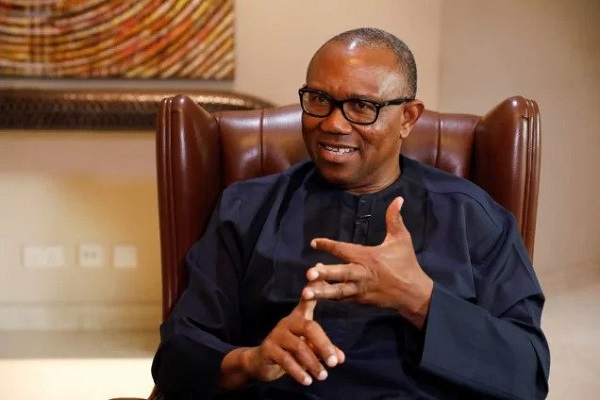
Presidential candidate of the Labour Party, Peter Obi

Share on FacebookShare on TwitterShare on Linkedin

The presidential candidate of the Labour Party, Peter Obi, has repeatedly declared his intention to end Nigeria’s fuel subsidy regime if elected president. 

But as it turns out, the Nigeria Labour Congress (NLC) is very much against any plan to remove fuel subsidies in the country. And this has created confusion among Nigerians, seeing as there is a strong tie between the Labour Party and the NLC.

The connection between LP and the NLC: The Labour Party is the brainchild of the NLC and Nigerian workers. In July 2022 interview, NLC President Ayuba Wabba confirmed that the Labour Party was registered and promoted by the NLC and working Nigerians. 

MoreStories

Meet the women transforming Nigeria’s $2.5 billion aviation industry

Meet the women transforming Nigeria’s $2.5 billion aviation industry

March 1, 2026
OPEC+ to raise oil output by 547,000 bpd in September as market stabilizes  

OPEC+ approves hike in oil production as Gulf crisis escalates

March 1, 2026

He also disclosed that statutorily, the NLC and the Trade Union Congress (TUC) are members of the Central Working Committee and the National Executive Council of the Labour Party. However, neither the NLC nor the TUC micromanages the party. 

Where the contradiction lies for Obi and NLC: Peter Obi has repeatedly stated that fuel subsidies will be removed immediately after he becomes president, if he ever does. It may strike some people as odd that Obi wants to remove subsidies as a Labour Party candidate when the Nigerian Labour Congress (NLC) has vehemently opposed the removal of fuel subsidies for years. 

In January 2023, the President of the NLC issued a statement highlighting the fact that in the face of rising inflation and difficult economic conditions, the Nigerian worker has not had the luxury of an increase in salaries. So, it would be unfair to remove fuel subsidies, without at least attempting to resolve some outstanding issues. He said:  

  • “Pronouncements by some leading presidential candidates to remove petrol subsidy if elected to office do not address recovery of local refining, affordable refined products, decent jobs, economic expansion, wealth generation, and shared prosperity.  
  • “The penchant to mouth subsidy removal as a solution to government’s criminal neglect of our public refineries is not only wicked, but also betrays a predilection to lazy quick fixes, surrendering our economy to foreign interests, transfer of government inefficiency on Nigerians, and enslaving our people with poverty and hardship.” 

Wabba also pointed out the effect the removal of kerosene and diesel subsidies have done on businesses and households, as many Nigerians can no longer afford the commodities.  

So, as the NLC is opposed to fuel subsidy removal and the Labour Party candidate, Peter Obi is in support of the removal, isn’t that a clash of interests? As earlier noted by Wabba, the NLC wants the country to be self-reliant in crude refining before the fuel subsidy removal is carried out.  

Can 100% refining capacity make a difference? In its Public Finance Review report of November 2022, the World Bank notes that increased domestic petrol refining will have little effect on the cost of petrol supply and will not reduce the fiscal burden of the petrol subsidy materially. The World Bank suggests that Nigeria supplies petrol to consumers by either selling crude oil to the highest bidder and importing petrol from the lowest-price bidder or refining domestic crude to produce petrol and other fuels.  

  • The oil revenue accruing to the government should be the same in both cases, as domestic refineries should purchase crude at the prevailing international price. The savings from switching from imports to domestic refining would arise from shipping costs, which are about $0.01–0.04 or ₦4–17 per litre.  
  • The report also notes that benchmark petrol prices are set in the major global refining centres, where economies of scale and other sources of efficiency enable refiners to keep the cost of refining low, offsetting the disadvantage incurred by shipping costs. 

The need to remove the petrol subsidy: To finance the subsidy, the government must increase its borrowing, raise additional revenue elsewhere, or reduce spending on other public goods and services. This will only result in hindering growth and weakening the fiscal accounts.  

  • Stakeholders note that petrol subsidy payments prevent consumers from adjusting their purchasing behaviour in response to changes in the cost of supply and create financial incentives to overconsume petrol, resulting in a loss of consumer surplus.  
  • Also, the subsidy distorts relative fuel prices, encouraging the use of petrol even when other energy sources like clean energy, might be more efficient. 


Add Nairametrics on Google News
Follow us for Breaking News and Market Intelligence.
Tags: Fuel SubsidyNLCPeter Obi
Omono Okonkwo

Omono Okonkwo

Omono Okonkwo is an accomplished Mass Communicator, with a remarkable track record spanning over a decade across various dimensions of the field. Her proficiency encompasses Print, Digital, and Broadcast Journalism, Copywriting, Research and Writing, Podcasting, Public Speaking, as well as a comprehensive grasp of Energy Markets. Her engagement in energy market coverage commenced officially in 2016, as she assumed the role of a country correspondent (Nigeria) with Natural Gas World, a subsidiary of Minoils Media based in Vancouver, Canada. Since then, Omono Okonkwo has consistently demonstrated excellence and left an indelible mark on the ever-evolving energy sector.

Next Post
Fuel queues have resurfaced in Abuja, 3 days to gubernatorial elections 

Fuel scarcity hasn't ended despite fuel supply efficiency claims by NNPC

Leave a Reply Cancel reply

Your email address will not be published. Required fields are marked *

rabafast

nairametrics


DUNS

Follow us on social media:

  • HOME
  • ABOUT NAIRAMETRICS
  • CONTACT US
  • DISCLAIMER
  • ADs DISCLAIMER
  • COPYRIGHT INFRINGEMENT

© 2026 Nairametrics

Welcome Back!

Login to your account below

Forgotten Password? Sign Up

Create New Account!

Fill the forms below to register

All fields are required. Log In

Retrieve your password

Please enter your username or email address to reset your password.

Log In
Social Media Auto Publish Powered By : XYZScripts.com
No Result
View All Result
  • Home
  • Exclusives
    • Recapitalization
      • Access Holdings Offer
      • Fidelity Bank Offer
      • GTCO Offer
      • Zenith Bank Offer
    • Financial Analysis
    • Corporate Stories
    • Interviews
    • Investigations
    • Metrics
    • Nairalytics
  • Economy
    • Business News
    • Budget
    • Public Debt
    • Tax
  • Markets
    • Currencies
    • Cryptos
    • Commodities
    • Equities
      • Company Results
      • Dividends
      • Public Offer & Right Issues
      • Stock Market News
    • Fixed Income
    • Funds Management
    • Securities
  • Sectors
    • Agriculture
    • Aviation
    • Company News
    • Consumer Goods
    • Corporate Updates
    • Corporate deals
    • Corporate Press Releases
    • Energy
    • Entertainment
    • Financial Services
    • Health
    • Hospitality & Travel
    • Manufacturing
    • Real Estate and Construction
    • Renewables & Sustainability
    • Tech News
  • Financial Literacy
    • Career tips
    • Personal Finance
  • Lifestyle
    • Billionaire Watch
    • Profiles
  • Opinions
    • Blurb
    • Market Views
    • Op-Eds
    • Research Analysis
  • Login
  • Sign Up

© 2026 Nairametrics