
 Follow Us on Google Discover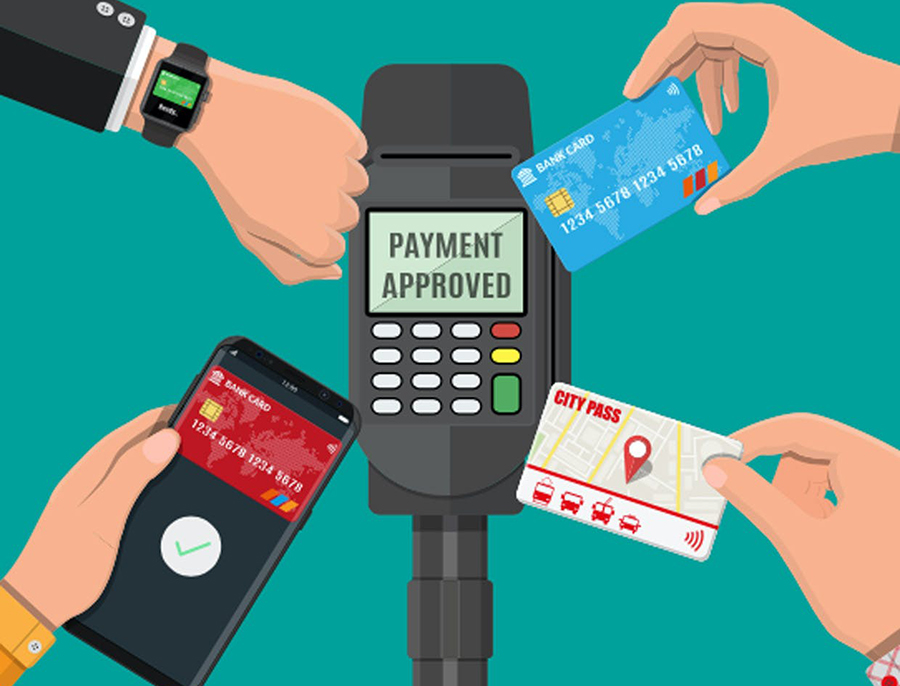
Nigeria’s journey to a cashless society started in 2012 when the Central Bank of Nigeria (CBN) introduced a cashless policy to eliminate the drawbacks of a cashless economy.
In the initial stage in 2012, it proposed N150,000 and N1,000,000 as limits for individuals and corporate bodies. This was later reviewed upwards to N500,000 and N3,000,000 for individuals and corporate bodies, respectively.
There is a popular belief that the cashless policy was designed to eliminate total cash or physical money. However, a cashless policy is only intended to reduce the use of cash to the barest minimum.
- Note that technologically advanced countries across the world still make use of cash in daily transactions.
- Over the years, successive governments have tried to introduce, implement and integrate one form of cashless policy or the other into the economy. Most notably, the CBN, under Governor Godwin Emefiele, launched the eNaira in 2021. The launch was geared toward a cashless society and is used exactly like a physical naira. Its equivalence is equal to the physical naira with 1 eNaira equalling N1.
- The eNaira was introduced to complement the naira and make transactions easier and fast.
- Also, on November 23, 2022, President Muhammad Buhari launched the recently redesigned N200, N500, and N1000 banknotes. In a similar vein, the CBN announced that effective from January 9, 2023, the maximum cash withdrawal over the counter will be N100,000 and N500,000 for individual and corporate bodies, respectively.
- This was all in a bid to implement a cashless policy in the country. Here are reasons why Nigeria will be better off as a cashless society.
Improving the Informal Sector: Nigeria as a country is cash-based and heavily reliant on the informal sector. This makes a cash-based economy and thriving informal sector mutually inclusive.
Also Read
Petty traders that do not have access to banks miss out on potential revenue which affects their incomes. According to a report by A.T Kearney and VISA on Digital Payments and the Global Informal Economy spanning over ten years from 2007, Nigeria tops as the country with the highest informal sector.
The top contributors to the informal sector in Nigeria include agriculture, forestry, fishing, wholesale & retail, trade, and manufacturing. The informal sector in the country is unregulated, making it a sector where ‘anything goes.
A cashless society will help in making the sector much better. The sector is heavily cash-based which makes it a breeding ground for inequality, unfavourable working conditions, and non-compliance with government rules like minimum wage.
A cashless society will address this as the sector’s activities will be monitored and also regulated.
It will improve taxation: In 2021, the Chairman of the Federal Inland Revenue Service (FIRS) Mohammed Nami said that the agency has 41 million taxpayers, with at least 49 million tax evaders across the country.
This has made Nigeria’s tax revenue relatively lower compared to its counterparts such as South Africa which has a much smaller population, especially as regards Personal Income Tax (PIT).
A cashless society will mean everyone’s transactions are done electronically. The implication is that everyone will be under the radar of the government, thus helping the government to generate more revenues through taxes and also encouraging and promoting transparency and accountability on the path of the citizens and government.
It will tackle corruption: Kick-backs are mostly synonymous with Cash. According to the governor of the Central Bank of Nigeria (CBN) Godwin Emefiele, as of September 2022, N2.73 trillion of N3.2 trillion of the currency in circulation is outside the vaults of the commercial banks. The implication is that these funds are stashed in the hands of individuals and most government officials who acquire them illegally.
In the aftermath of the announcement from the CBN to redesign the naira, a lot of cash stored away was discovered and cash of different values from years ago surfaced. Moving to a cashless society will automate every transaction and make it accessible if the need arises. These will reduce corruption to the barest minimum as payments or transactions made are recorded.
Lower cash printing cost: Every year, the CBN, commercial banks, and financial institutions spend a huge amount of money to print, handle, safeguard and transfer money from one place to another. Moving to a cashless society will eradicate all this and make transactions stress-free and easy and can be done at a convenient time.
Data Implementation: A cashless society will aid data processing and storage in the country. Since every transaction will be done electronically, data can be gathered from this without breaching the privacy of the citizens. For instance, the government can get data on the number of people living in a particular place or area. The data can help the government make good and informed decisions and also policies that will improve the lives of the citizens.
Accessibility and reliability remain threats to a cashless Nigerian society. A large percentage of the Nigerian population does not have access to the Internet or smartphones which will enable them to function optimally. Also, the reliability of network providers
The challenges currently faced by customers of banks in Nigeria are a threat. The level of education in the country is another problem. The government should ensure it embarks on financial literacy and inclusion to ensure that both the banked and unbanked have access to a cashless Nigeria.


There is no doubt that the more cashless we are the better. However, there are so many variables to be considered and resolved before we get to the promised land chiefly amongst these are telecoms coverage and capacity, failed transaction cycle, receipting, developing understanding of riural dwellers etc
The only reason the policy was made was to transfer wasteful government spending and debt to its citizens in for of imposed taxation.
Also if one want to make a train they must work first on the railway. Poor medium for cashless transactions and poor infrastructure cannot be suitable for the people of the nation.