
 Follow Us on Google Discover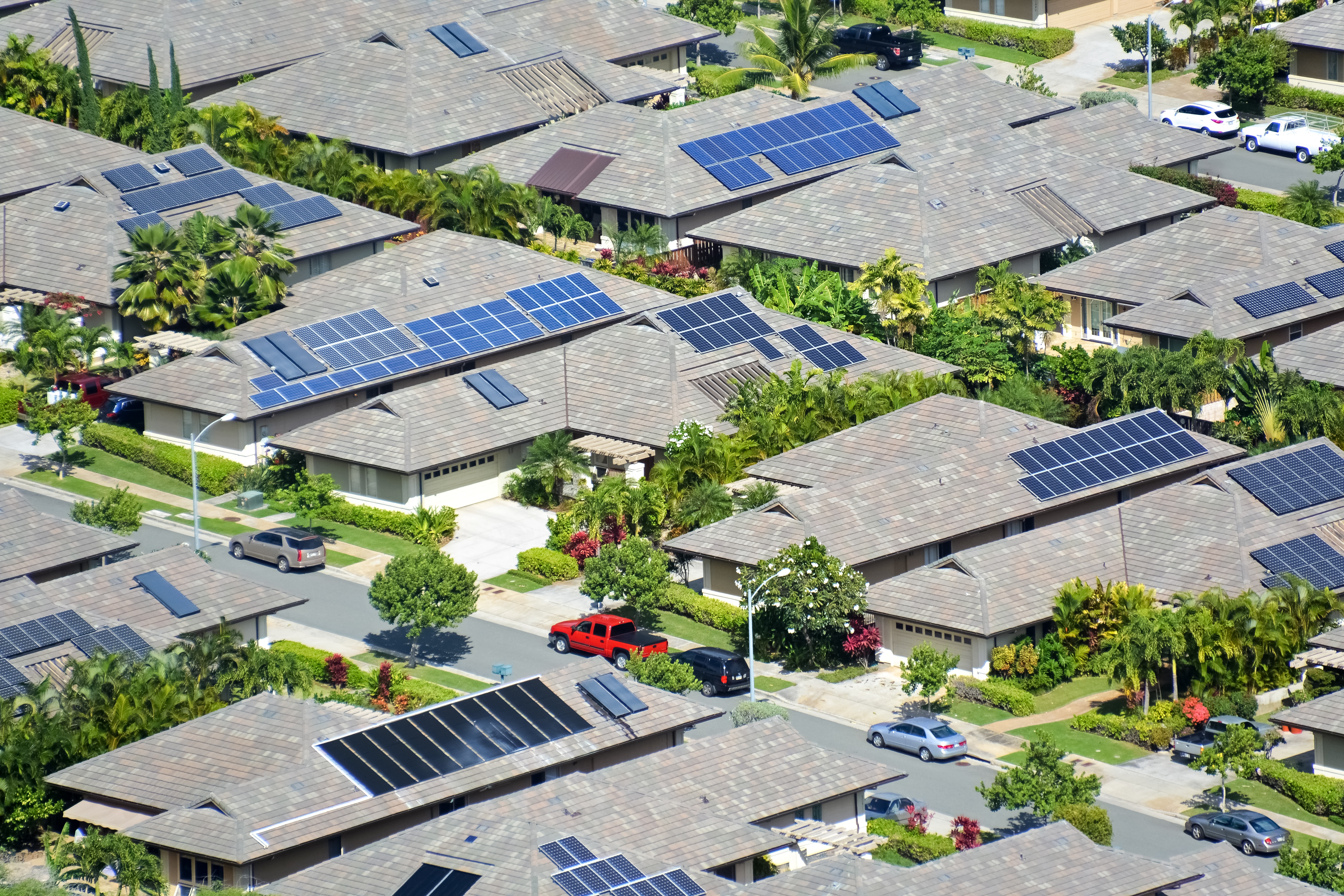
Mr. Tosin, a senior executive at a Nigerian company was pondering what was the most efficient way to get at least 20 hours of power daily.
Prior to May 2022, Mr. Tosin relied on the power grid to give him approximately 14 hours daily. He then complimented this with Generator power to provide 5 hours to 6 hours daily for which he consumed 50 litres of AGO diesel per week (i.e. 200 litres per month)
Unfortunately, the astronomical surge in energy prices in 2022 meant that his diesel bill had spiked from N48,000 (200 Litres x N240) to N140,000 (200 Litres x N700).
This large spike was a cause for concern, thus resolving in a decision to consider solar-powered inverters to augment his power supply or as he was informed by a vendor; completely replace the other sources of Grid Power and Generator power.
However, his reality turned out to be different from his expectations.
So why solar as an alternative?
The pitch from the Solar firm to Mr. Tosin was pretty simple to make:
- With a 10KVa solar inverter, all his electronics, including refrigerators will be powered by the inverter
- the grid would then power his air conditioners, heaters, electric cookers, and microwave ovens.
- Therefore his generator power bill could potentially drop significantly to close to zero.
The cost of installation was about N4 million depending on the type of panels, batteries, and other equipment he was using.
- Therefore a payback period of fewer than 2.5 years or less with the rising costs of diesel.
- In other words, spending a one-off N4million would be cheaper than spending N140k on diesel in infinity
What he however did not envisage were some hidden costs that are often excluded when vendors of renewable power make their pitch.
The economics of Solar Powered Inverters
The economics of solar power for retail use includes several cost components which as direct and indirect depending on the capacities, quality and service demanded.
Direct cost items
- Nairametrics research suggests that on average, a typical 10kVa solar-powered solution could cost between N3million to N5million to purchase and install.
- Note that this depends on the components of the solution such as wattage of the solar panels, number of batteries and type of battery, the inverters, and converters.
- Using an average of N3 million as installation cost, we can attempt to discuss the true total cost of owning a solar-powered inverter.
This N3million initial outlay suggests a monthly amortized cost of N62.5k monthly over 4 years.
- This is based on the average 48-month suggested useful life of some solar batteries typically sold in Nigeria.
- On the surface, Solar powered setup costing N62.5k monthly over 4 years compares favourably to doling out N140k monthly on diesel.
- You may also save some money from not having to rely on grid supply for your energy needs.
However, from surveys carried out by Nairametrics, the N62.5k is simply NOT the only cost borne by buyers of solar-powered solutions.
Other costs include
- The costs of continually recharging the batteries especially if the grid supply is unavailable.
- The need to purchase replacement batteries at regular 36month to 48month intervals. These battery replacement costs continue to increase and can be substantial depending on the number of batteries installed.
- Ultimately, the quality-of-life sacrifices users need to make due to the limited capabilities and capacity of Solar powered offerings. Especially where appliances such as multi-location cooling units and refrigerator systems have to be disconnected to allow for smaller appliances.
A user’s experience – As in the case of Mr. Tosin, the 10KVa solar installation he has can only power two 1.5hp airconditioners and he cannot use them at the same time. In addition, when he does uses any of the airconditioners overnight, the batteries drain out before daybreak.
- When he reached out to his solar power providers, they told him he will need to charge the batteries for at least 4-6 hours daily with grid power or the diesel power generators he so badly wants to ditch.
- They explain that sunlight in Nigeria is not strong enough to power the inverters to last for a whole day.
- And even if it does, he will need to spend more on batteries which is also not a guarantee despite the enormous cost.
- Things can often be worse when there is a lot of rain or the weather is windy with limited sunshine.
To charge a 10KVa inverter for 5 hours, it will require at least 40KWh of power daily at a power factor of 0.8. Assuming what is being used is the grid, that could cost about N2,000 per charge or N60k monthly assuming he does this daily.
Another user, Emeka reveals he opted for liquid batteries which last longer but require you to change the “water” twice a year. However, the same solution requires a frequent charge with grid or diesel-powered generators to deliver expected uptime which is also not up to 24/7 power.
Community Pricing: The same challenges retail users experience with solar inverters are also faced by large-scale renewable energy providers who target the rural areas or communities where power supply is not available or are very minimal.
- Players in the sector inform Nairametrics that to achieve a tariff of between N120/KWh and N150/KWh they also rely on a blend of diesel-powered generators in the grid to deliver an effective power supply.
- Diesel generators or grid supply will often come on for at least 6 hours a day to ensure the solar-powered solutions deliver uptimes. Even at that, the solutions cannot power luxury appliances such as air conditioners, heaters, and other high-energy demanding equipment.
The examples above suggest the cost of retail purchase of solar power inverters is way above the means of the ordinary Nigerian. To afford such a 10KVa solution, your salary or income will have to be above N20 million annually at the least.
Sunshine State
According to the World Bank, Electric power consumption (kWh per capita) in Nigeria stands at 144.52kwh (compared to over 5,500 in Europe) while other sources put it even lower at 123kWh.
- According to data from the Nigerian Electricity Grid, the electricity grid sent out an average 80,000MWh daily this year. In very good periods of improved power supply, the grid sends out as high as 105,000MWh daily to achieve over 17 hours of power daily on average.
- To achieve a 24/7 reliable power supply, the amount of power sent out by the grid will have to be north of 200,000MWh, this is in addition to drastically reducing outages.
- The cost of achieving this level of power supply is likely $5 billion annually achieved 24/7 power according to industry estimates. This is where the affinity for solar power is typically recommended.
Sunshine State: Information from the website of the Renewable Energy Association (REAN) indicates Nigeria receives about 6 hours of sunshine per day. They also cite a report by the European Union, which also states that Nigeria can theoretically achieve 42,700MW of solar power from just 5% of suitable land in the Central and Northern parts of the country.
- So theoretically, this will imply solar power may just be the right solution Nigerian needs to meet the demands of a steady and reliable power supply.
- In practice, achieving this level of reliability will have to be achieved by blending solar power with gas or diesel-powered supply which is by far expensive when compared to just delivering reliable electricity from the grid or from alternative sources such as gas.
- While the cost of solar-powered electricity has fallen over the years due to improvements in battery storage technology it is still years away from being an affordable and reliable source of electricity.



Solar will only be comparatively cheap when you remove the battery factor. By this I mean if it was possible to generate power and feed into the grid. That way you “nil off” or subtract generation from consumption. Sadly the option to feed into the grid isn’t possible here yet. For now, all we get is some form of “convenient stop-gap” between a blackout and when the grid comes back on. By convenience I mean the effort expended to go fetch the diesel and all the effort also expended running the generator.
I am a solar energy system engineer. I design the system and also do installations.
All the write up here have some untold stories. The solar vendors failed to design the right system for the need of the client. When you design a system, give it a take off power to enable the inverter to execute off battery mode, then design it to also charge the battery to full capacity in exactly 5hrs. Then ensure the total load of the system is what the battery bank is designed for. Once all this is in place, your system will work non stop and effectively. Solar is energy you can utilize and still sell to your neighbor
I also didn’t go with this your findings, because, your research doesn’t capture large sample when it comes to people using Solar systems and the type of Engineer that design and install the Solar system.
In this scenario, you can’t use this stratified research for general Conclusion/Comparism
I am a Solar Engineer, and I bet you,if you meet the right Engineer, you will thank me that you made the right choice,
Are you aware that there are some batteries that can last up to 5years? And even more
Solar electricity is reliable, very reliable but it’s not affordable. In a bid to preach it as affordable, many vendors will lure you in with wild promises then start to chip in the true expenses later as you complain thus making many customers grossly unsatisfied
We should encourage the average household to install solar with Inverter and battery bank with the proviso that the load exclude luxury equipments with high power demand. This will decrease the current high demand on the grid supply which is unreliable anyway and at times not available. Solar generated power supply is reliable most of the year even during the wet season. My diesel gen is on forced vacation now because of high diesel cost and unreasonable operational cost. I want to see a Nigeria without the proliferation of noisy generators in say 10 years time. Thanks
Solar Power System still remains a reliable alternative and stance a gap in the energy industry
In the pricing yes, initial cost is always higher but on the long run it’s cheaper to maintain. Also note there are different batteries in the market, for someone who wants a quality installation, Lithium Batteries Technology can give you 8-10 years working lifespan, so solar works for a user who is willing to do the right thing and also manage his load depending on the capacity he/she is able to install.
However some solar power vendors can actually contribute to the malfunction likewise the customers, it’s always advisable as a customer that intend to get a solar power to get a reputable company into the service so as to get better result instead of just any solar vendor who may know little about the best approach.
Thanks to the writer for these revelations. It would really help us make more informed decisions when considering solar power installation.
thanks for pointing out his simplistic analysis. The entire analysis gives the impression that charging via solar panels isn’t plausible, when i daily charge my system through this means. My backup generator hasn’t been used in over 3 months and my batteries have just completed 7 years if use after installation. As with all things, a properly designed system will perform creditably and last.
The use of solar inverter as an alternative source of power is very much efficient and durable. In your write up (writer), you never mentioned off-grid. If you emphasize on off-grid, there will be no need for burning of diesel. What you talked about is grid-tied. Running on diesel generator also has a huge disadvantages on climate and also the cost of maintenance is high compared to solar. Let’s be wise.
In as much as many of the points laid out are true, i still believe alternative sources of power is the best way to go and i will use my own example. The user has to bear in mind that alternative power (AP) is not to totally discontinue the use of the usually power supply. It is to complement it. I bought my 1,5kva inverter in 2018 for my flat. Coupled with some solar panels. I bought two tubular batteries and i change the water every 6 months. Now i still rely on the national grid to charge the batteries thanks in part that the light situation has improved. And i get to charge my batteries during the day thanks to my solar panels whenever there is no light. I get to use my inverter at night and during the day whenever lights goes off. I did not connect it to freezers or a/c as the load would be too much, It wont power them anyway. I just made sure i got some rechargeable fans and normal fans to use at night. The essence of my inverter is mostly to provide comfort at night and i must tell you it works. I can watch, charge my laptops, phones, illuminate the house. I don’t have to turn on the generator at night most times. I only do that if there is a prolonged blackout mostly from collapsed grid and issues like that and we have to power on the freezer. My usage of generator has reduced drastically. The noise pollution associated with it as also reduced greatly. The only cost of my inverter is the usually change of water which cost me 3k per year. For those who use it for official purposes, their experience might be different but for residential purposes, it is the best.