Follow Us on Google Discover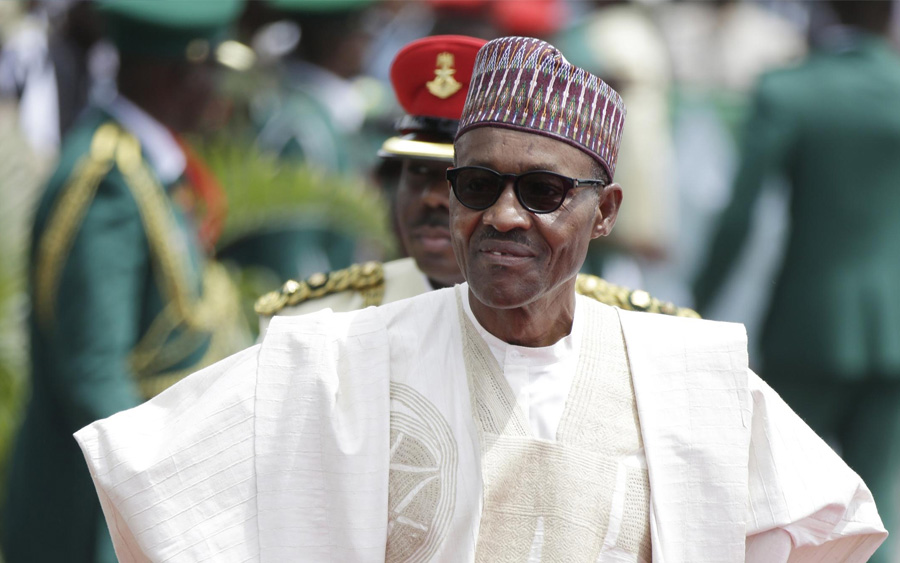
President Muhammadu Buhari’s victory at the polls in the early hours of Wednesday 2019 signaled the end of a very feisty election. It also confirms that the former military dictator will be in power for another 4 years.
For his teeming supporters, this was a hard-fought victory that the president will view as a support of his economic, political, and social policies. For the main opponent, People Democratic Party’s Waziri Abubakar Atiku, this was a result too bitter to accept. For many of his supporters, this is a return to Buharinomics, which they believe has contributed in no small measure to the poor economic growth currently being experienced by Nigeria.
For the neutrals in this election, the socio-economic impact of this election rings loud in their minds as they can only hope that the years of sufferings starts to translate into tangible economic development evidenced by an improvement in their lives.
By May 29th, 2019, President Buhari will formally begin his second term and only then can we start to track the impact of his economic policies. However, going by his antecedents we can to a large extent determine some key policies/projects expected in his second term.
Also Read
Stable foreign exchange rate – The Buhari administration has expressed a preference for a stable exchange rate, even at the expense of burning through the country’s foreign exchange reserves.
Irrespective of a new CBN Governor being appointed, or Godwin Emefiele having a second term, this is unlikely to change.
In fact, the exchange rate debacle is a cornerstone of Buharinomics and it will be a huge shock if the president were to love towards a floating exchange rate.
Some critics strongly believe the exchange rate might even depreciate to as much as N500 citing Nigeria’s rising debt to service ratio as a reason. Nigeria currently spends about N60 of every N100 in revenue servicing both local and external debts. Will the exchange rate remain stable by 2023 or will it depreciate further?
Double down on infrastructure – The Buhari administration has largely focused on infrastructure projects in the country, raising over N100 billion from Sukuk bonds to rehabilitate roads, as well as key rail projects like the Lagos Ibadan rail line.
In his second term, Landmark projects that may be completed in his second term include the second Niger Bridge, Mambilla power project and Lagos Calabar coastal railway.
Some of his critics believe these initiatives came alive because of the impending elections and suggest it may be abandoned now that he has won a new four-year term.
More support for agriculture – The Buhari administration has supported agriculture immensely with over N100 billion disbursed as loans through the anchor borrowers‘ scheme, as well as reactivation of fertilizer blending plants through the NSIA. The CBN also banned items such as rice and palm oil, from the official foreign exchange markets.
From all indications, this will be maintained in his second term, with a possible ban of fertilizer from official foreign exchange markets. Critics hate the fact that the government is banning fertilizer in exchange for encouraging local production citing capacity utilization issues and high cost of production.
Tax drive will go higher – The Federal Inland Revenue Service is likely to embark on a much tougher tax drive. While the FIRS attained an all–time high (in Naira terms), tax revenue will be sorely needed due to the large budget deficit.
As mentioned above, Nigeria’s huge debt to service ratio may be bridged by increased tax receipts, an option the government has vigorously pursued in the last two years.
The FIRS had taken a somewhat draconian step when it requested banks to freeze bank accounts of defaulting companies. Nairametrics has received reports from several quarters that they have seen their bank accounts frozen without notice. Bank’s explain they are only acting under the instruction of the Federal Inland Revenue. Though the order was suspended for thirty days, this may the first of several measures to meet its target.
Subsidies will remain – The Buhari administration has shown an unwillingness to remove electricity and fuel subsidies despite a mounting cost. In its view, doing so may increase hardship for the everyday Nigerian.
Fuel subsidies may be cut but are highly unlikely to be removed totally. The government will most likely adopt the same measure for the power sector, providing more intervention funds at the genco segment.
Privatization on pause – While the 2019 budget earmarks proceeds from the privatization of state-owned enterprises, as a source of funding, very little is likely to happen here. Bills privatizing the Nigerian National Petroleum Corporation (NNPC) will not make much progress.
Thus, billions of dollars in investment may continue to elude this sector due to the delays in passing this bill. Also, the planned concession of several of the country’s airports is expected to be delayed with the government preferring to upgrade our airports using its funds. The government could also take another shot at a National Airline even as it faces mounting pressures to merge Aero and Arik air, two local airlines it nationalised some years back.
Ease of doing business – The Buhari government in its second term, will continue to improve on the ease of doing business within the country. The administration had taken a few steps like improving electronic processes at the Corporate Affairs Commission (CAC) and providing visa on arrival for foreign investors. This one of the most positive things the government has done and we expect them to double down on this.
Electricity- The Buhari administration has over the last three years failed to record any significant progress in the power sector. Concerns around cost reflective tariffs have mounted stunting significant investment in one of the most critical sectors of the economy.
Rumours suggest there is appetite for the government to nationalize the Discos again or revisit the privatization. Whatever decision the government takes will require significant investment in by the industry which may not be unlocked without raising tariffs.