
 Follow Us on Google Discover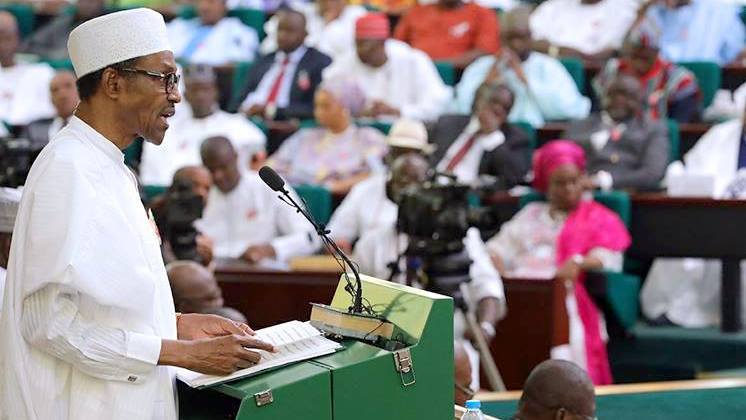
Nigeria: FY17 budget – Ambitious revenue target
Nigeria’s strategy to get the economy out of recession is captured by the following phrase: ‘grow what we eat, and consume what we make’. With this phrase, President Muhammadu Buhari presented a FY17 budget outlining expenditure of NGN7.3trn, a 20% increase vs the FY16 projection. This budget is premised on an ambitious 28% increase in revenue to NGN4.9trn. As revenue in September was 25% below the pro-rata full-year projections, we struggle to see how the Federal Government of Nigeria (FGN) will meet this projection.
‘Grow what we eat and consume what we make’
With the FY17 budget, the FGN plans to pull the economy out of recession and wean it off crude oil, via agriculture (by ultimately making Nigeria self-sufficient in food) and manufacturing (by producing what Nigerians consume, including petrochemicals, cement and light manufacturing products). We like the plans to focus on “rapid” infrastructure development, particularly rail and power. Buhari promised “tangible benefits” from 2017. We take this to mean we should see the stimulatory effects of the capex spend in the short term, which we find encouraging. We think the Presidential Enabling Business Council mandate of making it easier to do business – which Buhari mentioned – is critical, because the economy needs substantial private sector investment to help restore sustainable growth. Budget provisions to clear outstanding electricity bills and debt of NGN2.2trn owed to contractors and other third parties should improve liquidity, which is positive for growth.
Ambitious revenue target
The flaws in the FY17 budget emerge when we look at the revenue projections – an ambitious 28% increase to NGN4.9trn in FY17 – particularly when the FGN has failed to meet its FY16 target, due to low prices in 1Q16 and disruptions to crude oil production. At September, revenue was 25% below the pro-rata FY16 target. To the FGN’s credit, it revised down its independent revenue projection for FY17, which at NGN807bn is almost half that projected for FY16. Even the non-oil revenue projection is 5% lower. However, this pragmatism was countered by a 140% increase in the FGN’s oil revenue projections, to NGN2trn. This may in part be due to an optimistic assumption of oil production of 2.2mn b/d, which the country has failed to achieve since 2014 (Figure 2). This assumption is partly mitigated by a modest oil price assumption of $42.5/bl.
80% of budget will go towards capex, wages and debt servicing
The FGN plans to raise spending in FY17 by 20% to NGN7.3trn ($23.2bn at official FX rate). The biggest allocations will go towards capex (NGN2.2trn, or 31% of the budget), personnel costs (NGN1.8trn; 25%) and debt servicing (NGN1.7trn; 23%). Education, defence and health services will get 7%, 5% and 4% of the budget, respectively. The main capex recipients will be power (24%), transportation (12%) and housing (4.5%). Buhari pointed out that despite capex suffering from project formulation delays and revenue shortfall, in May-October 2016 the FGN released a record-high amount of capex. Because of this, work resumed on some stalled projects, including the construction of new airport terminals, several road projects, key power transmission projects and completion of the Kaduna-Abuja railway.
Download the full report below;
[gview file=”https://cdn.nairametrics.com/wp-content/uploads/2016/12/Nigeria_FY17_budget-16121631986.pdf”]


Everyday mother earth rotates on it’s axis.She give birth every morning.now the minister have said we are not the causes of Nigerian problem or woes.NOW AFTER BLAMING THE PREVIOUS GOVT NOW THEY ARE BLAMING THE MASSES.i may not have an opnion on this .it ‘s really non of my business..i am not in govt.
we are really preparing for the next election,by any means quite legal,now the minister is now insulting us by making this careless and reckless statement,a public servant is given a job by politician,whose task is to make us Nigerian proud and great.
Those who voted for President Buhari are young Nigerian,if you look at their expression ” Mr president what is the changes we or you promised us,of which we gave us our trust”
Those Nigerians analyst and commentator know they MISSED ATLEAST 3 OPPORTUNITIES TO RE-FLOAT THE ECONOMY THIS YEAR E.G (1)THIS ECONOMIC SUMMIT DONE BY THE GOVT (2)THIS MEDIUM ECONOMIC STRATEGY (3) THIS ADVANCED CONSULTATION WITH THE PRIVATE SECTOR DONE BY THEOFFICE OF THE VIC-PRESIDENT.INSTEAD OF BUIDING ON WHAT THEY KNEW OR HAVE TO PUSH THE ECONOMY,THEY ACTED TIMIDITYLY .TENTATIVE.
Birds of the same flock flys together, goods thing brings goods thing together.i.e the laws of attraction auspicious element, that is required to pushed the economy.
The people are still complaining,as peo-ple are differently endowed or blessed,but equal created.i thought what the hell is this endless complaint.so I thought.this recession is spiritually induced by about 70 %
A graduate have disciplined mind.so if this gradute have access to money,given or helped by govt,he could helped others that are lessed-blessed,but govt wanted to do it their way,and they have laid their bed.there is choices in Nigeria.which could have created positivitism in Nigeria.good luck to this govt.