
 Follow Us on Google Discover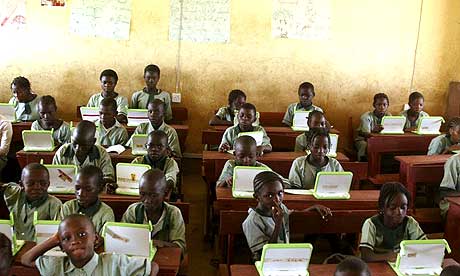
In Nigeria, the norm is for parents to enroll their kids into school at an early age. Early age being before they even start growing teeth and are aware of their environment. My first daughter started school at 2 while my second who is just one hasn’t even gotten a look in.
But as expected my wife and I have started discussing which school we will enroll her in, sighting the obvious need to start her early considering she hasn’t started talking unlike the second who started (well, mumbling words) before she was even one. But then I thought why do I have to start her that early? How does it influence her destiny? Will it help her talk quicker? By starting her early will it make her Nigeria’s first astronaut? Too many questions unanswered.
I had to come up with a decision and reason for it fast, lest I face the wrath of my wife. So to do that I have to rely on facts and practicality rather than theory, myth and norms. In the world the country with the best education is Finland. Finland? Yes Finland!! Strangely I sought to find out how and why? What clearly stood out was this “Children in Finland only start school at age seven”. I’m like why should my child start school at 7?
Finland believes children learn best when they’re playing and by the time they finally get to school they are keen to start learning. So why then do we start our children in school this early? The answer is in make believe rather than fact. Nigerians have been made to believe that starting kids early help the children do better as they climb the ladder of education. A direct opposite of the Finish model. Where has this led us to as a country? Has the system worked? From available facts it obviously hasn’t. Kindergarten and pre-schools started as far back as 20 years ago in Nigeria, replacing Nursery as the first port of call for a toddler. Twenty years down the line what are the results? 21.5% of those who sat for the exams had a credit and above pass in Mathematics with 24% for English respectively. In summary 60% of pupils who sat for the examinations in 2010 failed it. The trend has actually worsened over the years. So what then happened to the kids who started kindergarten at well …..say 1? Did they gain anything from it? Maybe yes, but was it worth the while definitely no.
The beauty of the Finnish education system is such that they do all the things we don’t do. For example, kids spent less time in school whilst ours spend average 6 hours in school and an extra 2hours in lessons. Education is free and compulsory for all(or more like no tuition fee for full time students), ours is not free and not compulsory. In Finland, Private schools are very few and even when available, they are free and receive grants from the Government. In Nigeria Private schools abound and charge disparate fees. Pupils who struggle with studies are given extra teachers but remain in the same class room with others in Finland. Well in Nigeria, you are stigmatized and the parents take the child out of the school putting the blame on the teacher rather than on the child who probably is a slow starter. The primary and secondary school is combined, thus a child who starts school at 7 will be in school for 9 years and don’t have to change schools during the period. In Nigeria you spend year 0 to 1 in Creche, 1 to 3 in kG , 3 to 6 in Nursery , 6 to 12 in primary and now 12 to 17 in secondary school ( it used to be divided into junior and Senior up until last year). In Nigeria, the child would have gone through those years changing schools, seen numerous teachers and engaged hundreds of fellow classmates along the line. In Finland, basically, the teachers know their pupils inside out and throughout their formative lives.
So back to my problem, how do I convince my wife especially when the neighbors have already enrolled their 1 year old in a nearby high flying KG even though the child probably can’t say a word beyond “Dada” and /or “Mama”? Will my adopting the Finnish style be misconstrued as using my child as a guinea pig? Your guess is as good as mine.




Nice Post Ugo…..I live in Canada and kids here are enrolled in Junior kidergatten to begin learning at the age of 4….There are Academic daycare centers here where some parents prefer to have their kids begin early(2-3). My aunt gave me a sound advise which is….take your kids to the babysitter till they are 4, enroll them into school and they will catch up. Reason being that there is a curiculum all schools have to follow…hence the children catch up and are where they are supposed to be academically and if for any reason the parent notices that their child are kinda lagging behind academically…they get a private tutor to help…but rememeber as amazing as Finlnad education system may be, I doubt if it has 100% success rate.Thanks.
Hi IJNice point. But remember nothing in life has 100% success rate not even Xtianity. The Finnish model has had a track record of success and still does, that's why they rank highest in the world. However, the issue here is KG and Preps are mostly for luxury rather than necessity. People should understand that…..they maybe inhibiting their kids growth when they actually think they are helping it.Thanks for dropping coming by my blog and pls do visit often.
Sometimes, i'm inclined to think that the problem with our society is unncessary competition! "How do I convince my wife especially when the neighbors have already enrolled their 1 year old in a nearby high flying KG even though the child probably can't say a word beyond Dada and Mama?" Before now, most parents would wait until their kids are two years of age before they are enrolled in KG. These days, the earlier they are enrolled, the smarter they are percieved to be. However, i would not consider the KG and the Preps as luxury. Bearing in mind that most mothers are career-oriented, the KGs are our way of having a little bit of control over the values our children are made to imbibe….
Well, youve got a point too. But then ain't live in Nanny's better?
@Dre my position on the subject matter has always been that the whole idea is crazy. I had the benefit of nursery school education, and have met a lot of properly educated chaps who didn't have the same benefit. I do not see how that experience gives me any comparative advantage to any other properly educated person. If I have any intellectual superiority over anyone, its definitely as a result of superior primary and secondary education which actually started at age 5. The only logical purpose to sending our kids to play groups and there likes is that they serve as a hangout for the toddlers while parents deal with the high pressure lives our generation is condemned to. Will Nigerians stop paying the huge fees to give their kids the presumed privileged upbringing which in the real sense adds to values to the kids? The answer is no. Will you win wiffy over ? Most unlikely. Nigerians are defined by style, trend and fashion and class preferring foreign things no matter how inordinately expensive they come, produce nothing and consume just about anything that defines privilege, and social class. Refusal to tag along with the Jones could create psychological problems for your kids and family. Na money we suppose go dey find, while reminding our mothers and wives of the home truth which is that, what will define the advantage of their kids over others will begin with the home training which prepares the kid for life away from home starting with primary education. Uche Nnoli
Well Uche I guess I might as well join the party then. In my wife's words "MOVE TO FINLAND"!!!
DreIt all first started as a convenient way to get the kids engaged while, as Uche put it, we pursue the pressures of life that we are today condemned to. Like most things in the world and every thing in Nigeria, it soon became a status symbol, and thats where the competition started. With competition and demand, the profiteers jumped in.I have choosen to live my family life the way I see it right even if I have to be looked down on by society or shouted down on by wiffy. After my daughter came, like you, it wasnt long before I started being drawn into 'which school?' conversations. I refused to listen to or yield untill my daughter got up one day and told me she wanted to go to school! She must have thought it was all play there seeing as the neighbours kids all went in the mornings.I had her bathed, dressed and we drove off. We visited quite a number of schools and my lookout was play things and a clean environment. I made it clear to one or two of the teachers that recieved us that I was not impressed with computer labs and such things for a two and half year old. Show me the swings, castles and slides. Also show me what safety measures you have put in place. Let me see toilets! Ofcourse to my daughter I told to make me know whenever she didnt want to attend.On one occassion, my daughter told me she was caned in school by her minder. I went there and made them understand that this is a play thing for me and her as far as I was concerned and we are not in any race to win laurels. Do not ever hit her; end of story!The said teacher and minder of that class, at that time, do not talk to me and I couldnt care less. It is worthy of note here that in the entirety of her class, all the class rooms of that class included, she is the only one that can properly read and write! This was not taught to her in school, nor did we make any deliberate effort at this, at home. All a child needs is the environment for the direction you want him or her to take. If the man and wife are in the habbit of reading, and if little story books are always available, with the learning aides in a lot of kiddies programs these days, you will be surpirised what happens right before your eyes!On one occasion, the kids were required to form words with letters that were jumbled up. My daughter wrote all but left one blank and ofcourse she was marked wrong. I was going through her school books when I came back from work, and i realised wht had gone wrong. The letters were supposed to be CHURCH, but there was no R. The teacher marked her wrong and 'corrected' her by writing church at the end.
I simply went there the next morning and asked the woman to please form CHURCH for me using CHUCH. A few teachers gathered to convince me it was intended to be church, the examiner had made a mistake. Now why should a four year old be the one to correct a kiddies book or a teacher? If you realised it was a mistake then delete it. It is obvious the four year old has a supperior mind if she clearly saw no word she knows will come out of these letters but you people sit here to assume it should be CHURCH!. I wasnt there for my daughter to be 1st in class or anything, but to instill the sense of pride in what she was doing if it was right, and ofcourse encourage them to deplore the ones that are bad.On another occasion, she was marked wrong for writing female, for her sex. The teacher corrected and put girl! You can be sure I was again there the very next morning!In summation, we have to move with the trends. The trend in this case being that you are likely to be busy as will your wife, most likely. The kids need to be in some care and if some 'unforced' learning can happen at the same time, why not?The high fees the schools charge does not bother me in so far as the facilities they have for that age group is for that age group. Do not teach my daughter how to do physics at 5! Do not impress me with a computer lab at kidergatten, no way!.If world class play things are available and I can afford the school, and it is no stress taking the child there and back…nothing spoil!The point has to be made to all the wiffies, that The Achebes, Emeagwalis, Pat Utomis, Soyinkas, Maitama Sules….all these went to school when they had to put there arms across their heads to touch the opposite ear. Awolowo went to night school as almost an adult. All these men became successes not because the started early, but because they sustained the momentum when they started.
@Tony your experience has opened my eyes to a whole new world. Yours is real and I can relate with it. My God, that's just point, it's simply a play ground for kids. I hope we all understand that.
Oh wow @ Tony's comments! What we subject our kids to! Ugodre, pls put a Twitter button on your blog….i need to tweet these write-ups every once in a while! People need to be aware of issues like this!