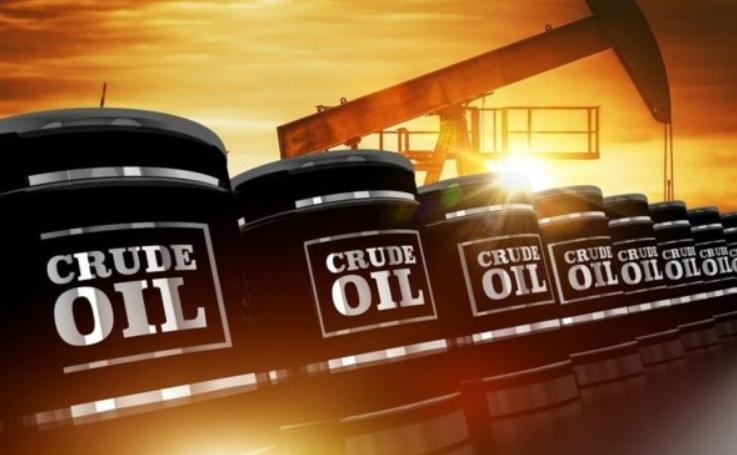
Brent crude oil prices climbed above $126 per barrel as U.S President Donald Trump considers resuming military action against Iran, raising fresh concerns over global oil supply disruptions.
Checks by Nairametrics showed that Brent crude rose by 8.28% to $126.31 per barrel, the highest it has reached since June 2022.
Meanwhile, West Texas Intermediate (WTI) crude also jumped by 3.37% to $110.48 per barrel at the time of filing this report.


The surge in global oil prices comes as President Trump is set to receive a military briefing on Thursday from CENTCOM Commander Adm. Brad Cooper, according to a report by Axios, which cited unnamed sources.
What they are saying
Although the war in Iran is currently under an extended ceasefire agreement, negotiations between the two countries have stalled. According to the Axios report, the planned briefing signals a potential return to military strikes on Iran in a bid to force Tehran to agree to core US demands.
Earlier on Wednesday, Trump said the blockade of the Strait of Hormuz, a critical global oil transit route handling about 20% of the world’s oil supply, would remain in place until Iran agrees to abandon its nuclear ambitions.
- “The blockade is somewhat more effective than the bombing. And it is going to be worse for them. They can’t have a nuclear weapon,” Trump said.
He added that Iran is pushing for the blockade to be lifted.
- “They want to settle. They don’t want me to keep the blockade. I don’t want to [lift the blockade], because I don’t want them to have a nuclear weapon,” he said.
More insights
Oil prices have remained highly sensitive to geopolitical developments since the conflict began on February 28, following a joint US-Israel military strike that reportedly killed Iran’s Supreme Leader.
On April 2, global oil prices surged by more than 5% after Trump signalled that the United States would sustain its military offensive for another two to three weeks, raising fears of prolonged supply disruptions.
Prices, however, dropped significantly on April 8 after both sides agreed to a two-week ceasefire. The relief was short-lived, as crude prices climbed again by over 7% on April 13 after Trump ordered a naval blockade targeting all vessels entering or leaving the Strait of Hormuz.
What you should know
The volatility in global oil prices driven by the Middle East conflict has had significant ripple effects worldwide, particularly in Nigeria.
Since the crisis began, petrol prices in Nigeria have risen by at least 50.19%, increasing from N799 per litre to about N1,200 per litre at the gantry and N1,153 per litre at the coast.
This surge has triggered widespread inflationary pressure, especially on food prices. A March report by Nairametrics showed sharp increases across major Lagos markets, driven largely by higher transportation and logistics costs linked to rising fuel prices.
- For example, a medium bag of pepper rose from N32,000 in February to N80,000 in March, while a large bag jumped from N58,000 to N140,000—representing increases of 141.38% and 150%, respectively.
- Tomatoes also recorded notable hikes, with large baskets rising from N40,000 to N60,000 and oval varieties increasing from N25,000 to N35,000.
The latest spike in oil prices shows how geopolitical tensions continue to shape global markets, with direct consequences for domestic economies like Nigeria.