Follow Us on Google Discover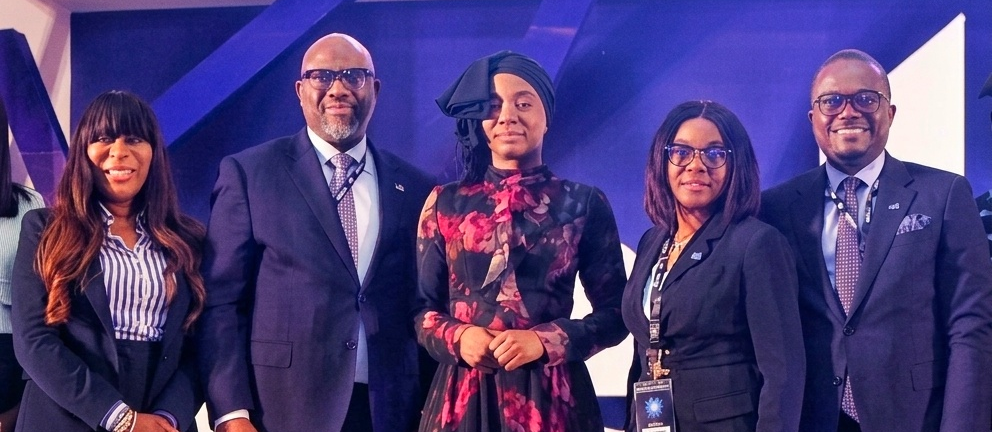
Financial services group, FSDH, has called for increased mobilisation of long-term capital to sustain momentum in Nigeria’s equities market, stressing that banks and financial institutions must play a more active role.
The Managing Director of FSDH Merchant Bank, Bukola Smith, made the call on Tuesday in Lagos at the company’s inaugural Investors’ Conference with the theme: “Co-creating the Future of Intelligent Investing.”
Smith said recent gains in the equities market reflect renewed investor confidence but require sustained capital inflows to remain resilient.
What they are saying
Smith emphasized the importance of banks, regulators, institutional investors, and development finance institutions in unlocking the long-term funding needed to support market growth and broader economic expansion.
- “Sustainable economic growth requires more than access to capital. It requires confidence, it requires trust, it requires strong institutions. Strong market performance alone does not define an investable nation.
- “An investable nation is built on sound policy, regulatory consistency, market transparency, and confidence that capital, especially long-term capital, can be deployed safely and productively. Building an investable nation requires all hands on deck,” she said.
Smith acknowledged persistent concerns about whether banks are doing enough to support the real sector but expressed confidence that recent capital injections into the banking industry would significantly improve their lending capacity.
- “Nigeria still requires significant investments to close critical infrastructure gaps, strengthen productive sectors, and deepen capital market participation.
- “Public funding alone cannot meet these needs. Building an investable nation is not only the responsibility of governments, it requires all hands on deck. It also requires regulators, institutional investors, banks, and I know some of you will be saying banks again, but yes indeed we need banks to help in this journey.
- “And I know that a lot of people think that banks are not as supportive as they should be, but with the new capital that banks have made, we believe that we will be able to do a lot more than what we have done in the past,” she said.
Despite the optimism, Smith stressed that deploying capital must be done with caution to safeguard financial stability.
She noted that internal risk management frameworks within banks remain a critical guardrail, ensuring that lending decisions do not compromise capital preservation.
More insights
Delivering a keynote address virtually at the event, Director General of the Securities and Exchange Commission (SEC), Dr. Emomotimi Agama, spoke on the theme “Building an Investable Nation Through Policy, Reform & Resilience,” highlighting the role of regulatory clarity, market discipline, and institutional trust in attracting and sustaining investment flows.
- “Today, we can gladly say that the market is well over 130 trillion in market capitalization. The question is whether we shall be its architect or its inheritors. We should not regulate the market of yesterday; we are building the regulatory scaffolding for the market of tomorrow.
Agama noted that regulation must run ahead of disruption, not behind it, adding that the SEC’s regulatory posture on technology is neither prohibition nor permissiveness; but intelligent governance.
- “Co-creation is not consultation; it is shared sovereignty over the future of our financial architecture. The SEC Nigeria does not regulate for the market; we regulate with the market, and so intelligent investing is not exclusive, rather it is by design.
- “The intelligence we invest in building this market today is the prosperity we harvest for generations yet unborn,” he said.
What you should know
The Nigerian equities market wrapped up the first quarter of 2026 in the green, rising 29.35% with total trading volume exceeding 52 billion shares, reflecting strong investor participation.
The market’s All-Share Index surged 45,674.8 points, climbing from an opening of 155,612.9 to close at 201,287.8, comfortably surpassing the 200,000-point milestone for the first time.
This marked the best quarterly performance since Q1 2024, when the market returned 39.8%, and represented a six-quarter winning streak after a red Q3 2024.