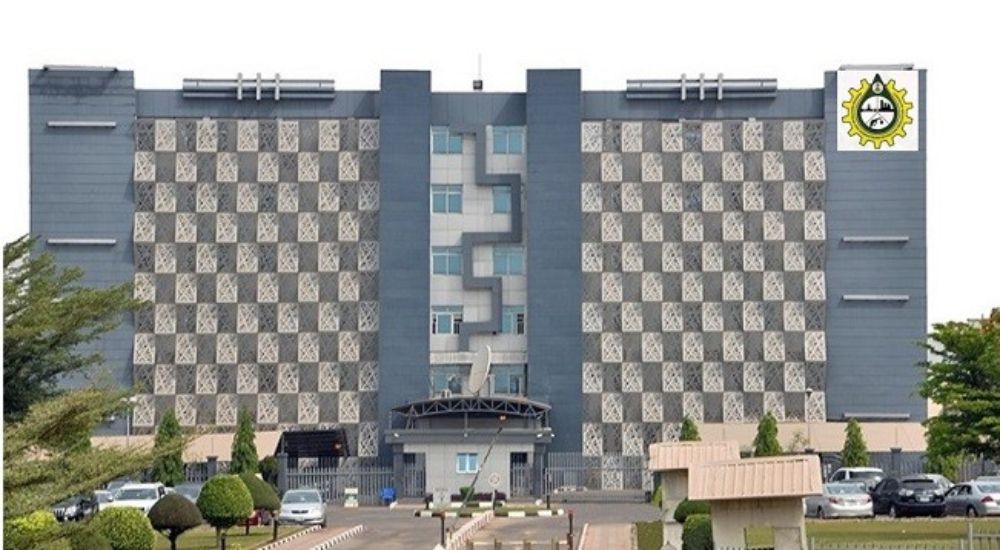
The Nigerian Midstream and Downstream Petroleum Regulatory Authority has sought the support of the World Bank to help Nigeria bridge a $22 billion gas infrastructure gap.
This was made known in a statement shared by the NMDPRA on X on Monday.
The agency’s Chief Executive, Saidu A. Mohammed, made the call while delivering remarks at the Decade of Gas Ministerial Roundtable on Regional Gas Development, organised in partnership with the World Bank.


What they are saying
According to the statement, Mohammed emphasised the importance of regional collaboration in advancing gas development across Africa.
- “Mohammed reaffirmed that the NMDPRA would continue to provide regulatory support to enable gas infrastructure investments, particularly in areas of pricing, tariff frameworks, and other policy enablers.
- “He further called on the World Bank to support efforts to mobilise the estimated $22 billion required to bridge Nigeria’s gas infrastructure gap,” the statement said.
Speaking on the theme “Strategic Areas of Collaboration in Advancing Gas Development with Regional Impact Across Africa,” he noted that the first half of the Decade of Gas Initiative has focused on identifying key enablers required to unlock Nigeria’s gas potential.
- These include strengthening supply, stimulating demand, expanding infrastructure, and establishing appropriate pricing frameworks to support the country’s gas-based economic growth.
He stated that the initiative’s second half would hinge on execution, measured by increased gas production, greater investment inflows, expanded pipeline networks, and the commissioning of new gas processing facilities.
More insights
The NMDPRA boss said that with the domestic framework for gas now in place, the focus must shift to extending the initiative’s impact beyond Nigeria to the wider African region.
- He highlighted three strategic corridors through which Nigeria could supply gas to regional and international markets.
- These include the Africa Atlantic Gas Pipeline, linking the northern Atlantic coast of Africa with potential delivery to Europe; the Trans-Sahara Gas Pipeline, extending the Ajaokuta-Kaduna-Kano pipeline across parts of West, Central, and North Africa; and coastal LNG supply infrastructure along the Gulf of Guinea and other African coastal regions.
To achieve these ambitions, he stressed the need for harmonised regulatory frameworks across countries, structured mechanisms for cross-border gas exports, credible regional demand data, and sustained funding for key infrastructure projects.
Backstory
Nairametrics reported that the Federal Government had stepped up high-level discussions on a proposed $20 billion transcontinental gas pipeline aimed at delivering its vast natural gas to European markets.
- A statement by Louis Ibah, spokesperson for the Minister of State for Petroleum Resources (Gas), Ekperikpe Ekpo, noted that the move was aimed at strengthening energy security and unlocking long-term economic value.
- The proposed pipeline, described as a transformative gas corridor, is designed to transport up to 30 billion cubic metres of gas annually from Nigeria’s southern reserves through Chad and Libya, before extending subsea to Sicily, Italy, and into the broader European market.
The minister, Ekpo, who joined key industry stakeholders in London, United Kingdom, for discussions on the proposed pipeline, described the engagement as both timely and historic, adding that Nigeria is poised to attract investors into its gas sector.
What you should know
The Nigerian National Petroleum Corporation has said Nigeria is seeing stronger demand for its liquefied natural gas cargoes.
- The NNPC Executive Vice President, Olalekan Ogunleye, said this last week at the CERAWeek energy conference in Houston, according to Reuters.
- The comment came as energy disruptions from the war in the Middle East have opened commercial opportunities for the country.
He noted that buyers are increasingly looking to Nigeria because of its proximity to key consuming nations and the scale of its gas reserves.
Ogunleye said demand for natural gas has proven resilient, adding that current geopolitical tensions would not derail its growth.