Follow Us on Google Discover
Dutch businesses operating in Nigeria are experiencing improved operating conditions following a period of foreign exchange instability that made it difficult for companies to repatriate funds, according to officials of the Netherlands Consulate in Lagos.
Bukola Lucas Kolajo, Economic and Trade Adviser/Policy Officer at the Consulate, said currency fluctuations had previously affected Dutch companies, including KLM, Heineken and FrieslandCampina, with some forced to borrow from their parent companies to sustain operations.
She said the situation had improved significantly, with greater stability in the foreign exchange market over the past year. She also noted that the Central Bank of Nigeria (CBN) had paid outstanding funds to airlines, helping them continue operations.
Multiple taxation still a challenge
Kolajo identified customs procedures and multiple taxation as other major challenges facing Dutch businesses in Nigeria.
Also Read
- She said engagement with the Nigeria Customs Service had improved, with customs officials showing greater willingness to address trade barriers.
- She cited the B’Odogwu platform, which allows importers to process customs documentation before goods arrive in Nigeria, as an example of efforts to improve clearance procedures.
However, she said concerns about multiple taxation remained unresolved, with discussions ongoing between the Dutch Embassy and Nigeria’s Ministry of Finance.
Dutch companies create jobs and invest in Nigeria
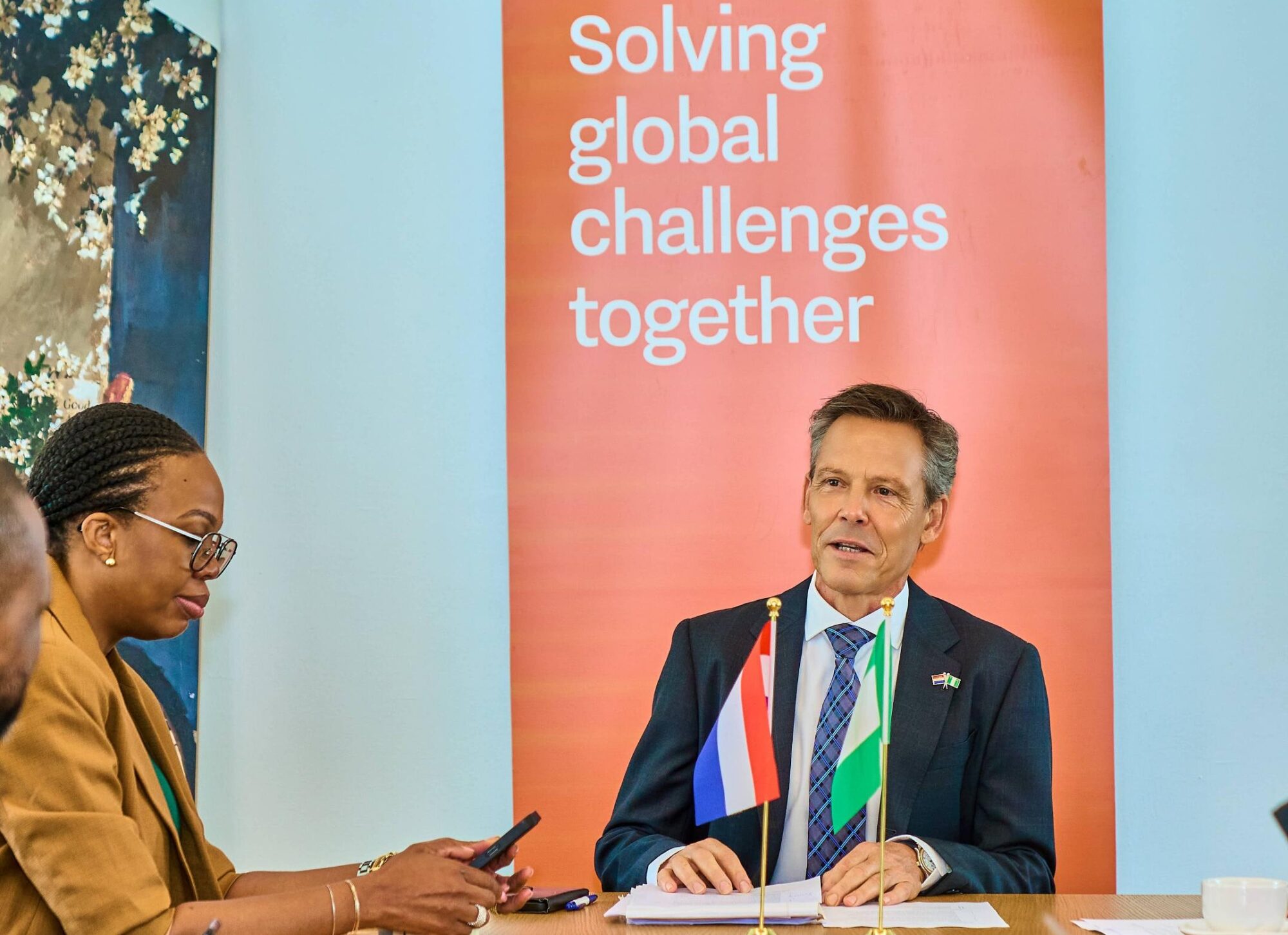
The Netherlands Consul General in Lagos, Frank Keurhorst, said Dutch companies had created more than 20,000 direct and indirect jobs in Nigeria through partnerships with local businesses.
- He cited companies such as Heineken, which partners with Nigerian Breweries, FrieslandCampina, which operates through FrieslandCampina WAMCO, and KLM.
- Keurhorst said Nigeria remained an attractive investment destination, but businesses needed a predictable economic environment, stable policies and a reliable legal system for resolving commercial disputes.
- He added that ease of travel remained a challenge, particularly with the increasing difficulty of obtaining Schengen visas. Short-stay visa applications for the Netherlands are currently handled through the French Embassy, while the Dutch Consulate handles certain long-stay applications, including those for students and temporary workers.
Netherlands targets agriculture, renewable energy and infrastructure
Keurhorst said the Netherlands had invested approximately €47 million in Nigeria’s agricultural sector in recent years, with more than 70,000 farmers trained over the past three years.
The partnership focuses particularly on horticulture and vegetable production, including access to improved seeds and planting materials that can withstand climate change and pests.
The Netherlands is also exploring opportunities in Nigeria’s renewable energy market, particularly solar power.
- One initiative, called Polar Store, focuses on solar-powered cold storage facilities to help preserve agricultural produce and pharmaceutical products. The technology is also expected to support irrigation.
On infrastructure, Keurhorst said Dutch companies could contribute expertise in port modernisation, dredging, coastal protection and logistics as Nigeria upgrades its ports.
He specifically mentioned APM Terminals’ proposed investment to further develop Apapa Port in Lagos, as well as a consortium of Dutch companies working on a feasibility study for coastal protection projects in Lagos.
Waste management projects could generate 60MW of electricity
The Netherlands is also supporting Nigeria’s circular economy development through projects focused on recycling and waste-to-energy technology.
- One project involves Dutch company Closing the Loop, which is working on establishing an electronic waste smelting facility in Lagos.
- Another initiative, involving Nigerian investors, Dutch technology providers and the Lagos State Government, is expected to generate between 60MW and 75MW of electricity using about 2,500 tonnes of waste daily.
The electricity generated is projected to supply approximately 40,000 homes.
Support for startups and youth employment
Keurhorst also highlighted the Netherlands’ support for Nigerian startups and small businesses through its Orange Corners incubation programme.
- The programme provides business support, mentoring, technical assistance, networking opportunities and access to finance.
- According to him, it has supported 280 startups and helped create approximately 3,000 verified jobs.
- He also cited the Challenge Fund for Youth Employment, which created 28,000 verified jobs through employment initiatives involving young Nigerians and private-sector partners.
The Consul General said the Netherlands would continue to work with Nigerian businesses, government agencies and knowledge institutions to support investment, job creation and economic diversification.