 Follow Us on Google Discover
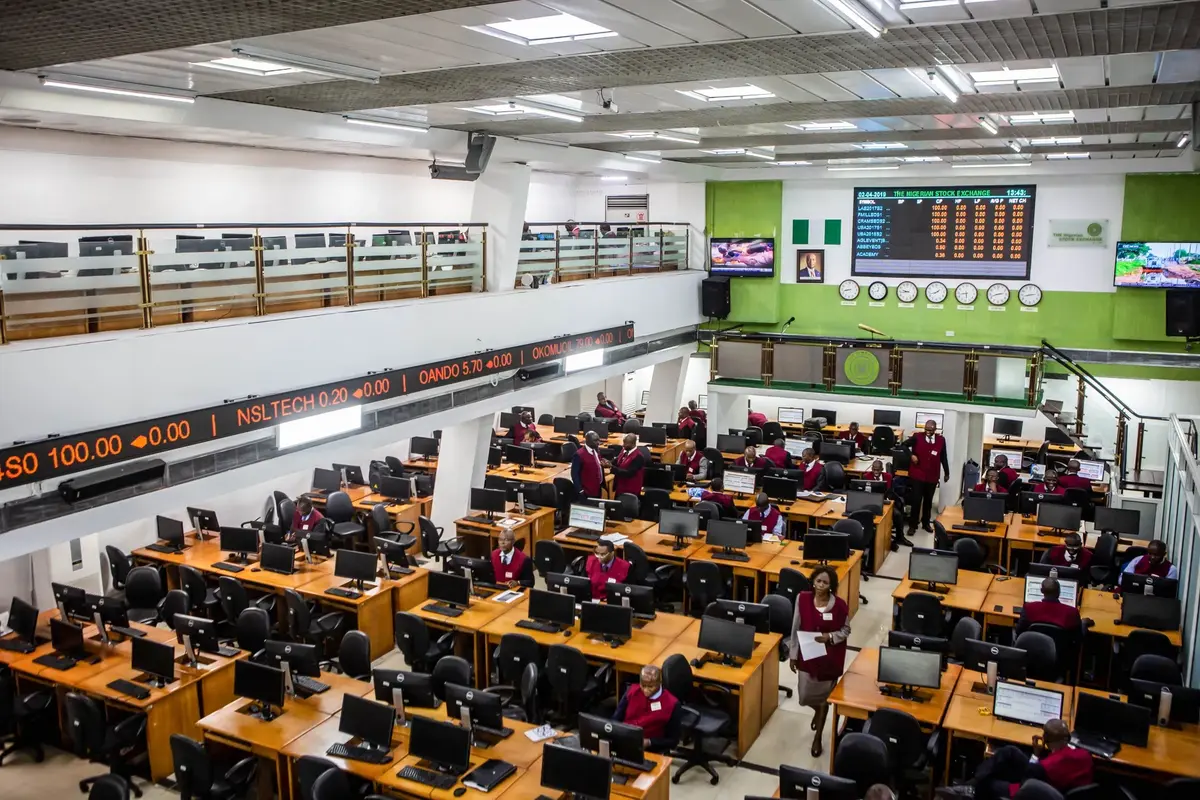
The Nigerian stock market ended October looking stronger than it had for much of the month.
A 2.86% rally in the final week lifted the All-Share Index to a 1.23% gain for October, taking its return for the year to 63.42%.
Listed shares were worth about N165.11 trillion at month-end, roughly N2 trillion more than at the end of September.
The first week of November took back more than October had added. The index fell 2.13% in the week ended November 6, wiping N3.52 trillion off the market and bringing the year’s gain down to 59.93%. Selling was widespread: 57 stocks fell and 29 rose.
Also Read
The market was still comfortably ahead for the year, but the reversal gave investors a reason to look again at the prices they were willing to pay at the end of October.
The September results help explain which shares look better value after the sell-off. Among the large companies reviewed, which account for nearly 90% of the NGX’s value, the clearest case was where share prices fell even as profits from the main business grew.
Buyers could pay less for a share in a company that was already earning more. Where profits had fallen, a lower share price offered less comfort: if earnings fell faster than the price, investors could still be paying more for every N1 of profit.
That is the distinction worth watching this week. With the index still up nearly 60% for the year, a stock can be well below its recent high and still need a strong recovery to justify its price.
The September results help investors see where stronger earnings already support the price and where buyers are still counting on better results to come.
Where the pullback gives investors a second look
MTN Nigeria is one of the clearer cases. Its shares fell from N850 at the end of October to N837 on November 6, even though nine-month profit rose 55%.
- Profit from running the business rose 38%, faster than sales. At Friday’s close, buyers were paying about N12 for every N1 of profit MTN earned over the previous year, compared with about N23 for Airtel Africa.
- Airtel operates across several markets, so the comparison has its limits. But MTN’s case is easy to see: a lower share price came alongside an improvement in the business that was already visible in the accounts.
Cement is a closer call. HBM Nigeria fell 10% over the week and closed at about N15 for every N1 of past profit, against N18 for Dangote Cement and N19 for BUA Cement.
- HBM’s nine-month profit grew about 31%, but its profit in the third quarter alone fell about 15%.
Investors buying the dip are getting a lower price than they were offered a week earlier. They still must decide which figure better describes the business heading into year-end: the strong nine months or the weaker quarter.
The same care is needed with banks. The NGX Banking Index fell more than 10% in October, even as the wider market rose, and slipped again in the first week of November.
That gives investors a reason to look again at bank shares. The September results help explain where the lower prices are most interesting.
Access Holdings is worth revisiting this week because investors are paying less for roughly the same earnings per share.
The shares fell from N30.40 at the end of September to N26.90 on November 6, while nine-month earnings per share barely moved, from N8.00 to N8.02 a year earlier.
The lower price could draw some buyers back if selling in bank shares eases.
Stanbic IBTC shares barely fell in October and edged higher in the first week of November. They still look inexpensive against past profit. The price looks more convincing if the bank can repeat more of that trading income or start keeping more from interest.
Selective buying looks more likely than a broad rebound this week. Access has the clearest case to steady among the banks that fell in both periods. Stanbic has already shown it can hold up while the sector weakens.
If buying reaches First HoldCo as well, that would be a stronger sign that confidence is returning beyond a few names.
Where the price is already counting on better results
The power stocks show the other side of the market. Transcorp Power jumped 23% to N219.60 in a week when most stocks that moved went down.
The shares are still below where they started the year, but the rebound took the price to about N21 for every N1 of past profit, even as nine-month earnings fell 17%.
The company cited gas supply problems and limits on how much electricity it could send to the grid. For buyers at Friday’s price, the case now rests more heavily on those constraints easing, and the company selling more electricity.
Geregu Power’s price did not move during the week, yet its latest results made that unchanged price harder to justify on recent profits.
- Transformer failures cut the amount of electricity it could generate, and nine-month profit fell about 77%. At N825.70, investors were paying about N257 for every N1 of profit earned over the previous year.
- Repairs could restore output, but the valuation will be easier to defend when that output turns into sales and the company collects the cash.
When trading resumes, the first thing to watch is where buyers return. Buying in companies whose shares fell despite stronger profits from their main businesses would suggest investors are finding value in the pullback.
Buying that mainly lifts companies with shrinking profits would suggest the market is still willing to pay for a recovery before it arrives.
A rising index could hide that difference. The September results give investors a way to see it: start with what the business already earns, then ask how much better it needs to do for the price to make sense.