Follow Us on Google Discover
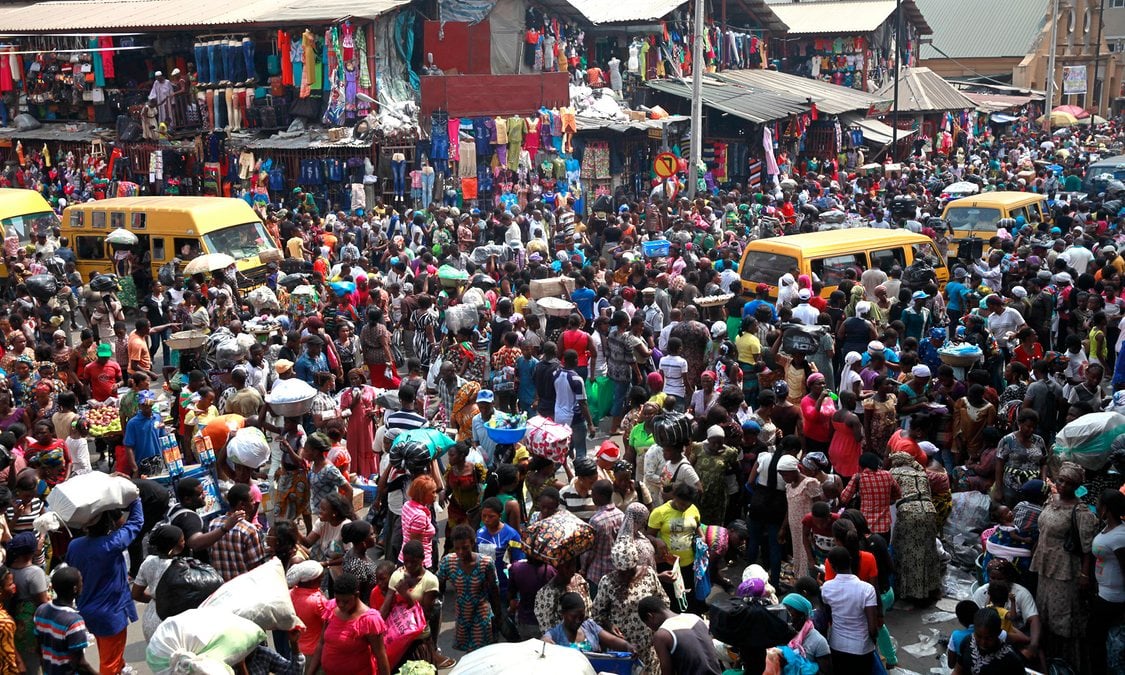
Angola’s capital, Luanda, is projected to overtake Lagos as Sub-Saharan Africa’s most populous city by 2050, with its population expected to rise by 78% over the next 25 years, according to the World Bank.
The projection is contained in the bank’s report, Sub-Saharan Africa’s Urban Awakening: Catalyzing Economic Growth and Job Creation, edited by Mark Roberts and Emily M. Owen.
The report estimates that Luanda’s population will increase from 11.4 million in 2025 to 20.3 million in 2050, while Lagos is expected to grow by more than 25% over the same period, from 12.8 million to 16.2 million.
Luanda leads Africa’s urban growth
The World Bank said population growth will reshape the ranking of Sub-Saharan Africa’s largest cities by 2050, with Luanda recording one of the most significant increases.
Also Read
- Between 2025 and 2050, the lender noted “The population of Angola’s capital city, Luanda, is projected to increase by 78 percent from 11.4 million to 20.3 million. In doing so, Luanda will overtake Lagos as SSA’s most populous city”.
Lagos, however, will remain among the region’s largest urban centres, with its population projected to reach 16.2 million by 2050.
- Among the other 11 cities expected to remain in the region’s 15 most populous by 2050, projected population growth ranges from 21% in Kinshasa, Democratic Republic of Congo, to 70% in Yaoundé, Cameroon.
- The report also identified Bamako, Mali, and Mogadishu, Somalia, as two cities expected to enter the top 15 by 2050.
Bamako’s population is projected to increase by 80%, from 4.2 million in 2025 to 7.6 million in 2050, while Mogadishu is expected to grow by 64%, from 4.4 million to 7.2 million.
Cape Town, South Africa, and Kano, Nigeria, are projected to leave the top 15 ranking, although their populations are still expected to increase by 36% and 31%, respectively.
Lagos pursues $1 trillion economy
Despite the projected change in population ranking, Lagos remains one of Africa’s major economic centres.
- The state’s gross domestic product reached an estimated $259 billion based on purchasing power parity (PPP), placing it as Africa’s second-largest city economy behind Cairo, Egypt.
- In October 2026, Lagos unveiled a long-term development plan targeting an economy worth nearly $1 trillion by 2052. The plan is intended to attract investment and strengthen the state’s position as an international economic and financial hub.
- The ambition is separate from the Federal Government’s target of growing Nigeria’s economy to $1 trillion by 2030, announced by President Bola Tinubu at the Nigeria Economic Summit in 2023.
However, the World Bank cautioned in its May 2025 Nigeria Development Update, Building Momentum for Inclusive Growth, that the country’s economic growth rate would need to increase about fivefold to achieve the national target by the end of the decade.
The bank’s warning was detailed in an earlier Nairametrics report on the feasibility of Nigeria’s $1 trillion economy ambition.