Follow Us on Google Discover
For Nigerian households and businesses, choosing where to place temporarily unused cash begins with a timing question, not a search for the highest rate.
Money that is not being spent today is rarely without a purpose. It may be waiting for rent, school fees, tax, stock, equipment or an emergency. The gap before it is needed creates an opportunity to earn a return, but also a risk: the investment may mature after the obligation arrives.
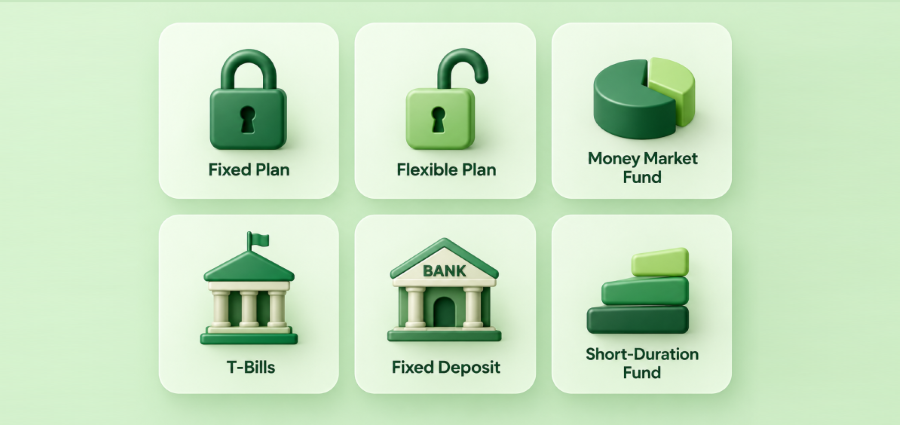
“Fixed investment” is not one uniform category. Fixed platform plans, bank deposits, Treasury bills, money market funds and short-duration fixed-income funds offer different combinations of certainty, access and return. The useful question is what kind of commitment the money can safely make.
Money may be needed without warning
An emergency reserve or supplier balance with an uncertain payment date needs a credible route back to cash. A flexible stated-return product can fit this middle ground by paying a return while allowing withdrawals under defined rules.
Also Read
Flex Yield by Credit Direct currently states a return of 15% per annum, starts from ₦50,000 and permits up to four withdrawals each month without a penalty. If ₦500,000 remained for twelve months, the simple gross illustration would be ₦75,000 before applicable withholding tax. An earlier withdrawal would reduce the balance used for subsequent returns.
A money market fund can serve a similar need through a different structure. It pools investors’ money into short-term instruments such as Treasury bills and commercial paper. Its strengths are professional management and diversification, but its yield changes with market conditions, while fees and redemption timelines affect the final proceeds.
The choice is therefore between different kinds of flexibility: a stated rate with defined withdrawal rules, or a managed portfolio with a variable yield.
Fixed plans suit dependable payment dates
Money attached to a known future date can accept a firmer commitment. Rent due in twelve months, an annual insurance premium or scheduled equipment purchase creates a clear investment horizon.
Fixed Yield by Credit Direct accepts plans from one to twelve months, starting from ₦50,000. Its published annual rates rise with the tenure, from 16% for one month to 21% for twelve months. At 21%, ₦500,000 held for a full year would produce a simple gross return of ₦105,000 before applicable withholding tax. The 21% rate should not be used to estimate a shorter plan.
A bank fixed deposit addresses the same broad need through a traditional channel. The bank agrees a rate for a defined term, although the offer may depend on the amount, tenure and customer relationship. The customer should confirm the annualised rate, net maturity value and early-liquidation rule before committing funds.
In both cases, the higher stated return only creates value if the money can remain untouched.
Government securities offer a different kind of certainty
Treasury bills may suit money whose use date aligns with an available maturity. They are short-term government securities bought at a discount and redeemed at face value. The return is the difference between the purchase price and maturity value.
Retail investors usually access them through authorised banks, brokers or investment channels. Minimums and charges vary. A bill held to maturity provides a known redemption value, but an early sale takes place at the prevailing market price.
The comparison should therefore use net proceeds and matching dates, not headline rates alone.
Professional management comes with variable returns
Money market and short-duration fixed-income funds suit investors who prefer professional management across several debt instruments. They may hold Treasury instruments, commercial paper and shorter-maturity bonds, providing more diversification than one deposit or security.
However, “fixed income” describes the assets, not a guaranteed investor return. Yields and unit prices can change, fees can reduce proceeds and redemptions follow the fund’s rules. The latest factsheet, portfolio composition, management fee and redemption timeline should be reviewed before investing.
One balance can carry several obligations
A single balance may contain money with different deadlines. Consider a household with ₦1 million: ₦300,000 may be needed for an emergency, while ₦700,000 is intended for rent in twelve months.
The uncertain-date portion could remain in Flex Yield. At 15% for a full year, it would produce a simple gross illustration of ₦45,000 before tax, assuming no withdrawal. The known-date portion could enter a twelve-month Fixed Yield plan and produce a simple gross illustration of ₦147,000 at 21%.
Together, the two portions would produce ₦192,000 gross if left intact, while preserving defined access to ₦300,000. Locking everything at the higher rate would earn more, but remove the planned liquidity buffer.
Let the cash-flow plan choose the product
Where the use date is uncertain, access rules deserve as much attention as the rate. Where the date is known, compare maturity values across fixed plans, deposits and Treasury bills. Where diversification matters more than a fixed outcome, a managed fund may be more suitable.
Before investing, confirm the annualised return, minimum amount, tenure, early-exit rule, fees, tax treatment, redemption time and provider. Yield by Credit Direct addresses two common timing needs within one product family: Flex Yield for controlled access and Fixed Yield for a defined commitment.
The strongest decision is not simply the largest percentage. It is the option that allows the money to earn without preventing it from doing its original job.
Risk disclosure
Rates, minimums and conditions may change. Fixed plans and deposits restrict access. Treasury bills sold early are subject to market pricing. Managed-fund yields are variable and fees may apply. Returns are subject to applicable withholding tax. Confirm current terms before investing. This article provides general information, not personal financial advice.