Follow Us on Google Discover
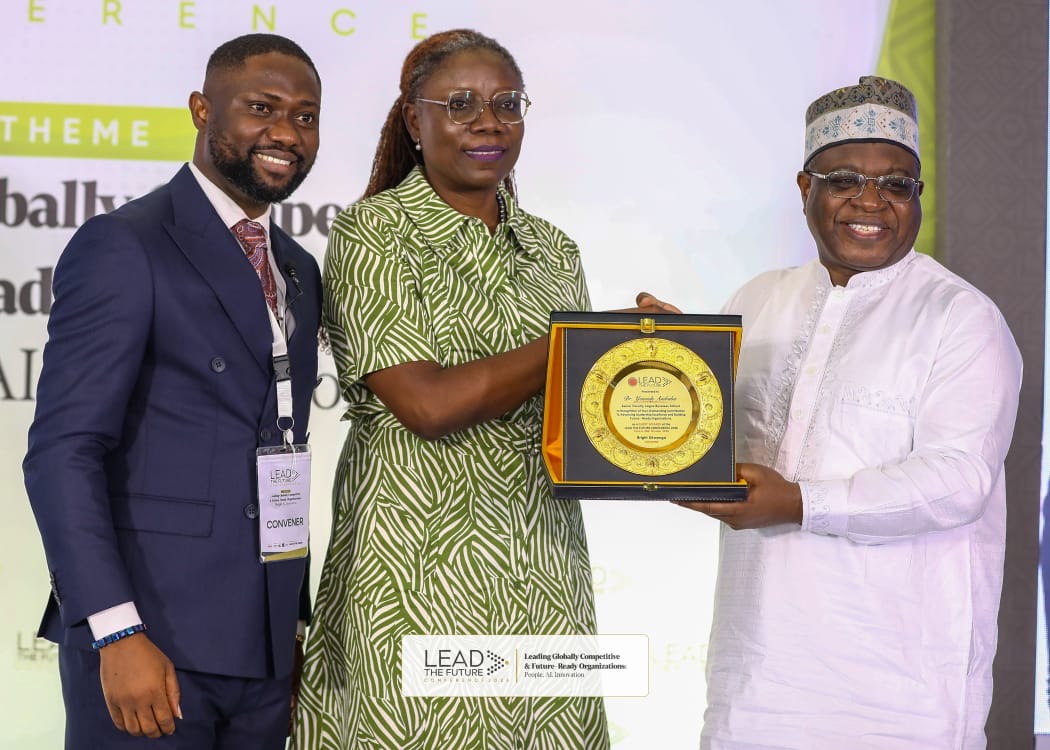
Business leaders, technology executives and governance experts have called for stronger leadership, continuous workforce development and the strategic adoption of technology to help African organisations compete in a rapidly changing global economy.
The call emerged at the Lead the Future Conference 2026, held on October 23 and 24 at the Oriental Hotel, Victoria Island, Lagos, under the theme, “Leading Globally Competitive and Future-Ready Organisations: People, AI, Innovation.” Chaired by Dr Umaru Kwairanga, Group Chairman of Nigerian Exchange Group (NGX), the conference explored leadership, artificial intelligence, governance, talent development and organisational transformation.
In his opening address, Kwairanga urged African businesses to look beyond geographical boundaries and take advantage of technology to expand their reach and compete globally.
“Modern technology democratizes opportunities, and African enterprises must take advantage of that to scale their businesses,” he said.
Also Read
He also highlighted the importance of effective leadership, sound governance and strong institutions in translating Africa’s human and natural resources into sustainable economic growth.
The first day featured a keynote address by Bright ‘UK’ Ukwenga, convener of the conference and Principal Consultant at SixthSense Leadership, on “Redefining Leadership for the Future.” Ukwenga challenged leaders to see leadership as a continuous process of personal growth, influence and helping others fulfil their potential.
“The social contract between the leader and the led has changed fundamentaly. Leadership is becoming a better version of yourself so that you can inspire and influence others. Your growth must inspire others,” he said.
He further emphasised that leadership should create the conditions for people to thrive, rather than make them dependent on those in positions of authority.
Dr Yetunde Anibaba, Senior Faculty at Lagos Business School, led a session on strategic foresight, examining how organisations can anticipate change and prepare for long-term relevance. Ademola Adebise, Chairman of Family Homes Funds Ltd and former Managing Director of Wema Bank, explored technology adoption and organisational transformation, taking the audience through Wema Bank’s journey of lunching ALAT, Africa’s first fully digital bank.
Adebise stressed that successful transformation requires more than investment in new technology. It depends on the people responsible for implementing change and the organisational conditions that enable them to deliver results.
“Transformation is really people doing things, not just the technology,” Adebise said.
His session highlighted the importance of clear vision, effective communication, access to resources, execution and measurement in ensuring that technology investments translate into meaningful organisational outcomes.
The second day extended the conversation to governance, public-sector accountability, institutional sustainability and the future of work. Speakers included Niyi Adesanya, Founder of FifthGear Plus; Mr Akinrinade Morakinyo Oluwola, representing the Chief of Staff, Lagos State; Foluso Phillips, Chairman of Phillips Consulting; and Dr Tunde Lemo, OFR, former Deputy Governor of the Central Bank of Nigeria.
Discussions on talent development, the changing workplace, and ecosystem leadership featured Kunbi Adeoti, Chief People Experience Officer at Leadway Group; Kola Oluyemi, Group Head of Sterling Academy; Ireayomide Oladunjoye of Endeavor Nigeria; and Bola Lawal of Premia Business Network.
Adeoti addressed the evolving relationship between employers and employees, highlighting the need for organisations to respond to changing career expectations and support continuous learning.
“It’s not a linear career anymore. That’s why we have the concept of pivoting. How do you learn, relearn and learn again?” she said.
Her remarks underscored the importance of career adaptability and workplace cultures that enable employees to develop new skills and remain relevant as business needs evolve.
Oluyemi reinforced the need to connect workforce development to business strategy, arguing that qualifications and training must translate into practical capabilities.
“A certificate is good, but if you have a certificate and there’s no application or knowledge, it’s useless to the organisation,” he said.
Across the two days, speakers emphasised that artificial intelligence and other emerging technologies must be integrated into a wider organisational strategy. Technology alone cannot guarantee competitiveness without capable leadership, skilled people and the ability to execute effectively.
The discussions also highlighted the importance of anticipating disruption rather than simply reacting to it. Organisations must build the capacity to adapt, strengthen their institutions and align their people, strategy and innovation efforts to deliver lasting value.
The conference concluded with a call for cross-sector collaboration and a renewed focus on leadership that combines strategic foresight with practical action to build resilient, globally competitive and sustainable organisations.
About Lead the Future Conference
The Lead the Future Conference is the leadership convening for visionary founders, executives, and institutional leaders shaping future-ready organizations. The conference provides a platform for conversations around leadership excellence, strategic foresight, innovation, and the capabilities organisations need to remain competitive and future-ready.
Website: www.weleadthefuture.com | Email: [email protected]