Follow Us on Google Discover
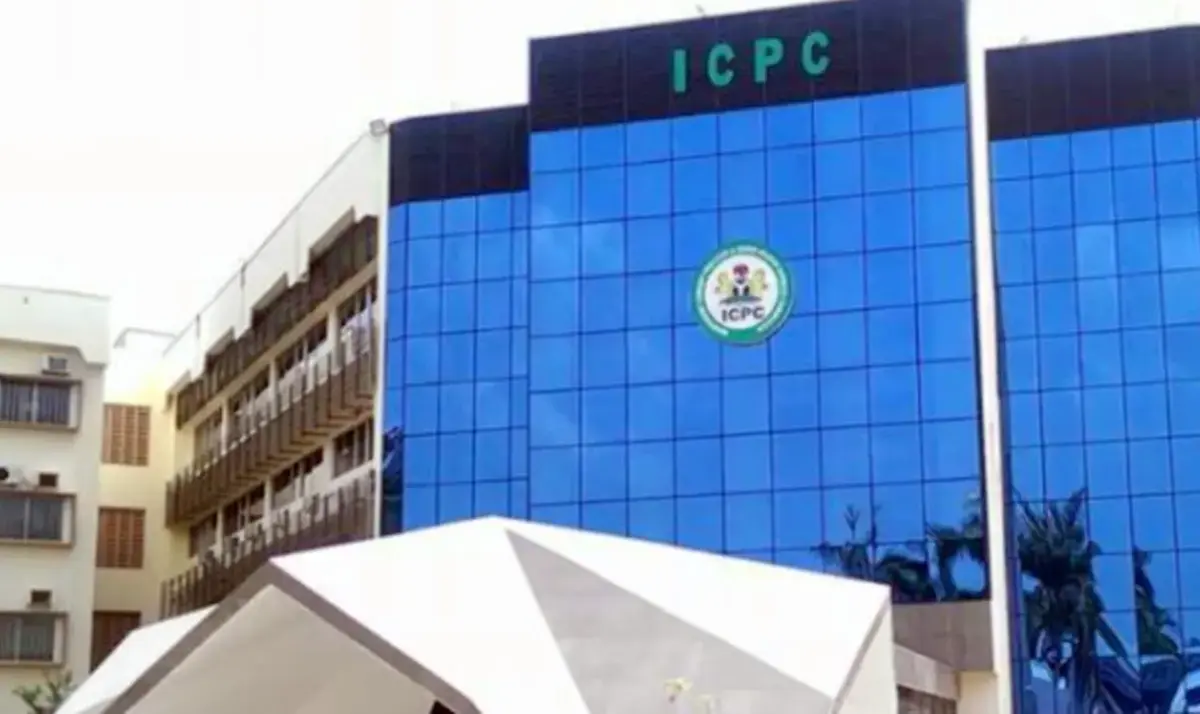
The Independent Corrupt Practices and Other Related Offences Commission (ICPC) has withdrawn its court case against Sterling Oil Exploration & Energy Production Company Limited (SEEPCO) following the settlement of its investigation into an alleged $2.3 billion tax evasion involving the company.
ICPC’s motion was withdrawn on March 23, 2026, by Osuobeni Akponimisingha, Esq., Head of High Profile Prosecution at the ICPC, according to court documents exclusively seen and reviewed by Nairametrics.
A Federal High Court judge, Justice James Omotosho, who presided over the case, struck out the matter following the ICPC lawyer’s request.
ICPC’s allegations against Sterling Oil
On June 24, 2025, Akponimisingha, citing the affidavit attached to his motion exparte, alleged that the oil company had been under-declaring its daily oil production to evade taxes on its production income.
Also Read
He claimed that the respondent, in a bid to evade taxes, had allegedly registered several companies and opened bank accounts for them.
- “The respondent (Sterling Oil) had been diverting the profit of exploration of oil into these numerous company bank accounts in order to deprive the Federal Government of its accruable tax revenue,” he stated.
- The lawyer alleged that the tax revenue accruable to the Federal Government of Nigeria from Sterling Oil “between 2012 and 2021 was approximately $2.3 billion”.
He added that numerous companies and bank accounts were allegedly being used by the oil firm to launder funds legitimately belonging to Nigeria outside the country, to the detriment of the nation.
He also claimed that the respondent’s unlawful activities had deprived the Federal Government of Nigeria of its accruable revenue, thereby affecting budget performance over the years.
- “The operators of these companies and bank accounts are all multinationals (all purportedly from India), as deduced from the bank verification numbers,” he stated.
He then urged the court to freeze the bank accounts of Sterling Oil Exploration & Energy Production Company Limited and its connected companies across several commercial banks for investigative purposes and in the interest of justice.
The lawyer had also stated that, where cogent and verifiable explanations existed for the respondent’s operations that ruled out criminal activity, the ICPC would return to court before the expiration of the requested 90-day period and apply for the unfreezing of the accounts.
ICPC confirms settlement with Sterling Oil
On June 24, 2025, Justice Omotosho, noting the numerous bank accounts involved and the ICPC’s affidavit, froze Sterling Oil’s bank accounts for 120 days to allow the Commission to conduct its investigation.
The judge subsequently adjourned the case to October 22, 2025, for a report from the Commission.
However, during court proceedings on March 23, 2026, Akponimisingha informed the judge that the Commission had reached a settlement with the oil firm.
- “Your Lordships, we have concluded settlement with the respondent (Sterling Oil) in this matter,” he stated.
The judge then asked whether he was applying to withdraw the case in light of the development, to which the ICPC lawyer responded in the affirmative.
- “May I, with the leave of this court, apply to withdraw this suit and same be struck out, my Lord. I’m grateful, sir,” he stated.
In his ruling, Justice Omotosho held that, having been withdrawn by counsel to the ICPC, the matter was struck out.
Court orders banks to unfreeze accounts
The development adds to the list of cases in which prosecutors have sought to withdraw proceedings or lift restrictions on previously frozen bank accounts.
In October 2025, the Federal High Court in Abuja ordered eight Nigerian commercial banks to lift the post-no-debit (PND) restrictions placed on 13 bank accounts that had previously been frozen following a court order obtained by the Inspector-General of Police (IGP) in connection with a 2022 financial misappropriation investigation.
The IGP’s legal team had urged the court to direct eight financial institutions to unfreeze accounts linked to the FCT Investment Promotion Agency and Public-Private Partnership (FIPA-APP), the United Nations Youth Global Foundation, and 11 others, to allow the respondents to resume their normal and legitimate transactions.