Follow Us on Google Discover

Nigeria’s push to accelerate electric vehicle (EV) adoption faces several challenges, including high financing costs, limited charging infrastructure and questions over how to balance vehicle imports with the development of local manufacturing.
In an exclusive interview with Nairametrics, Arc. Dr. Kaycee Orji-Kelechi, Chairman of The ROXETTES Group and ROXETTES Eco-Drives Ltd, discusses the factors shaping Nigeria’s electric mobility market, the affordability of EVs for commercial drivers and the investment required to build a viable charging network.
He also examines the challenges facing local automakers, calling for policies and financing arrangements that support domestic production while making cleaner transport options more accessible.
Orji-Kelechi discusses his company’s plans for vehicle assembly in Nigeria and the potential roles of electric, compressed natural gas (CNG), hybrid and petrol-powered vehicles in the country’s evolving transport market.
Nairametrics: Electric vehicles are often more expensive to purchase than petrol-powered cars in Nigeria. Given the country’s declining purchasing power, what is the realistic market for EVs, and how can Roxettes Eco-Drives make them affordable for ordinary Nigerians and commercial transport operators?
Dr Orji: The future of electric vehicles in Nigeria will depend largely on affordability, financing and the actual cost of ownership, rather than the initial purchase price alone. We believe commercial transportation presents one of the biggest opportunities. Taxi drivers, ride-hailing operators, logistics companies and other high-mileage users spend substantial amounts on petrol and vehicle maintenance.
Electric vehicles can significantly reduce these operating expenses. At ROXETTES Eco-Drives, our strategy is to combine local vehicle assembly with accessible financing, including lease-to-own and drive-to-own arrangements. We are also introducing BeeRides, our indigenous ride-hailing platform within the BEEZENDS ecosystem. BeeRides will initially accommodate drivers using their existing vehicles, while we progressively introduce electric vehicles into the fleets.
Our objective is to make EV ownership economically attractive, particularly to commercial drivers who depend on their vehicles for daily income. Ultimately, affordability is not just about how much a vehicle costs to purchase, but how much it costs to operate and how much income it can generate over time.
Nairametrics: Nigeria faces high electricity tariffs, unreliable grid supply and expensive diesel-powered generation. How can electric vehicles deliver meaningful cost savings when charging them is also expensive? At current energy prices, how much can an EV owner realistically save compared with a petrol-powered vehicle?
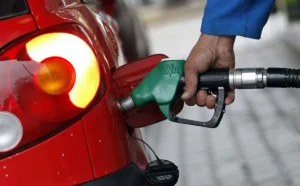
Dr. Orji: Electric vehicles can deliver substantial savings, even under Nigeria’s current energy conditions, provided the charging infrastructure is properly managed. Let me give a practical illustration using petrol at N1,450 per litre and electricity at N209 per kilowatt-hour. A typical petrol vehicle consuming eight litres per 100 kilometres would spend approximately N11,600 on fuel. A comparable electric vehicle consuming 16 kilowatt-hours over the same distance, or approximately 18 kilowatt-hours when charging losses are considered, would spend about N3,762. That represents approximately 67.6% savings in energy costs.
For a commercial driver travelling 200 kilometres daily over 26 operating days monthly, the potential savings would be approximately N407,576 monthly, or N4.89 million annually. These figures are illustrative and exclude financing, depreciation and maintenance. Actual savings will depend on vehicle efficiency and the effective electricity tariff, particularly where generators or commercial charging services are involved. Our strategy is to support reliable charging through a combination of grid electricity, solar energy and battery storage. The economic advantage is clear, but we must build the right energy infrastructure to sustain it.
Nairametrics: How does Roxettes Eco-Drives intend to address Nigeria’s inadequate charging infrastructure, and what would it cost to establish a commercially viable network of charging stations? Could solar-powered charging offer a sustainable solution?
Dr. Orji: Charging infrastructure is fundamental to the success of electric mobility. We cannot deploy electric vehicles on a large scale without providing dependable and accessible charging facilities. Our approach is to develop charging infrastructure progressively, beginning with major cities, commercial transportation corridors, fleet operating centres and strategic highway locations. The investment required depends on the charging capacity, number of charging points, electricity connection, land and supporting infrastructure.
A commercial fast-charging hub could cost tens or hundreds of millions of naira, depending on its configuration. We see considerable potential in solar-assisted charging, particularly when combined with battery energy storage and grid supply. However, solar power requires significant upfront investment, and fast-charging facilities need substantial electrical capacity.
Therefore, hybrid energy systems may be more practical than relying entirely on solar generation. We intend to explore partnerships with energy companies, infrastructure investors, property developers and relevant government institutions. Our objective is to develop charging infrastructure that is commercially sustainable and expands alongside actual vehicle demand.
Nairametrics: What are the biggest commercial risks facing EV businesses in Nigeria, particularly foreign exchange volatility, high import costs, expensive financing and limited after-sales support?
Dr. Orji: The major challenges include foreign exchange volatility, high import costs, expensive financing, inadequate infrastructure and limited technical support systems. These are serious issues, particularly for companies investing in automotive manufacturing, which requires substantial capital and long-term planning. At ROXETTES, we are addressing these challenges through local assembly, strategic partnerships, technical capacity development and an integrated mobility business model.
I am pleased to say that all equipment at our automotive assembly facility in Obuaku Industrial City, Ukwa West Local Government Area of Abia State, has been fully installed. This is an important milestone in our industrial development programme. We are also developing the market for electric mobility through BeeRides, which will provide a structured platform for introducing EVs into commercial transportation.
Our focus is on building a sustainable automotive business supported by manufacturing infrastructure, dependable after-sales services, financing arrangements and actual market demand. We recognise that the journey requires patience and substantial investment, but we are committed to building long-term industrial capacity rather than simply trading imported vehicles.
Nairametrics: Is Nigeria ready to move beyond importing electric vehicles to assembling or manufacturing them locally?
Dr. Orji: Absolutely. Nigeria has the population, market demand and human resources to support a viable automotive manufacturing industry. However, automotive industrialisation must be approached progressively. We should begin by strengthening local assembly, then gradually increase the production of components and the transfer of manufacturing technologies. At ROXETTES, we have already taken an important step by completing equipment installation at our automotive facility in Obuaku, Abia State.
Our broader automotive strategy encompasses electric vehicles, conventional petrol-powered vehicles, CNG vehicles and hybrid technologies. To make local manufacturing competitive, Nigeria needs reliable electricity, affordable long-term industrial financing, consistent government policies, technical training and incentives that encourage genuine local value addition. We also need stronger collaboration between manufacturers, universities and research institutions.
My vision is to see Nigeria move beyond importing finished vehicles towards producing components, developing automotive technologies and eventually exporting competitively manufactured vehicles across Africa. We should not remain merely a market for technologies developed elsewhere. We must become participants in creating those technologies.
Nairametrics: With Nigeria investing in domestic refining while promoting cleaner energy, could widespread EV adoption significantly reduce petrol demand over the next decade? How should policymakers balance the growth of electric mobility with the country’s dependence on petroleum revenues?
Dr. Orji: I do not believe petroleum development and electric mobility should be viewed as competing national interests. Nigeria will continue to require petroleum products for many years, and domestic refining remains important for energy security, industrial development and economic growth. However, the global transportation industry is evolving, and Nigeria must prepare for that future.
Electric vehicles will gradually reduce petrol consumption in transportation segments where adoption becomes commercially viable, particularly taxis, commercial fleets and urban mobility. The impact on total petrol demand will depend on how quickly EV adoption grows relative to overall transportation demand. Our position at ROXETTES is that the transition should be practical and gradual.
That is why our automotive strategy accommodates electric, CNG, hybrid and conventional vehicles. Government should encourage energy diversification while using petroleum revenues and existing industrial capabilities to support emerging industries. Ultimately, Nigeria should focus on creating more economic value through manufacturing, technology, electricity generation and transportation services rather than depending excessively on petroleum revenues.
Nairametrics: Battery replacement costs, durability and disposal remain major concerns for EV users. How suitable are existing EV batteries for Nigeria’s road and climate conditions, and what plans should the country put in place for battery recycling, maintenance and eventual replacement?
Dr. Orji: Battery durability is a legitimate concern, particularly in Nigeria, where high temperatures, difficult road conditions and inconsistent electricity supply can affect vehicle performance. However, modern electric vehicle battery technologies have improved considerably in durability, thermal management and energy efficiency. The important thing is to select vehicles and battery systems suitable for our operating environment.
At ROXETTES, we recognise the importance of proper battery management systems, vehicle diagnostics, trained technicians, spare-parts availability and dependable after-sales support. Battery replacement costs must also be considered in the total cost of ownership, and customers should have clear information about warranties and expected battery performance.
I believe Nigeria should begin establishing a national framework for battery recycling, safe disposal and potential second-life applications in stationary energy storage. There are also opportunities for local investment in battery maintenance, diagnostics, pack assembly and recycling technologies. As EV adoption grows, battery management can become an important industry of its own, creating specialised technical jobs and business opportunities.
Nairametrics: What three policy interventions would most accelerate EV adoption in Nigeria? Should the government prioritise import-duty relief, affordable vehicle financing, renewable-energy powered charging stations or incentives for local manufacturing?
Dr. Orji: I would prioritise three interventions. First is affordable long-term financing. Electric vehicles must become accessible to ordinary Nigerians, especially commercial transport operators. Government should support financing structures that enable drivers and fleet operators to acquire vehicles through manageable repayment arrangements. Second is incentives for local automotive manufacturing.
We need appropriate import-duty relief for essential production equipment and components, alongside incentives for companies investing in local assembly, technology transfer and job creation. Policies should encourage domestic value addition rather than permanent dependence on imported finished vehicles. Third is charging infrastructure and energy development. Government should create an enabling environment for private investment in charging stations, renewable energy and battery storage.
These interventions must work together. We cannot promote EV ownership without financing, encourage vehicle deployment without charging infrastructure or expect local manufacturing to thrive without supportive industrial policies. My belief is that government should provide the enabling environment while the private sector drives investment, innovation and implementation.
Nairametrics: What would you advise the government to do to improve the situation?
Dr. Orji: Whatever measures the government is implementing, it should work towards narrowing the gap between the official and parallel market exchange rates. It should also examine the processes banks use to ensure that businesses can access foreign exchange through the official market more seamlessly.
However, our major concern is the double standards in government policy and the failure to practise what the government preaches.
For instance, the government has introduced the Nigeria First policy, which encourages the patronage of locally made products. Yet, some of the people responsible for implementing the policy use foreign-made vehicles. Government ministries, departments and agencies (MDAs) also continue to purchase foreign-made products. I do not think that makes sense.
Another concern is the access being granted to foreign companies importing electric vehicles into Nigeria, particularly the concessions that allow them to obtain Import Duty Exemption Certificates and benefit from very low import tariffs while competing with domestic manufacturers.
When you consider the investments that local manufacturers have made in establishing factories and developing production capacity, you begin to question the incentive to invest in Nigeria. After making these investments, local manufacturers find that foreign companies can obtain the relevant certificates and concessions more quickly than they can.
If the government is serious about protecting local industry, it should carefully review the concessions granted to foreign companies importing products that compete directly with those manufactured locally. These foreign companies already have access to funding and other resources that domestic manufacturers may not enjoy.
Foreign exchange is not necessarily our biggest problem. The bigger concern is that foreign companies importing electric vehicles are being granted access to very low import duties, putting local manufacturers at a disadvantage.
There should be a clear framework for granting appropriate concessions to companies that own and operate factories in Nigeria. If I were the president, I would require foreign companies seeking to introduce their vehicles into the Nigerian market to do so through a licensed automobile manufacturer operating in the country. That is the approach adopted in other countries to support domestic manufacturing and ensure that local businesses benefit from market access.
Another major challenge is the cost of financing. Interest rates on loans obtained from Nigerian banks to finance vehicle imports can approach 40%. When we borrow at those rates and bring vehicles into the country, our costs are significantly higher.
Meanwhile, foreign companies may have access to financing at near-zero interest rates. They can therefore introduce their vehicles into the Nigerian market at lower prices, while local manufacturers must charge more to cover their production costs and repay their bank loans.
If we price our products higher to meet these obligations, we risk losing customers to foreign competitors selling at lower prices. If we reduce our prices to compete, we may be unable to cover our costs and service our loans.
This creates a serious threat to the survival of Nigeria’s automobile industry. The government needs to address these imbalances through fairer import policies, better access to financing and stronger incentives for companies investing in local production.
Nairametrics: Any closing remarks?
Dr Orji: Nigeria’s transition to electric mobility represents much more than a change in the type of vehicles we drive. It presents an opportunity to develop new industries, create jobs, reduce transportation costs, strengthen local manufacturing and build technological capabilities. At ROXETTES, we are investing in that future because we believe Nigeria should not remain merely a consumer of technologies developed elsewhere. Our ambition is not simply to participate in the future of mobility. It is to help build that future here in Nigeria.