Follow Us on Google Discover
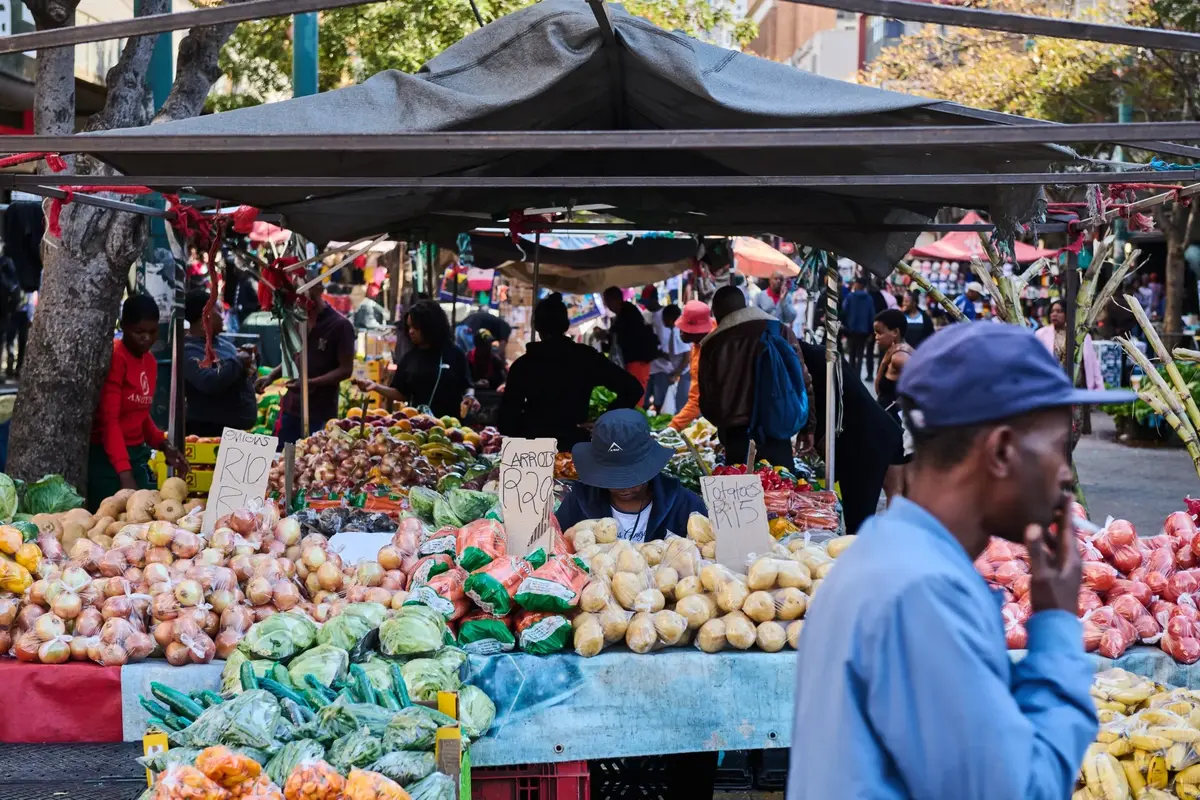
South Africa’s annual consumer price inflation rose to 4.5% in September 2026 from 4.4% in August, driven largely by higher transport costs, according to Statistics South Africa.
The consumer price index (CPI) increased by 0.4% month-on-month in September, while transport recorded the highest contribution to the annual inflation rate.
The figures were released by Risenga Maluleke, Statistician-General of Statistics South Africa, as higher global energy prices continue to pose risks for the country, which imports most of its fuel.
Transport drives South Africa’s inflation
Transport prices rose by 10.8% annually in September, contributing 1.5 percentage points to the overall inflation rate of 4.5%.
Also Read
- Housing and utilities recorded annual inflation of 5.2%, contributing 1.3 percentage points.
- Insurance and financial services rose by 5.4%, contributing 0.6 percentage points.
- Annual goods inflation increased to 4.1% in September from 3.3% in August.
- Services inflation eased to 4.9% from 5.1% over the same period.
The figures show that transport, housing and utilities, and insurance and financial services were the main contributors to South Africa’s annual inflation rate.
Global energy prices add pressure
South Africa’s dependence on imported fuel leaves its economy exposed to changes in global energy prices. The outbreak of the Iran war in late February has added to uncertainty in international energy markets, with potential implications for transport costs and domestic inflation.
The increase in annual goods inflation from 3.3% to 4.1% also contrasts with the moderation in services inflation, which declined from 5.1% to 4.9%.
Although annual inflation rose only slightly between August and September, the 0.4% monthly increase in consumer prices indicates that price pressures continued during the month.
Nigeria’s inflation continues to ease
In Nigeria, headline inflation moved in the opposite direction, easing to 14.63% in September 2026 from 15.39% in August, according to the National Bureau of Statistics (NBS). Nairametrics reported that the decline marked the fourth consecutive month of disinflation.
- Annual core inflation, which excludes volatile agricultural produce and energy prices, fell to 12.95% in September from 22.11% a year earlier. However, monthly core inflation rose to 1.11% from -0.06% in August.
- The comparison highlights differing inflation trends in the two African economies: South Africa’s annual rate edged higher in September, while Nigeria recorded another monthly decline in its headline inflation rate.
- The share of Nigerian households that perceived inflation as high rose to 77.2% in September 2026, up from 67.2% in August.
- Nairametrics previously reported that South Africa’s unemployment rate climbed to its highest level in four years, with the number of unemployed people rising to 8.5 million.
The latest figures represent a further deterioration from the first quarter of 2026, when South Africa’s unemployment rate had already risen to 32.7% from 31.4% in the fourth quarter of 2025, a trend that Nairametrics previously reported.