Follow Us on Google Discover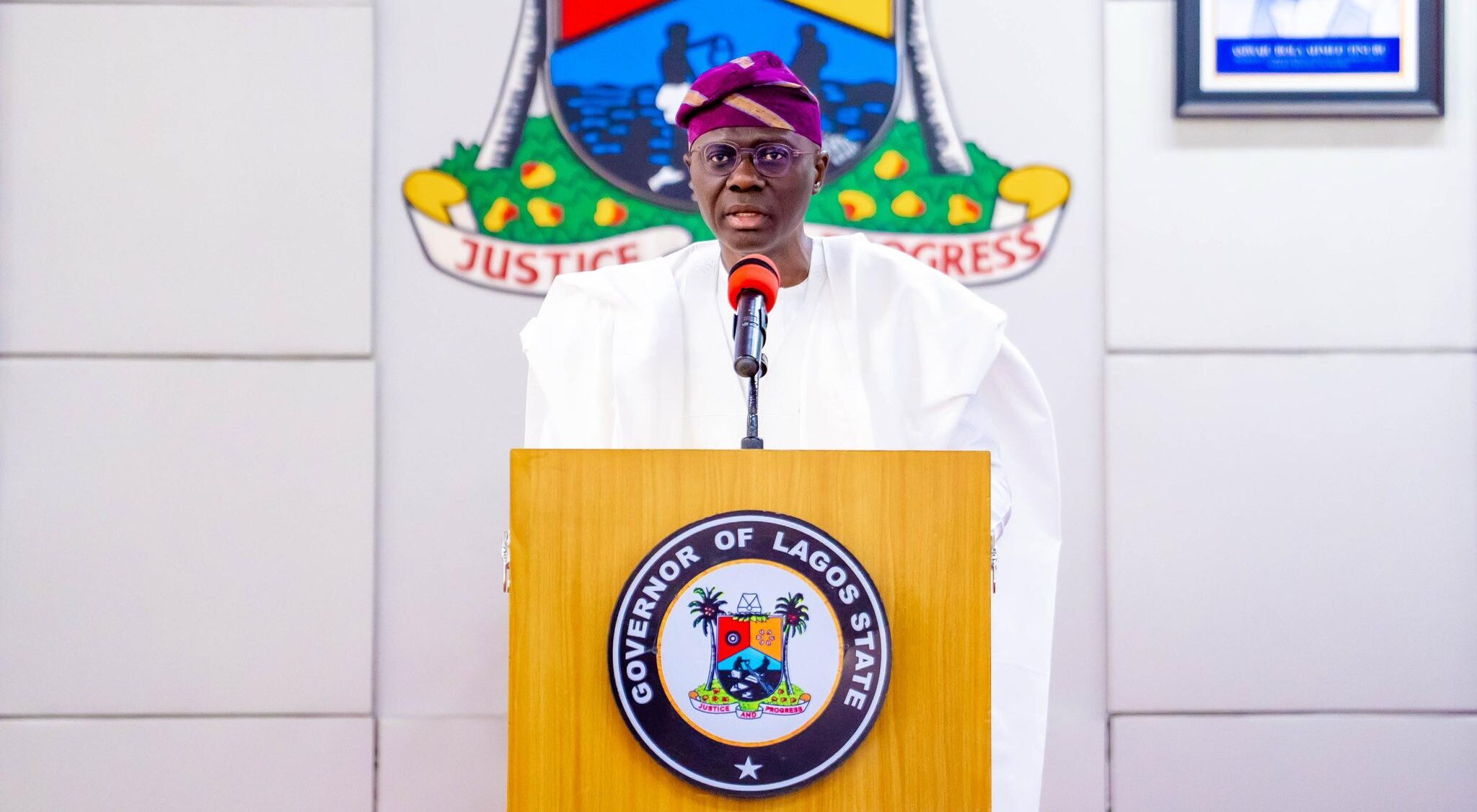
The Lagos State Government has opened its Series 5 Fixed Rate Bond offer to raise up to N200 billion under its N1 trillion Debt and Hybrid Instruments Issuance Programme.
The offer opened on Friday, October 9, 2026, and is scheduled to close on Friday, October 16, 2026.
It will be priced through book building, with indicative coupon guidance of 16.50%–16.75% per annum.
Proceeds will finance priority infrastructure projects, including the Blue Line rail extension, hospital construction and the Omu Creek Road and bridge project.
Also Read
What the offer terms say
- Issuer: Lagos State Government.
- Series: Series 5 Fixed Rate Bond due 2036.
- Tenor: 10 years.
- Target size: Up to N200 billion.
- Programme size: N1 trillion.
- Coupon guidance: 16.50%–16.75% per annum, to be finalised through book building.
- Redemption: Semi-annual principal repayments following a 36-month moratorium.
- Coupon payments: Fixed rate, payable semi-annually.
- Issuer ratings stated in the offer: Aa- from Agusto & Co. and AA from GCR.
- Indicative issue rating: Aa with a stable outlook from Agusto & Co.
- Minimum subscription: N5 million, representing 5,000 units at N1,000 each.
- Additional subscriptions: Multiples of N1,000.
- Listing: Nigerian Exchange Limited and/or FMDQ Securities Exchange Limited.
- Taxation: Applicable taxes apply unless otherwise exempt.
About Lagos State
Lagos is Nigeria’s commercial and financial hub, with a diversified economy spanning trade, financial services, telecommunications, manufacturing, transportation and real estate.
Its large workforce and concentration of businesses support a substantial internally generated revenue base, reducing its dependence on federal allocations.
Agusto’s financial summary shows that Lagos generated N1.85 trillion in IGR in 2025, up 19.7% from N1.55 trillion in 2024.
IGR accounted for 69.4% of revenue excluding grants in 2025. Over 2023–2025, its contribution averaged about 70%.
The offer: Project funding and expected investor income
The issuance follows Lagos State’s N244.82 billion dual bond transaction in November 2025, comprising a N230 billion 10-year conventional bond at 16.25% and a N14.82 billion five-year green bond at 16%.
For the latest offer, the proposed allocation directs N122.16 billion, or 61.1% of gross proceeds, towards the Blue Line rail development.
- The work includes track and bridge construction on the Mile 2–Trade Fair section, stations at Festac, Alakija and Trade Fair, and associated fare collection and information systems.
- Another N48.87 billion is earmarked for health projects, including the New Massey Street Children’s Hospital and the 280-bed Ojo General Hospital.
- The Omu Creek project will receive about N24.43 billion for a 3.915-kilometre road incorporating a 600-metre bridge. Estimated issue costs account for the remaining N4.54 billion.
- At the minimum investment of N5 million, the indicative coupon range of 16.50%–16.75% would produce annual gross interest of N825,000–N837,500 while the full principal remains outstanding.
- Using the midpoint of 16.625%, this translates to N831,250 annually, split into two semi-annual payments of N415,625, before applicable taxes.
The final coupon will be determined through book building.
Principal repayments begin after the three-year moratorium and continue semi-annually over the remaining seven years.
As principal is repaid, the outstanding balance and the coupon received in naira terms will decline.
The proposed terms also allow Lagos to redeem the bond at par, wholly or partly, on a coupon payment date after five years, subject to approvals and the required notice. Investors could therefore receive their remaining principal before the stated 10-year maturity.
Investment case
Lagos’ revenue growth and cash generation provide support for the issuance.
- The audited accounts show total operating revenue, including grants, increased by 15.5% to N2.68 trillion in 2025.
- Internally generated revenue rose 19.7% to N1.85 trillion, accounting for about 69% of revenue excluding grants.
- Net cash from operating activities increased by 7% to N1.39 trillion, while year-end cash and cash equivalents rose 27.1% to N540.60 billion.
- The interest-rate outlook adds another consideration. The CBN reduced its Monetary Policy Rate from 26.5% to 23% in September 2026.
For investors expecting further cuts below 23%, the Lagos bond provides an opportunity to lock in a fixed coupon before yields on new investments potentially fall.
However, the proposed coupon does not offer a premium over the latest comparable FGN auction benchmark.
- At the September 14 auction, the 10-year FGN September 2036 bond cleared at 16.79%, compared with Lagos’ indicative range of 16.50%–16.75%.
- The Lagos offer is therefore 4–29 basis points below that benchmark, although current secondary-market yields may differ.
The investment case consequently rests partly on securing today’s income ahead of possible further yield declines, alongside Lagos’ credit strength and repayment structure.
Investors should compare the final coupon with prevailing FGN yields, allowing for differences in tax treatment, liquidity, and principal repayment schedules.
If market yields fall after issuance, the bond resale price could rise, creating a potential capital gain for investors who sell before maturity.
Repayment arrangements provide additional support. The proposed structure combines contributions from Lagos’ Consolidated Debt Service Account with deductions from federal allocations through an Irrevocable Standing Payment Order, subject to final approval.
These contributions will enter a sinking fund administered by joint trustees for bondholders. Monthly funding is projected at N3.40 billion during the first three years, increasing to N4.57 billion thereafter.
Investor takeaways
The bond offers fixed semi-annual income, with the final coupon determined after book building.
- Lagos’ substantial IGR base supports repayment capacity and limits reliance on Federal transfers.
- Principal amortization spreads repayments over the final seven years, reducing the amount outstanding at maturity.
- Coupon receipts decline as principal is repaid, requiring investors to consider how they will reinvest returned capital.
- The five-year call option allows Lagos to repay the bond before its 10-year maturity if rates fall, cutting short investors’ coupon income and potentially forcing them to reinvest at lower yields.
Investors should assess returns after applicable taxes rather than assume the advertised coupon is their net return.
Risk considerations
The main concern is pricing. Lagos’ indicative coupon of 16.50%–16.75% is below the 16.79% yield recorded for the comparable 10-year FGN bond at the September auction.
Against that sovereign benchmark, the offer provides no additional yield to compensate investors for taking Lagos State’s credit risk.
- The final coupon should also be compared with prevailing FGN yields when book building closes.
- The five-year call option favours the issuer. If interest rates fall, Lagos can redeem the bond at par after five years and potentially refinance at a lower cost.
- Bondholders would lose the remaining scheduled coupon income and may have to reinvest their returned principal at lower yields.
- The feature also limits potential price gains because the State can redeem the bond at par even when falling yields make its coupon more attractive.
- Investors therefore face a combination of no yield premium over the cited FGN benchmark and an issuer call option that can shorten the period over which they receive the agreed coupon
- Lagos’ public debt increased by 9.5% to N3.07 trillion at December 2025, with external loans accounting for N1.91 trillion, or 62%.
If the naira weakens, the naira value of these foreign-currency obligations and the cost of servicing them would rise.
Since the State earns most of its revenue in naira, this could absorb more revenue, reduce funds available for other obligations, and weaken its capacity to service the bond.
The proposed issuance would add to its existing debt burden.