Follow Us on Google Discover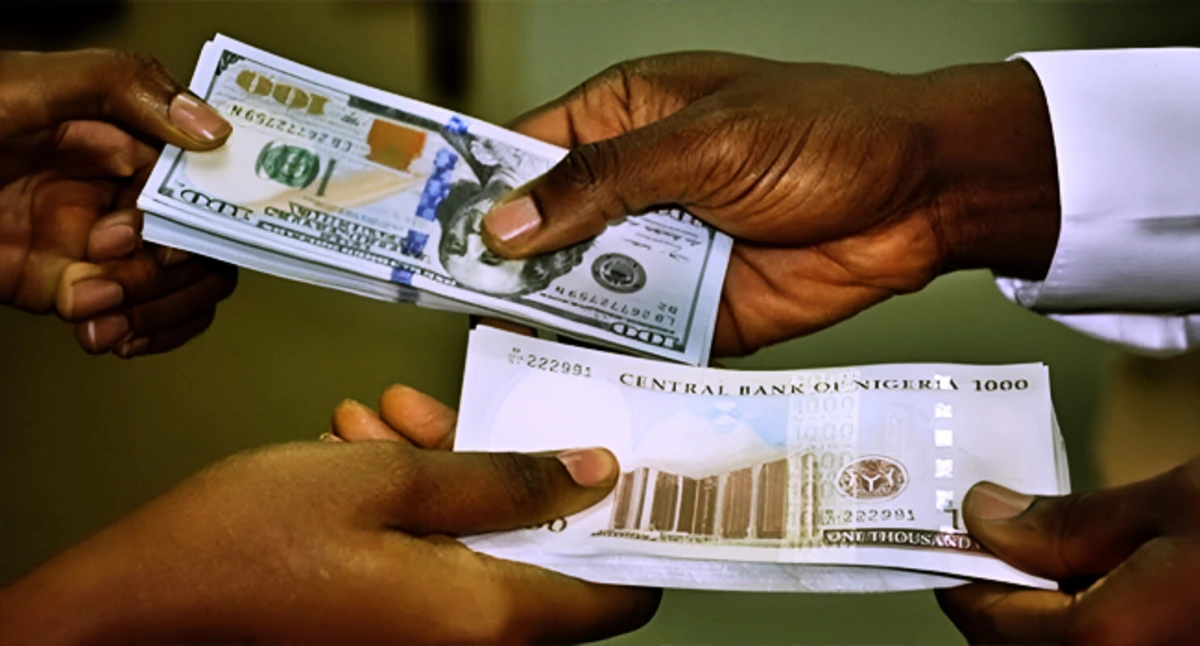
The naira is projected to trade at around N1,330 per dollar in the fourth quarter of 2026, with a full-year average of about N1,385/$, as rising foreign reserves, returning portfolio inflows and lower fuel import requirements support the currency.
The projections are contained in Dangote Group’s Economic Research and Intelligence H1 2026 Economic Report obtained by Nairametrics.
The report attributed the naira’s appreciation to reserve accumulation, positive real interest rates that attracted foreign portfolio investors, and an improving current account position as domestic refining reduced Nigeria’s fuel import bill.
Naira appreciation extends through August
According to the report, the naira appreciated by about 4% against the dollar in the first half of 2026, trading near N1,380/$ in the official foreign exchange window. The appreciation continued through August, when the currency traded at around N1,330/$.
Also Read
- “Staff project the naira to hold its firmer level, averaging N1,405/$ in the second quarter, about N1,340/$ in the third and N1,330/$ in the fourth, for a full-year average close to N1,385/$,” the report stated.
It also linked the improving external position to reduced fuel imports as domestic refining expanded.
Foreign reserves strengthen investor confidence
The naira’s outlook comes amid an improvement in Nigeria’s external buffers and foreign exchange market conditions.
Nairametrics earlier reported that Nigeria’s net foreign reserves had risen to a record $46 billion, while improved stability in the foreign exchange market was helping to strengthen investor confidence.
The World Bank also said the naira was among Africa’s most resilient currencies in the second quarter of 2026, with its maximum depreciation limited to 2.6% despite exchange rate pressures across the continent.
Dangote Group sees 2026 growth between 3.9% and 4.4%
The report also outlined different growth scenarios for Nigeria’s economy in 2026.
- Under its downside scenario, tighter monetary policy and weaker confidence could slow economic activity in the second half of the year, limiting full-year growth to 3.9%.
- Under the upside scenario, stronger oil production and earlier monetary easing could lift growth to 4.4%.
- The report suggested that stronger-than-expected second-quarter performance indicated that the drag from restrictive monetary policy might be fading sooner than previously anticipated. It also identified capital budget execution and the expected onset of monetary easing as factors that could support aggregate demand in the fourth quarter.
The World Bank has separately raised its 2026 growth forecast for Nigeria to 4.3%, from 4.0%, and projected annual growth of 4.4% in 2027 and 2028.
Andrew Dabalen, the World Bank’s chief economist for Africa, said Sub-Saharan Africa continued to demonstrate resilience, with growth forecasts upgraded for nearly three-quarters of countries in the region.
The differing projections reflect variations in the institutions’ assumptions and outlooks for oil production, monetary policy and domestic demand.