Follow Us on Google Discover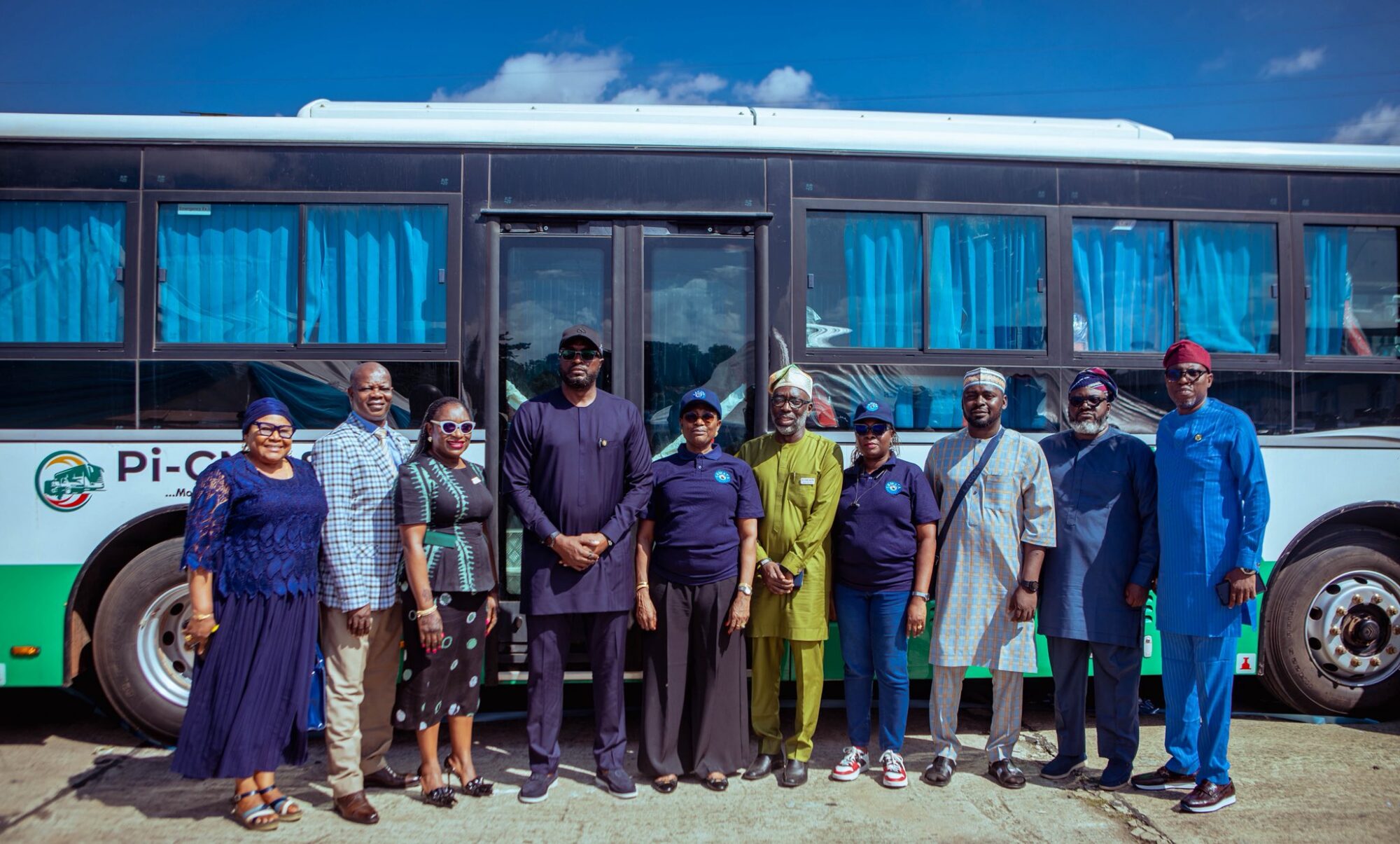
The Presidential Initiative on CNG and Electric Vehicles (Pi-CNG & EV) has delivered 20 high-capacity Compressed Natural Gas (CNG) buses to the Lagos Metropolitan Area Transport Authority (LAMATA) to expand public transport capacity in Lagos.
The buses were handed over at LAMATA’s head office in Lagos on Wednesday, September 30, 2026, with IVM and TATA units among those seen by Nairametrics.
The handover comes a day before the Federal Government’s October 1 target for Nigerians to begin seeing measurable reductions in public transportation costs through greater use of CNG and electric buses.
LAMATA receives 20 CNG buses
Speaking at the handover ceremony, the Managing Director/CEO of LAMATA, Engr. Abimbola Akinajo, said the additional buses represented another practical step towards providing Lagos residents with more efficient, affordable, reliable and sustainable public transportation.
- “It is my great pleasure to welcome you all to this important occasion, the handover of 20 Compressed Natural Gas buses to operators under the regulatory framework of LAMATA.”
- “Today marks another practical step in our collective efforts to provide Lagos residents with more efficient, affordable, reliable, and sustainable public transportation,” she said.
Akinajo said the buses would provide additional capacity to move commuters, connect communities and support economic activities across Lagos, while urging beneficiary operators to deploy and maintain them properly.
Lagos State Commissioner for Transportation, Oluwaseun Osiyemi, said the high-capacity buses could move more commuters with fewer vehicles and potentially reduce waiting times on the routes where they operate.
Pi-CNG & EV Chief Operations Officer Tosin Coker said Lagos was critical to the energy transition in the public transport sector and urged operators to ensure proper maintenance.
Lagos expands CNG bus capacity
The 20 new buses add to the approximately 150 CNG buses already operating within Lagos’ regulated bus transit system, according to Akinajo.
The additional buses will increase passenger-carrying capacity on routes with identified capacity gaps, particularly the Ikorodu-TBS corridor, which Akinajo said has high passenger demand.
Lagos introduced CNG-powered buses into its regulated bus transit system in 2024 as part of efforts to reduce reliance on conventional fuels and lower public transport operating costs.
Akinajo said the lower operating costs of CNG and electric buses are helping LAMATA keep fares within the regulated bus system from rising despite higher diesel prices.
According to her, diesel prices have risen from about N950 per litre at the beginning of the year to between N1,950 and N2,100 per litre currently, significantly increasing the operating costs of diesel-powered buses.
She said the use of CNG and electric buses allows LAMATA to manage the higher operating costs without passing the full increase on to commuters through higher fares.
The additional buses will expand capacity within the regulated bus system as LAMATA faces higher operating costs from rising diesel prices.
Meanwhile, the Lagos State Transport Policy targets having 52% of buses in the Bus Rapid Transit system powered by clean energy by 2050.
FG targets lower transport costs with CNG
The handover comes as the Federal Government prepares for its October 1 target for state governments to leverage CNG and electric vehicles to reduce transportation costs.
President Bola Tinubu announced in August that state governors had agreed, under the Nigeria Governors’ Forum, to take measures to lower fares by taking advantage of the lower operating costs associated with CNG and electric vehicles.
Tinubu subsequently cited savings recorded from CNG-powered public transport in several states.
In Kaduna, he said 100 CNG buses carried about 3.2 million passengers in their first year and saved commuters more than N3.5 billion. He also cited fare reductions linked to CNG and alternative-energy transport in Oyo, Enugu, Plateau, Abuja, Niger and Abia.
CNG conversion reaches 120,000 vehicles
The Midstream and Downstream Gas Infrastructure Fund is financing more than 100 gas projects, including 15 CNG mother stations and 86 daughter stations.
The government plans to add 500 CNG refuelling stations to the 500 previously ordered by the Fund, bringing the planned nationwide rollout to 1,000 stations.
The Federal Government had also targeted the conversion of one million commercial petrol vehicles to CNG by 2027.
Data on the Pi-CNG/EV website shows that about 120,000 vehicles have so far been converted, despite the initiative attracting more than $2.5 billion in investment.
The CNG initiative was introduced in 2023 following the removal of the petrol subsidy, with the government positioning compressed natural gas as a cheaper and cleaner alternative for transportation.