Follow Us on Google Discover
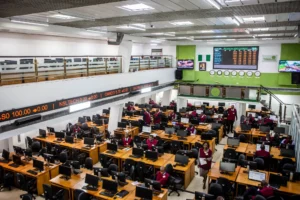
Nigerian stocks are experiencing an unprecedented surge.
The All-Share Index has surpassed 250,000 points, and market capitalization has exceeded the N162 trillion threshold.
Nigerian stocks started the week with an eighth consecutive positive session, with the NGX All-Share Index gaining 0.14% to 250,156.80 points, leaving the index up 61% year to date.
Composition was notably better than the headline gain, with breadth much improved to 39 advancers versus 25 decliners, deals up to 68,655 from 44,293, volume up 9.16% to 574.19mn units valued at N38.06bn, and the most prominent lines capturing 26.01% of value versus nearly 70% on Friday, substantially improving depth.
Also Read
This remarkable performance results from a confluence of macroeconomic reforms, enforced financial consolidation, and re-engagement with international markets. The trend maintains a bullish outlook, provided the index stays above the previous high recorded in May.
The 250,000 level on the All-Share Index presently functions as a support or pivot point. Volume contraction during upward movements may serve as an early warning of exhaustion, preceding a retest of the mid-range of 250,000.
Nigerian Tier-1 banks, characterized by a strong mix of foreign and local earnings, offer a safety buffer should profit-taking pressure impact the broader index near the resistance ceiling of approximately 254,000 marks
This extended multi-day rally signifies substantial institutional positioning ahead of global index modifications, such as the FTSE Russell frontier classification implementation. Additionally, substantial capital inflows into tier-1 banking and telecommunications large-cap stocks have created upward pressure.
However, a divergence warrants attention: blue-chip stocks and maximum-cap gainers, such as NASCON, SUNU, and selected banking stocks, continue to propel the green, while profit-takers have heavily moved into high-value counters like Okomu Oil (which declined by 10%) and Custodian (down approximately 9%). Not all green streaks are broad-based.
Sector dominance continues to define the market landscape. The Banking Index increased by 4.43% weekly, with an impressive year-to-date of 74.22%. The Oil & Gas sector remains robust with a year-to-date gain of 125.94%, supported by holdings such as Aradel.
Institutional rebalancing is ongoing within the Industrial Goods and Premium Boards, involving major players like First Bank Holdings and NGX Group. Pension funds and high-net-worth individuals are repositioning ahead of the Q3 corporate reporting season, with their activities surpassing August profit-taking.
The official reclassification of Nigeria into the FTSE Russell Frontier Market Index Series has reactivated institutional inflows, increasing the visibility of over 31 liquid Nigerian blue chips on the international stage.
Higher capital adequacy requirements mandated by the Central Bank of Nigeria have led to rights issues and open offers by leading banks and financial holding companies.
Massive Initial Public Offerings (IPOs), such as the multi-trillion-naira refinery sale, stimulated market sentiment, and integrated domestic equity capacity into the broader investor base.
The market absorbed billions of naira in capital instead of liquidity drains, driven by domestic and institutional investors aggressively purchasing tier-1 bank shares. Foreign systemic discount rates have decreased amid the resolution of legacy foreign exchange backlogs and improved capital repatriation clarity, supported by ongoing economic reforms.
Chronic inflation and erosion of legacy fiat currency have prompted domestic institutional and high-net-worth capital to transition from underperforming, passive yield-focused instruments—such as five-year domestic bonds yielding 4% to cash-generative equities in sectors like energy, gas, industrials, cement, and consumer goods, which have significantly outperformed passive yields.
Additionally, confirmed first-half earnings surpasses in banking, industrials (up 81% YTD), and upstream/oil-linked sectors provide fundamental cash flow support, bolstering market confidence and speculation.