Follow Us on Google Discover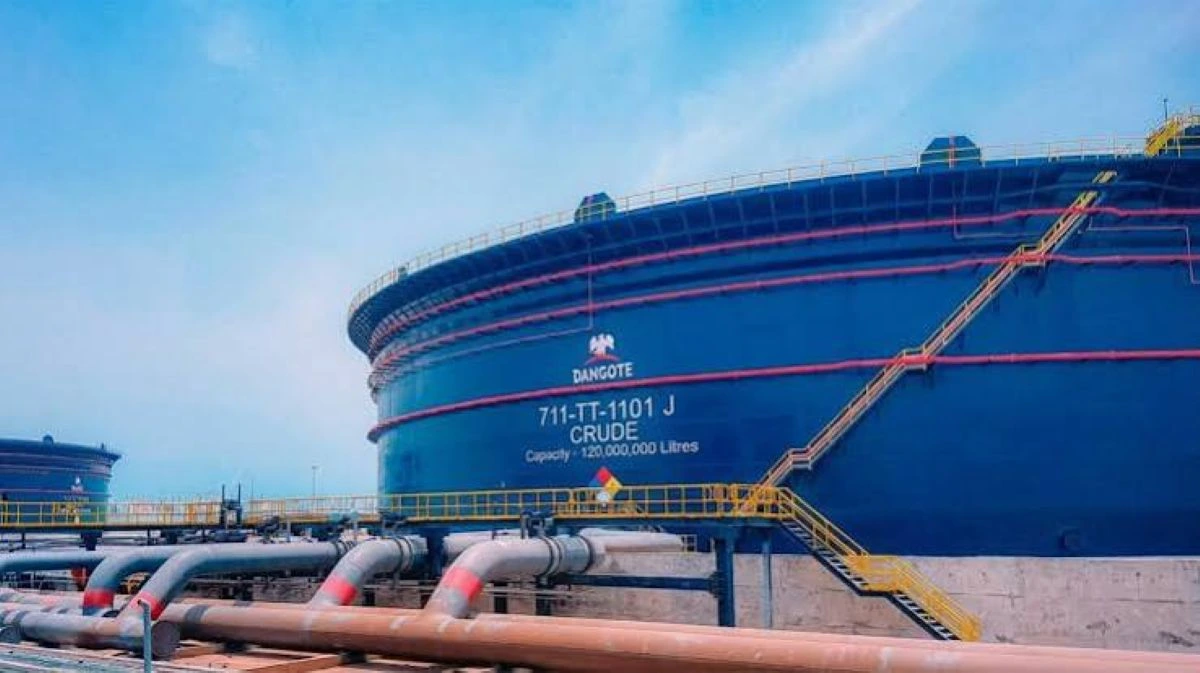
Dangote Petroleum Refinery & Petrochemicals FZE is set to open one of Nigeria’s biggest public equity offers, giving retail investors an opportunity to own shares in the 700,000-barrel-per-day refinery with a minimum investment of N5,250.
The company is offering 4.1 billion new ordinary shares at N525 each, targeting gross proceeds of N2.1525 trillion.
The offer opens on September 14, 2026, and closes on October 13, ahead of the proposed listing on the Nigerian Exchange (NGX).
But the low entry price does not necessarily mean the shares are cheap. Investors still need to understand what they are buying, how to participate, how allotment will work, who will control the company, and whether its earnings can justify the valuation.
Also Read
What exactly are investors buying?
An Initial Public Offering, or IPO, allows a company to sell shares to public investors before listing them on a stock exchange.
Dangote Refinery’s transaction is an Offer for Subscription, meaning the company is issuing 4.1 billion new shares rather than existing shareholders simply selling their holdings.
The money therefore goes to the refinery. The prospectus says the offer is intended to “broaden public ownership”, diversify its investor base and support its long-term growth strategy.
Someone allotted the minimum 10 shares for N5,250 becomes a shareholder once the shares are validly allotted.
The new shares also rank equally with existing ordinary shares. This gives investors exposure to potential dividends and increases or declines in the share price after listing. Neither return is guaranteed.
How can you invest?
Retail investors must apply through approved electronic channels listed in the prospectus.
- These include NGX Invest, bank platforms such as Access Bank, Ecobank, Fidelity Bank and FirstBank, and investment or fintech platforms including Meritrade, Bamboo, PiggyVest and Cowrywise, among others.
- The minimum application is 10 shares at N525 each, with additional applications in multiples of 10. A valid BVN is mandatory for electronic applications.
- Ordinarily, an investor trading shares on the NGX would be expected to have a stockbroking account, a Clearing House Number (CHN) and a CSCS account, where shares are held electronically.
The prospectus encourages applicants to obtain these before applying but makes provision for first-time investors who do not yet have them.
It states that successful applicants without valid CHN and CSCS details will be allotted through a Registrar Identification Number (RIN), a temporary number used to
- “Warehouse allotted shares… under the Registrar’s custody at the CSCS.”
The shares are transferred to the investor’s stockbroking account once valid CHN and CSCS details are provided.
So, not having a CSCS account does not prevent a first-time investor from subscribing to the IPO.
What happens if the IPO is oversubscribed?
Paying for shares does not guarantee receiving everything requested.
The base offer is 4.1 billion shares, but Dangote Refinery may absorb up to 30% additional oversubscription, subject to SEC approval. This could increase the maximum shares allotted to about 5.33 billion.
The company will establish a Full-Allotment Threshold. All valid applications at or below that threshold will receive their full applications.
- Shares remaining afterwards will be distributed among larger applications according to an SEC-approved Basis of Allotment and may be scaled back.
- The allocation may also consider the need for a broad shareholder base and sufficient post-listing liquidity.
Where fewer shares are allotted than requested, surplus application money, together with applicable accrued interest or profit, is expected to be returned within five business days of the Allotment Date.
Dangote will still control the company
Dangote Refinery has a total share capital comprising 125.48 billion shares. Before its recent private placement, 112.98 billion shares had been issued and fully paid.
- The company subsequently raised about $2.5 billion through a two-tranche private placement, issuing 7.148 billion new shares and increasing issued shares to 120.13 billion.
- The 4.1 billion-share IPO would increase issued shares to about 124.23 billion if fully allotted. That means the base IPO represents only about 3.3% of the enlarged company.
Even within the offer, Pan-African Refinery Investment SPV has committed to subscribe for up to the Naira equivalent of $400 million, representing about 1.039 billion shares or 25.34% of the IPO, subject to allotment.
- If fully taken up, about 3.061 billion shares would remain for other investors, which is 74.66% of the offer, but only about 2.46% of the enlarged company.
- Control also remains concentrated. Aliko Dangote beneficially owned about 104.83 billion shares, or 87.27%, before the IPO. If the base offer is fully subscribed and he buys no additional shares, that would fall to about 84.4%.
The IPO therefore broadens ownership without materially changing control.
Why is Dangote raising N2.15 trillion?
Dangote plans to add another 700,000 barrels per day, taking refining capacity towards 1.4 million barrels per day.
- The prospectus estimates the expansion programme at about $14.27 billion, equivalent to N19.46 trillion at the prospectus exchange rate of N1,364/$.
- Net IPO proceeds of N2.111 trillion will fund only part of this, including refinery equipment, utilities, infrastructure and construction.
The prospectus says the balance will come from internally generated cash flow and financing including debt, trade, and project finance.
Is the N525 cheap?
At N525 per share, Dangote Refinery would be valued at about N65.22 trillion after the base IPO.
- CardinalStone’s peer comparison suggests that the price is not particularly cheap. Valuing Dangote Refinery in line with other listed refiners produced much lower equity values of about $26.7 billion to $28.5 billion.
However, its future cash-flow model, which factors in higher production and the planned expansion, produced a much higher value of about $62.9 billion. Combining the different approaches, CardinalStone arrived at a 12-month target price of N688.09, equivalent to a projected market capitalisation of about N77.7 trillion.
- Chapel Hill Denham reached a similar conclusion. Its peer comparison valued the refinery at about N56.67 trillion to N64.66 trillion, while its future cash-flow model produced about N104.57 trillion. Its final blended valuation was N82.62 trillion.
- Private-placement investors also appear to have entered lower. The $2.5 billion raised from 7.148 billion shares implies an average price of about $0.35 per share, compared with roughly $0.385 for the IPO price, suggesting an approximate 10% premium for public investors.
So, is N525 cheap? Not really. It looks closer to a fair-to-full valuation today. The upside case depends largely on Dangote Refinery delivering the expansion; higher production and future cash flows are what analysts expect, and the recent H1 2026 results become a reference point.
Can the H1 profit be sustained?
Dangote Refinery reported N19.13 trillion in revenue and N2.50 trillion in profit after tax in H1 2026, compared with a N723.06 billion loss in FY2025.
- At N2.50 trillion, its half-year profit is already higher than that reported so far by any NGX-listed company for H1 2026, although some major banks are yet to publish their results.
- The prospectus attributes the turnaround largely to stable full-capacity production from March, higher throughput and stronger product prices.
But investors should be careful about simply doubling the H1 profit.
For perspective, if the N2.50 trillion H1 profit were annualised, full-year profit would be about N5.01 trillion.
- Against the IPO’s post-offer market value of N65.22 trillion, that would put Dangote Refinery on a hypothetical P/E ratio of about 13 times.
- That is considerably above CardinalStone’s 7.5 times median P/E for its refining peers, but close to Chapel Hill Denham’s 13.6 times FY2026 peer average and above its 10.6 times FY2027 peer average.
However, H1 earnings should not be treated as a normal run rate. Chapel Hill Denham estimates refining margins reached $33.70 per barrel in Q1 2026, helped by unusually favourable market conditions, and expects them to fall to about $28 in FY2026 and $25 in 2027–2028
Overall, investors are buying into a profitable refinery with significant growth potential, but also a N65.22 trillion valuation, major expansion needs and exposure to operational and market risks.
The key question is whether Dangote Refinery can sustain enough earnings and cash flow to justify N525 per share after listing.