Follow Us on Google Discover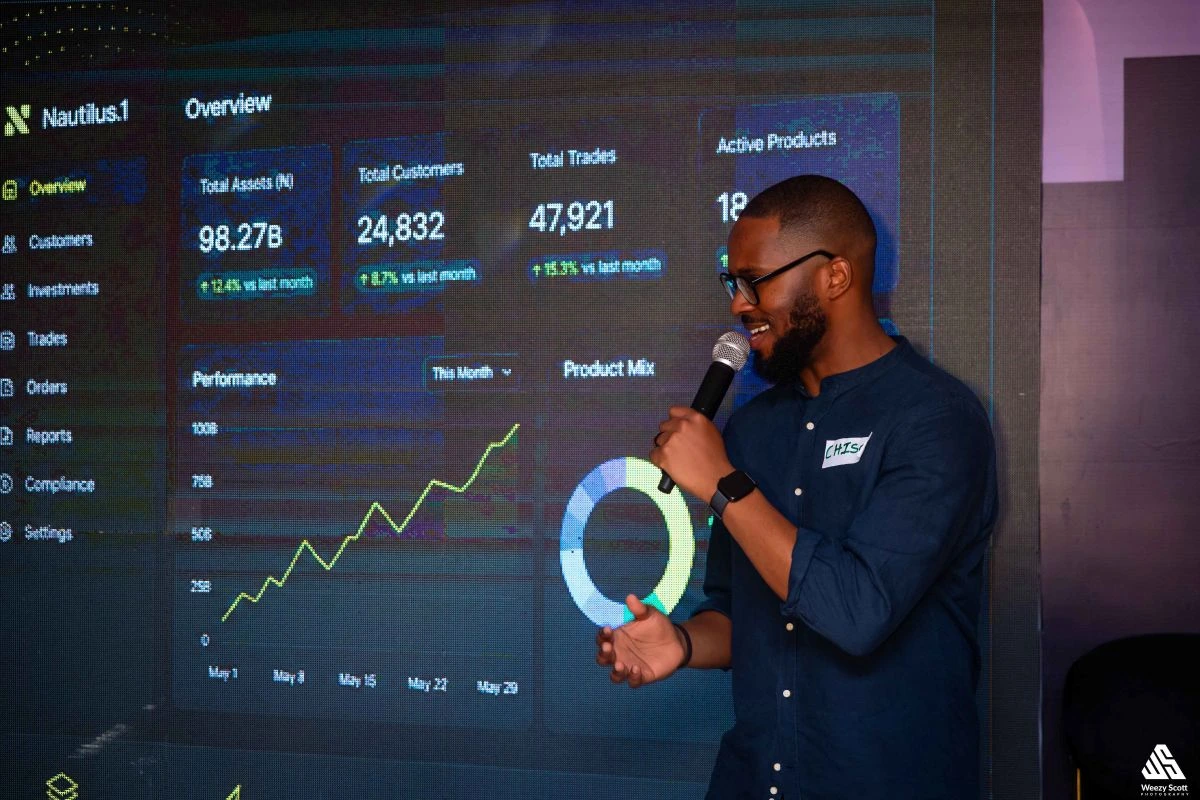
Nigeria’s retail investment market has changed dramatically over the past decade. What once required physical forms, branch visits, brokers and lengthy processes can increasingly be done from a smartphone.
Investors can move between naira funds, dollar funds, equities, savings products and other investment options with considerably less friction than before.
But on Tuesday, August 25, 2026, at a Retail Investment Innovation Mixer hosted by product and technology company, Check, at O’DA Art Gallery in Victoria Island, Lagos, the conversation moved beyond whether Nigerians now have enough ways to invest.
Check’s argument is that Nigeria may have made significant progress in putting investment products online, but the next phase of retail investment growth will depend on understanding the behaviour, fears, motivations and financial realities of the people expected to use those products.
Also Read
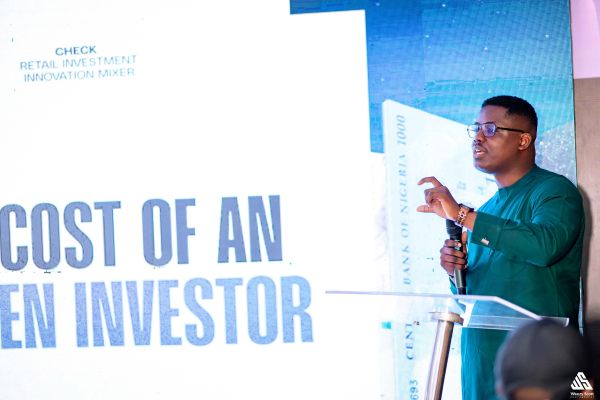
That thinking formed the basis of its latest report, titled The Cost of an Unseen Investor: What Nigeria’s Retail Investment Industry Loses When It Builds for Transactions, Not People.
What the research data are saying
Check’s latest research points to a significant gap between interest in investing and taking meaningful action.
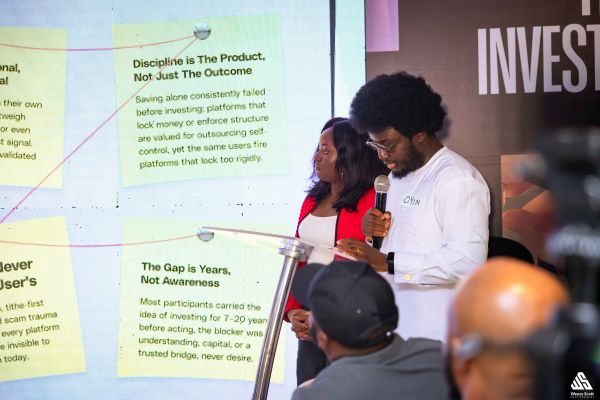
- The study found that 81% of research participants had carried the idea of investing for an average of seven to ten years before acting, while the same proportion said they had consistently struggled to save before they began investing.
- Another 56% said building a sense of discipline was itself a primary reason for investing, separate from returns.
Check grouped these findings under one of the study’s recurring themes: “The gap is years, not awareness.”
Participants identified barriers including understanding, capital, financial obligations, previous scam experiences and the absence of a trusted bridge into investing.
Trust also featured prominently. Some 77% of participants named a person they knew who already had money invested as their primary trust signal.
During the report preview at the Retail Investment Innovation Mixer, Mr. Oyin Oludipe, Head of Content & Engagement at Check and Miss Somto Okechukwu, research associate, emphasised that respondents often relied on people they already knew rather than institutional badges, ratings or marketing messages.
“It was somebody they already knew. Seventy-seven percent, not the credentials of an investment company, or badges, or copy, or anything.”
The research also found that 55% of participants identified family financial obligations as recurring commitments competing directly with their ability to save or invest, while 82% described an emotional response to saving or investing.
Check grouped these behaviours under another theme: “Money is never just the user’s,” highlighting family obligations, faith-inspired giving and scam trauma as factors influencing financial decisions.
Investors were also spreading their money across different platforms as 56% used multiple platforms, assigning each a different financial purpose, including liquidity, daily yield, currency hedging, short-term growth and discipline.
Meanwhile, 62% kept their investing private, while 81% said their ultimate goal was to generate income that would not depend on continuous work or asking others for help.
The report also identified what Check calls “The Saver Identity” – the phenomenon where participants who were already investing, earning returns, reinvesting and holding diversified portfolios still described themselves as savers rather than investors.
Another finding showed that 100% of investors engaged with had stopped using an investment platform over an issue that could have been resolved, without telling the platform why, or attempting to fix it.
This behaviour was summed up simply: “They just leave quietly.”
On artificial intelligence, 80% of participants who discussed AI wanted automated analysis, recommendations and updates, while 20% independently drew the line at allowing technology to control the final buying decision or custody of their investments.
The reveal
Check’s latest research did not begin with the investor. Its earlier work began with the investment platforms themselves.
Last year, the company reviewed 10 digital investment products in Nigeria and found an average usability score of just 43.2 out of 100, identifying recurring gaps across the investment experience.
This year, it turned the lens around to understand how retail investors actually think, feel and behave.
At Tuesday’s event, Check traced that progression back to its decision to download, sign up for and use investment platforms itself.
That process led to a deeper question:
- “What are we really designing for? And where does this experience break?”
That, in turn, pushed the company to look beyond screens and transactions to understand:
- “The people behind the transactions, the people behind the apps, the people who we’re actually building for.”
The evolution of the research also mirrors the wider evolution of Check itself as a technology company born from design, which now organises its work across three broad areas: product, systems and brand.
Over the past decade, Check has supported more than 50 digital products and platforms, while expanding its work beyond design into the product and systems underpinning how organisations create and deliver value.
The progression is significant because the company’s retail-investment work has followed a similar path: from examining the interface investors use, to understanding the people using it, and now to questioning the systems underneath the experience.
The reframe
What Tuesday’s mixer ultimately suggested is that Nigeria’s retail-investment challenge may no longer be primarily about product availability. The industry has become increasingly good at putting investment products within reach, but Check’s research raises a harder question: how do more people actually become investors and remain investors?
The seven-to-ten-year gap between intention and action suggests that access alone is not enough. Trust, understanding, financial obligations and confidence begin shaping an investor long before the first transaction.
That thinking ran through the presentation of Check’s Head of Innovation, Lanre Wright on the future of retail investing. His argument that people should be able to engage with an investment platform before they have money ready to invest effectively expands the role of the app—from transaction channel to a place for discovery, learning and habit-building.
It also explains Check’s reframe: “What if investment platforms were designed to be social-first?” If people already rely heavily on trusted relationships when deciding whether to invest, community and social proof are not outside the investment journey; they are already part of it.
But the mixer also revealed another layer. Check identified fragmented systems, semi-manual workflows and unreliable trade infrastructure as constraints, suggesting that better interfaces alone cannot solve every problem.
That is where Check’s own evolution from design into product and systems becomes relevant, including its invention, Nautilus.1, which it presented as a unified infrastructure for modern investing.
Taken together, the event presented a broader proposition: Nigeria does not merely need more ways to invest. It needs better ways to turn interest into participation, participation into trust, and transactions into long-term investment behaviour.
Explore the report at report.wearecheck.co/2026