Follow Us on Google Discover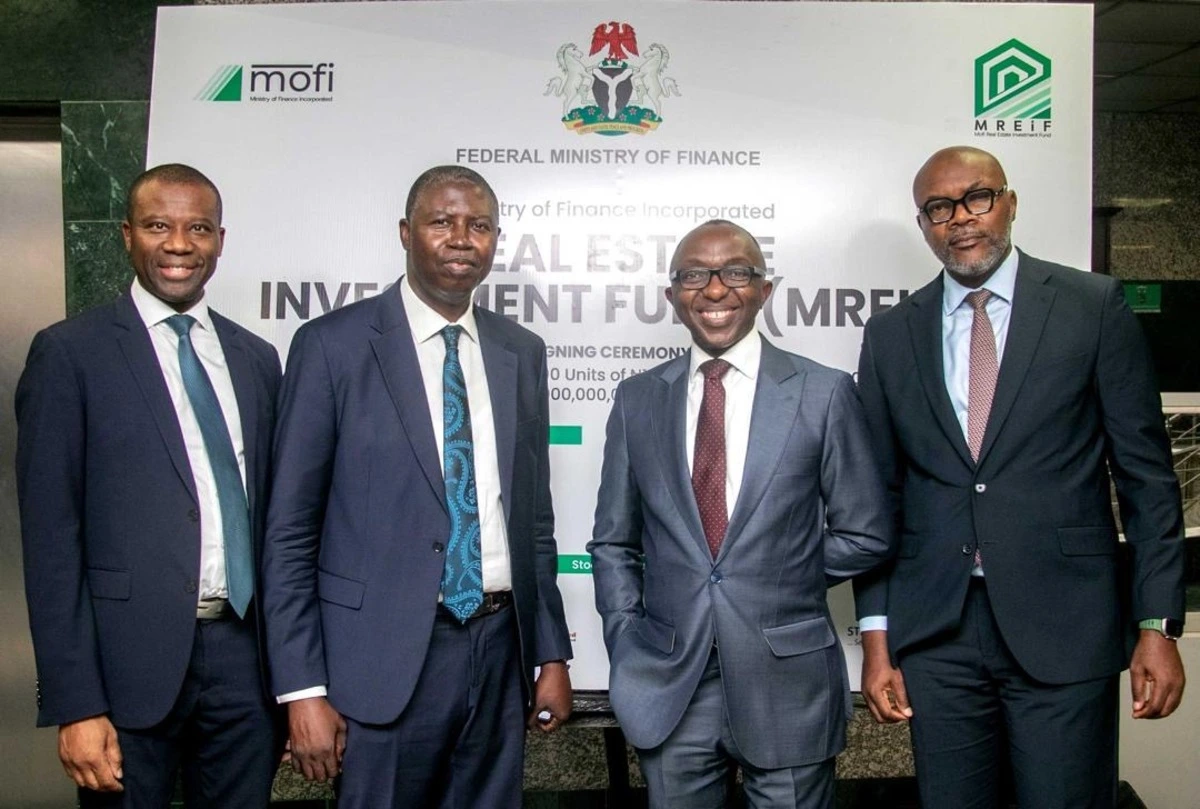
Nigeria’s housing deficit has never posed a demand problem.
Millions of Nigerians want to invest in properties and will service a mortgage if the terms are reasonable.
Currently, what the industry lacks is a fairly priced financing structure that is patient enough for prospective property owners while delivering attractive returns to the providers of the capital.
In addition to financing issues, a lack of understanding of available investment opportunities also poses a risk to the sector.
The MOFI Real Estate Investment Fund (MREIF), managed by ARM Investment Managers on behalf of the Ministry of Finance Incorporated, was set up to address some of these issues and provide a trusted investment vehicle for Nigerians.
Its results for the first half of 2026 give a clear picture of how far that effort has come in its first year and a half of operations.
For the six months ending June 30, 2026, the fund generated a total income of N17.48 billion from its investing activities, including income from mortgages created and interest income on cash holdings.
In simple terms, MREIF’s income is not generated from trading or speculative activity, but from interest on the loans and financial assets it holds. This is exactly the kind of steady income a fund built around long-term mortgage lending should be generating.
After accounting for operating costs, the fund posted a profit before tax of N14.49 billion and profit after tax of N14.24 billion, building on the N7.34 billion the fund had already earned in the first quarter of the year.
The total value of MREIF’s assets stood at N269.9 billion by the end of June. Of that, N131.67 billion has been disbursed specifically as mortgage loans, and that money has so far financed 1,909 completed housing units for homeowners.
These units span all six of Nigeria’s geopolitical zones and cover 27 states, which matters because mortgage financing in Nigeria has typically clustered around a small number of major cities, leaving large parts of the country underserved.
In terms of MREIF’s mortgage beneficiaries, 87.2% are salaried employees and 12.8% are self-employed, largely a reflection of the fund’s single-digit interest rates, made possible through its network of 22 partner banks and mortgage institutions that help extend this pricing to eligible homebuyers.
So, this pricing structure is arguably an important model as it has brought homeownership within reach of people who earn a regular salary but would never qualify for a market-rate mortgage.
Mortgages are only one side of what MREIF does. The fund has also extended what are called offtake guarantees to three developer projects so far.
In practical terms, this means MREIF is backing developers so they can secure construction financing to build housing units, financing that banks might otherwise hesitate to provide without that guarantee in place. Those three guarantees currently support 475 housing units under construction.
This matters because financing the supply of housing is often harder to solve than financing the demand for it, and it is one part of the fund’s work that gets far less attention than mortgage numbers do.
All of this lending is funded by investor capital, and MREIF’s mid-year results show how that capital was rewarded. On July 15, the fund paid its interim dividend for the first half of 2026 to two groups of investors.
Commercial investors, who hold 1 billion units, received N8.61 per unit, which works out to an annualised yield of 17.37% and a total payout of N8.61 billion. Government-held units, totalling 1.5 billion units, received N2.80 per unit, a yield of 5.65% and a payout of N4.20 billion.
Combined, the fund returned N12.82 billion to investors across its 2.5 billion outstanding units.
The difference between those two yields is not a sign that one group of investors is being treated better than the other. It is the mechanism that allows the whole structure to function.
Government capital accepts a lower return so that it can fund mortgages with rates the ordinary Nigerian can afford, while commercial investors are paid closer to market rates to keep them willing to fund the programme.
This blended finance model enables the combination of public and private capital at different price points to fund affordable mortgages. Blended finance only works if the underlying numbers hold up over time, and six months into this financial year, MREIF’s do.
In total, a balance sheet of N269.88 billion, equity of N266.78 billion, and a net asset value of N106.71 per unit describe a fund that is on a steady trajectory rather than in short bursts.
For a programme designed to outlast any single housing policy cycle, this kind of consistency matters more than a single standout quarter would. What the half-year figures show, when studied collectively rather than in isolation, is a fund whose earnings and housing impact are moving in the same direction, which is not something every investment vehicle in this sector can claim.