Follow Us on Google Discover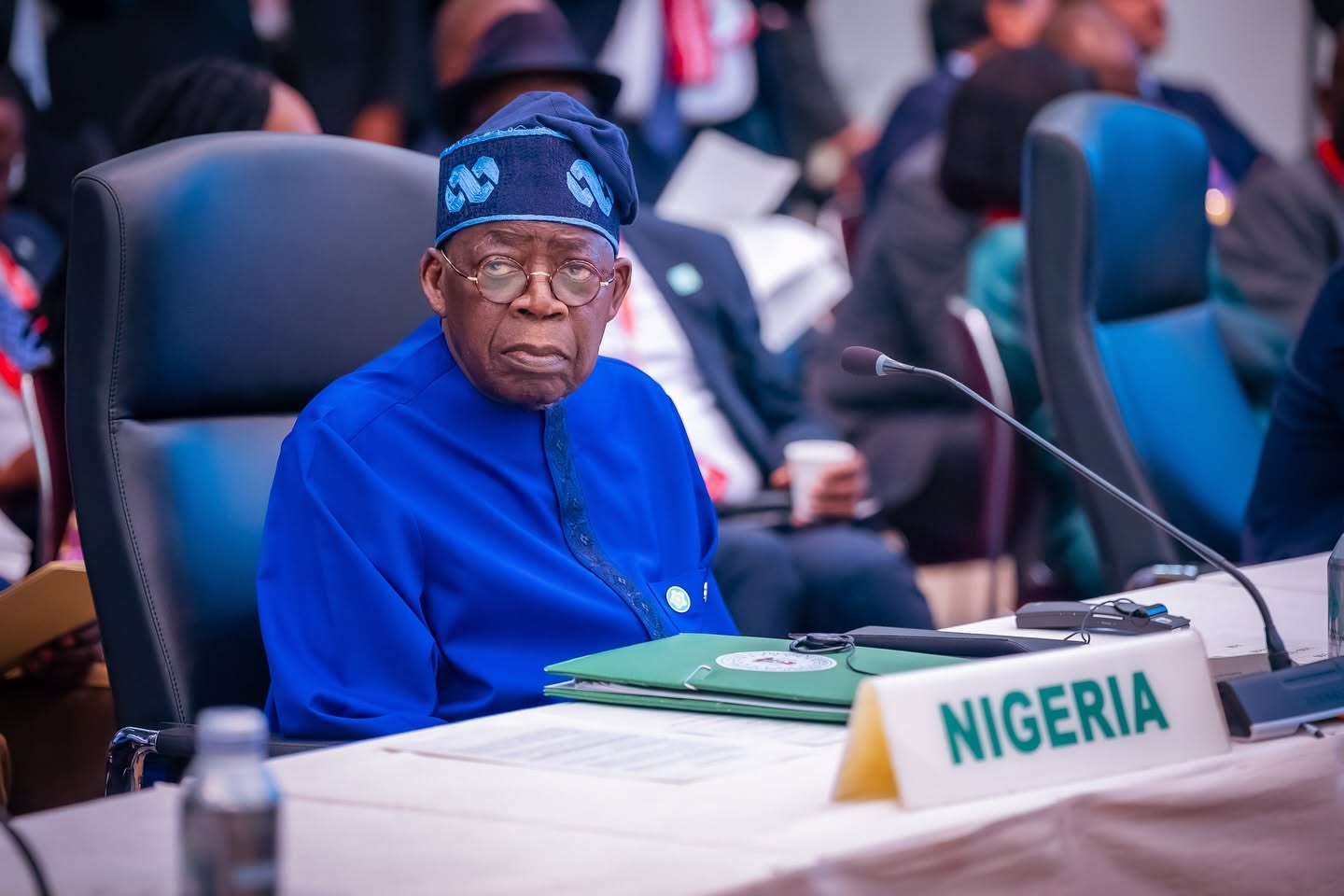
The Alliance for Economic Research and Ethics (AERE) has urged President Bola Ahmed Tinubu and the Nigeria Revenue Service (NRS) to translate Nigeria’s revenue and macroeconomic gains into improved living conditions, including lower food prices, better wages and stronger poverty reduction.
AERE made this known in a statement sent to Nairametrics on Thursday.
The call came as the group praised the government for what it described as significant progress in revenue mobilisation and macroeconomic stabilisation.
AERE, however, said the recovery must move beyond headline economic indicators and deliver tangible benefits to households.
Also Read
What they are saying
AERE said the NRS and President Tinubu deserved recognition for the increase in tax collections and improvements in several macroeconomic indicators.
- “The NRS internal report shows that tax collections have more than doubled, from N12.3 trillion in 2023 to N27.1 trillion by July 2026, a surge of roughly 120%.”
- “The baton must now pass from macro stabilisation to micro wellbeing: from reserves to stomachs, from ratios to rent, from trillion-naira headlines to the N18,000-a-month driver, the N70,000-a-month civil servant, and the 140 million Nigerians still waiting for the recovery to taste like something.”
The group said the four tax reform laws, digitised collection, the overhaul of the revenue service and measures to close tax evasion loopholes had contributed to the improvement in revenue mobilisation.
AERE said Nigeria’s debt-to-GDP ratio had fallen from 38% in 2023 to 35.5% in 2025 and a projected 32.3% in 2026, while gross external reserves increased from $33.22 billion at the end of 2023 to about $51.9 billion by July 2026.
The group also highlighted improvements in the balance of payments, oil production, trade, capital importation and the Nigerian Exchange market capitalisation.
However, the organisation said the gains had not yet translated sufficiently into improved household welfare. It cited National Bureau of Statistics data showing headline inflation at 15.91% in June 2026, while food inflation rose to 17.52%.
The group also cited the World Bank’s April 2026 Nigeria Development Update, which estimated that Nigeria’s poverty rate rose to 63% in 2025, representing about 140 million people below the poverty line.
AERE said Nigeria was experiencing a “two-speed economy” in which macroeconomic improvements were not yet being felt equally across households.
It said the N70,000 minimum wage was worth about $47-$50 a month at an exchange rate of N1,400-N1,500 to the dollar, while market surveys cited by BusinessDay suggested that urban households required between N349,000 and N513,000 monthly for basic needs.
The organisation said the situation was more difficult because more than 90% of employment is informal, where minimum wage protections have limited reach.
- “Recovery is a relay race, not a photo finish,” the organisation said, urging the government to ensure that the benefits of economic reforms reach households across the country.
Get up to speed
Niairametrics reported that Nigeria’s GDP growth improved from 2.54% in Q3 2023 to 3.46% in Q4 2023. Growth averaged 3.19% in 2024 and strengthened further to 3.85% in 2025, representing the strongest annual performance within the review period.
- In Q1 2026, GDP growth remained positive at 3.89%, bringing average quarterly growth between Q3 2023 and Q1 2026 to approximately 3.46%.
- Despite stronger revenue performance, Nigeria’s public debt and debt servicing obligations have risen sharply under the current administration.
- According to the Debt Management Office (DMO), total public debt stood at N87.38 trillion as of June 30, 2023, shortly after Tinubu assumed office.
- By December 31, 2025, Nigeria’s total public debt had increased significantly to N159.28 trillion, reflecting rising borrowing levels, exchange rate adjustments and securitisation of legacy obligations.
Recently, the Manufacturers Association of Nigeria (MAN) said that the Nigeria Tax Act 2025 has yet to eliminate multiple taxes and levies imposed on manufacturers, with companies still facing visits from different tax authorities and regulators.
According to MAN, the continued encounters with multiple tax collectors meant that the tax reform had yet to deliver the relief expected by manufacturers.
In the Central Bank of Nigeria’s July 2026 Business Expectations Survey, 70.8% of respondents identified high and multiple taxation as the biggest constraint to business operations, ahead of insecurity and high interest rates.
What you should know
In its 2026 Fiscal Transparency Report released on Thursday, the US Department of State said Nigeria made no significant progress in addressing the deficiencies identified during the review period.
The assessment covered January 1 to December 31, 2025, and evaluated 140 governments, including the Palestinian Authority. While 73 met the minimum fiscal transparency requirements, 67 did not, with Nigeria among those that failed.
The latest assessment comes after concerns raised by the International Monetary Fund (IMF) over Nigeria’s fiscal reporting and financing arrangements.