Follow Us on Google Discover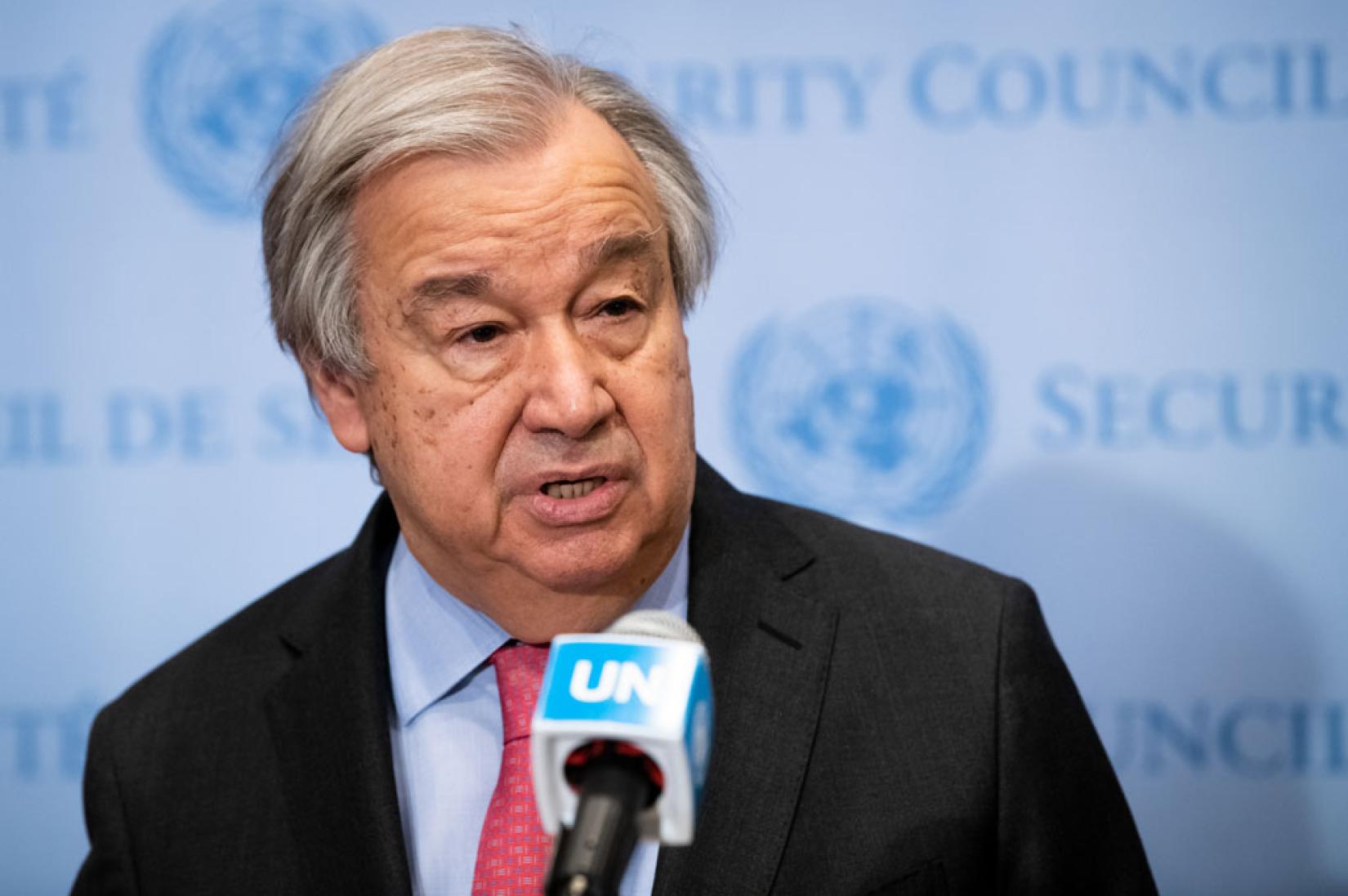
The Secretary-General of the United Nations, Antonio Guterres, has warned that artificial intelligence (AI) is advancing at a pace that regulators can’t keep up with.
According to Reuters, Guterres said AI’s rapid advancement outstrips the ability of governments, regulators, and even developers to manage its risks.
He gave the warning while speaking on Monday at the inaugural government-level UN Global Dialogue on AI Governance in Geneva.
He called for coordinated global rules to ensure the technology is used safely and responsibly.
What the UN Secretary-General is saying
Guterres said AI’s rapid deployment has far-reaching implications for economies, labour markets, elections, global security, and vulnerable populations, particularly children.
- “A technology that can reshape economies, transform the world of work, sway elections and tilt the balance of security is being deployed faster than anyone—including the people building it—can keep up,” Guterres told delegates, according to Reuters.
He stressed that innovation must be accompanied by effective oversight.
- “Innovation needs guardrails. If AI is to be powerful, it must be governed,” he said.
The two-day meeting marks the first government-level global dialogue convened by the United Nations to address AI governance, reflecting growing international concern over the technology’s rapid evolution and its societal impact.
Antonio Guterres’ warning has been echoed by other industry experts in recent times. In June, the Chief Executive Officer and Co-founder of Bluechip Technologies, Kazeem Tewogbade, identified the potentially destructive consequences of artificial intelligence as his biggest concern about the technology’s rapid evolution.
Tewogbade made the remarks while speaking to Nairametrics on the sidelines of the Bluechip Data and AI Summit in Lagos.
- While acknowledging AI’s enormous potential to transform businesses and industries, he said the unpredictable nature of increasingly powerful AI systems remains a major source of concern, warning that it is still difficult to fully anticipate how the technology could evolve or the risks it may pose if left unchecked.
His comments came amid growing global debate over AI safety, governance, and regulation, as governments, technology companies, and researchers grapple with the long-term implications of advanced AI for economies, employment, cybersecurity, and society.
More insights
While the UN Global Dialogue on AI Governance in Geneva is not intended to produce a binding international treaty, it aims to build consensus on managing AI risks while ensuring countries can harness its economic and social benefits.
- Delegates at the Geneva meeting are expected to review findings from a UN-backed independent scientific panel comprising 40 experts.
- The report examines both the opportunities presented by AI and the risks associated with its widespread adoption, providing recommendations to inform future international policy discussions.
The United Nations plans to publish a more comprehensive AI assessment next year, alongside a second Global Dialogue on AI Governance scheduled to take place in New York.
What you should know
Nairametrics earlier reported that former Google CEO Eric Schmidt has also issued a similar warning.
- He warned that AI could pose a significant global security threat if it is exploited by terrorist groups or hostile states, calling on governments to strengthen oversight of private technology companies developing advanced AI systems.
- Speaking in an interview with the BBC, Schmidt said his greatest concerns about AI extend beyond commonly debated issues, focusing instead on what he described as the technology’s “extreme risks.”
He cautioned that countries such as North Korea, Iran, and Russia, as well as terrorist organizations, could potentially misuse advanced AI capabilities for harmful purposes if adequate safeguards are not put in place.