Follow Us on Google Discover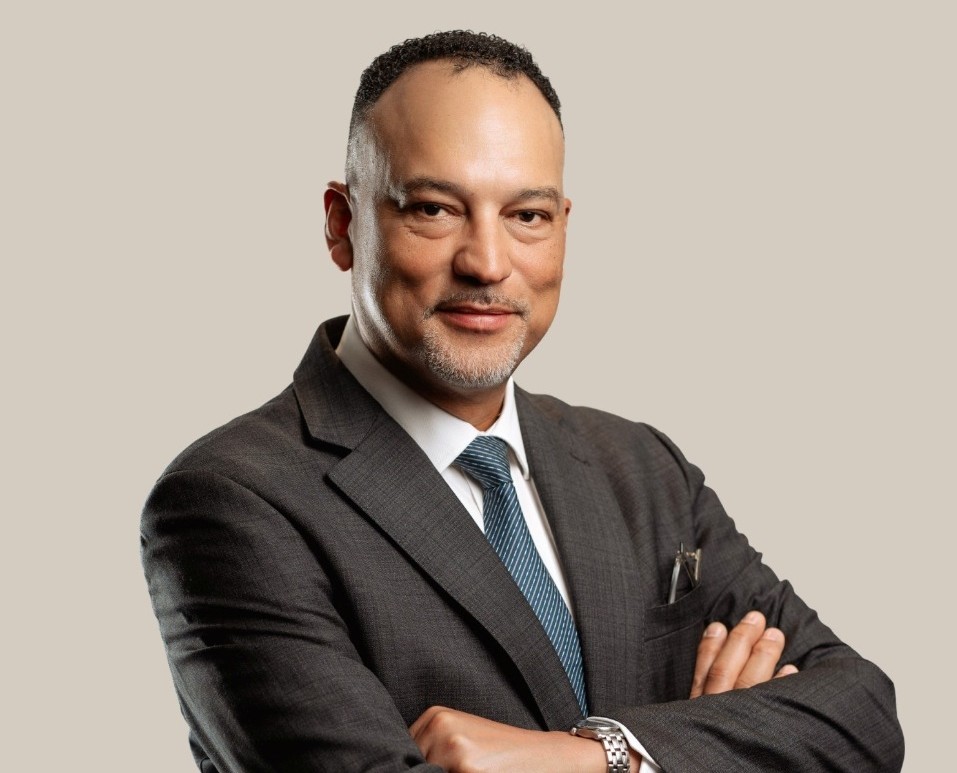
The Chief Executive Officer of Open Access Data Centre (OADC), Dr. Ayotunde Coker, has dismissed concerns over Nigeria’s capacity to comply with the Central Bank of Nigeria’s (CBN) payment data localisation directive, insisting that the country’s data centre infrastructure is sufficient to support the transition.
Speaking during an interactive session with ICT editors, Coker urged banks, fintechs, and other payment service providers to focus on implementation rather than questioning the availability of local infrastructure.
The comments come weeks after the CBN, in a circular dated June 15, 2026, directed all financial institutions and licensed payment operators to store and manage payment transaction data generated within Nigeria on local servers.
What the OADC CEO is saying
According to Coker, Nigeria’s data centre market is supported by more than $2 billion in projected investments by 2027, with OADC alone investing $240 million in a 24 megawatt hyperscale facility in Lekki.
- “There is no capacity problem in the high-quality data centres with expansion plans in place. I would really advise people to just get on with the process of figuring out what they need to do. Don’t make excuses,” he said.
He added that major operators, including Equinix, OADC, Rack Centre, and other providers, are continuing to expand capacity, with the domestic data centre market projected to grow from 136.7 megawatts in 2025 to 279.4 megawatts by 2030.
Coker explained that operators maintain multiple layers of available capacity, including fully operational facilities that can immediately accommodate customers, shell infrastructure ready for rapid deployment, and approved land earmarked for future expansion.
- “What you have is, first of all, the land is there. Typically, you build out what’s an efficient deployment of capital, and then you have what is actually used and what is immediately available for sale. Data centres have capacity immediately available for sale, as quickly as a client wants to come in,” he said.
He noted that additional investments, including Airtel’s Nxtra data centre project in Eko Atlantic and Equinix’s ongoing expansion in Lagos, would further strengthen Nigeria’s hosting capacity.
More insights
On concerns about meeting the January 2027 deadline, Coker said institutions should begin detailed migration planning immediately instead of seeking extensions.
- “If your regulator tells you to do something by January 1, in six months, you get your head down, and you work out what you need to do. And then if there are issues or questions, you give a very authentic analysis of what it is. You need to present your case,” he said.
He acknowledged that institutions relying on global cloud providers such as Amazon Web Services (AWS), Google Cloud, and Microsoft Azure would face technical and operational decisions, including whether to migrate workloads to Nigerian data centres or work with providers offering local infrastructure.
- “Do you lift and shift? Do you need to buy new equipment? Do you have equipment lead time issues? What do you need to do to maintain service? You need to lay it out,” he added.
Responding to concerns raised by some fintech operators about the security of locally hosted data, Coker argued that modern Nigerian data centres already meet international security standards.
He, however, distinguished between physical infrastructure security and cybersecurity, noting that while data centres are responsible for securing their facilities, financial institutions remain responsible for protecting their applications, systems, and customer data from cyber threats.
What you should know
The CBN in June gave affected institutions until January 1, 2027, to fully comply with the directive, which applies to deposit money banks, microfinance banks, mobile money operators, switching and processing companies, payment terminal service providers, payment solution service providers, super agents, and other licensed payment operators.
The timing of the CBN’s directive coincides with a period of unprecedented growth in demand for computing infrastructure globally.
Artificial intelligence applications are driving a surge in demand for high-density data centres, with operators increasingly expanding their facilities to support more powerful computing environments.