Follow Us on Google Discover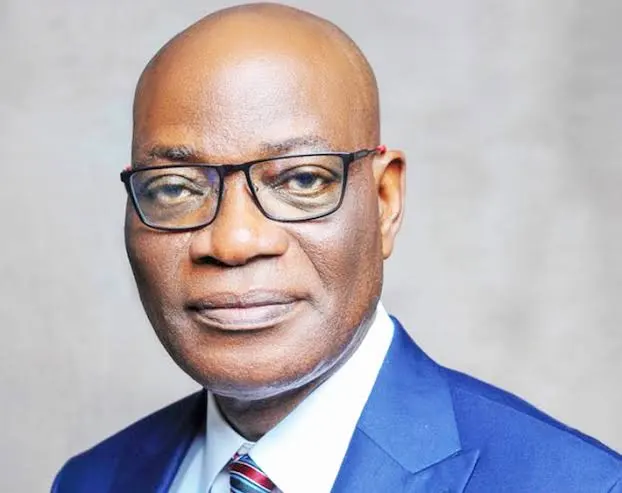
President Bola Ahmed Tinubu has appointed Professor Oluwatoyin Temitayo Ogundipe as Chairman of the Governing Board of the National Universities Commission (NUC), in a move aimed at strengthening leadership and regulatory oversight of Nigeria’s university system.
The appointment was announced in a statement released on Monday, June 22, by Bayo Onanuga, Special Adviser to the President on Information and Strategy.
Professor Ogundipe succeeds Emeritus Professor Olufemi Raphael Aina, who resigned from the position after less than one year in office. Professor Aina was appointed in July last year, while members of the governing board were inaugurated in November 2025.
What they are saying
According to the Presidency, the appointment of Ogundipe is intended to reinforce governance within the Nigerian university system and improve institutional performance in key areas such as funding, global competitiveness, and academic stability.
Also Read
It stated that Professor Ogundipe is expected to provide visionary leadership at the National Universities Commission in line with the administration’s Renewed Hope Agenda, with a focus on strengthening quality, access, and integrity in tertiary education.
- “As NUC Chairman, Professor Ogundipe will oversee the regulatory body of the Nigerian university system, focusing on funding, global competitiveness and academic stability,” the statement reads in part.
The Presidency noted that his appointment reflects confidence in his extensive academic and administrative experience, as well as his leadership roles across Nigeria’s higher education and scientific research ecosystem.
Brief profile of Professor Ogundipe
Professor Oluwatoyin Temitayo Ogundipe is a distinguished Nigerian academic and university administrator with decades of experience in higher education leadership and scientific research.
He holds a PhD in Botany from Obafemi Awolowo University and an MBA from the University of Lagos.
- He previously served as Vice-Chancellor of the University of Lagos from 2017 to 2022, where he led major institutional reforms and academic development initiatives.
- He is currently the Pro-Chancellor of Redeemer’s University, Ede, Osun State, and at 66 years old, remains active in higher education governance and policy development.
- Ogundipe is a fellow of several professional bodies, including the Nigerian Academy of Science, the Linnaean Society of London, and the Royal Society of Biology, London. He has also served as President of the Botanical Society of Nigeria and Chairman of the Lagos State Science, Research and Innovation Council (LASRIC).
His academic contributions span multiple fields, including plant taxonomy, ecological conservation, ethnobotany, and forensic botany, positioning him as one of Nigeria’s leading figures in botanical sciences and environmental research.
What you should know
The National Universities Commission (NUC) is Nigeria’s primary regulatory agency responsible for overseeing university education, including accreditation, quality assurance, funding coordination, and policy implementation across federal, state, and private universities.
In recent years, the commission has played a central role in addressing challenges within the higher education sector, including funding constraints, strikes, infrastructure deficits, and concerns over global competitiveness.
The appointment comes at a time when the Federal Government is seeking to reposition Nigeria’s university system to better align with global standards, improve research output, and enhance institutional stability.
In February, the NUC issued 16 new guidelines tightening regulation around the award and use of honorary doctorate degrees in Nigeria. The framework restricts eligibility to accredited universities with PhD-awarding capacity, caps the number of honorary degrees at each convocation to three, and mandates clear, publicly accessible selection criteria approved by university Senate and Governing Councils.
The guidelines also prohibit self-nominations and exclude serving public officials, while requiring that all honorary doctorate recipients are carefully vetted through statutory committees. Awards must be conferred without payment, may be rescinded in cases of misconduct, and must be formally documented and published by awarding institutions to ensure transparency and accountability.