Follow Us on Google Discover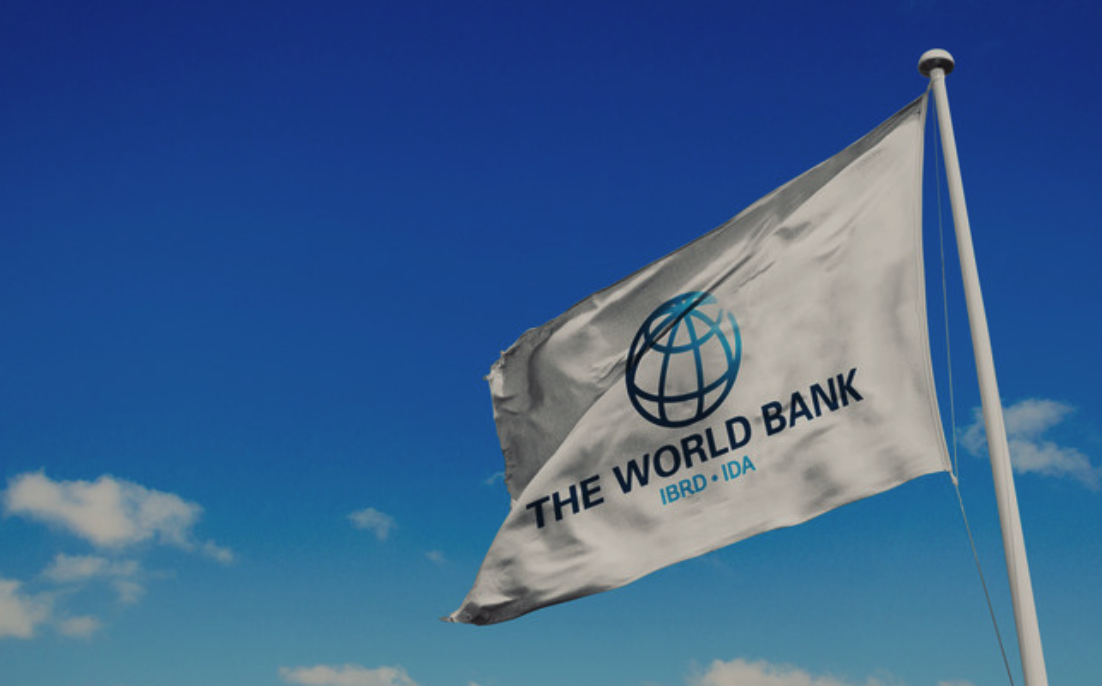
The World Bank Group has announced plans to provide up to $100 billion in financing support for developing countries over the next 15 months as the escalating Middle East conflict threatens to drag global growth to its weakest level since the COVID-19 pandemic.
The bank disclosed this in a statement released on Thursday, following its latest Global Economic Prospects report, which warned that higher energy prices, rising inflation, and increasing borrowing costs are putting severe pressure on vulnerable economies across the world.
The Bank said it is immediately making between $50 billion and $60 billion available through existing financing instruments, including $25 billion in pre-arranged financing.
What they are saying
According to the bank, the funding is expected to support social safety nets for vulnerable populations, strengthen fiscal capacity in developing economies, and provide liquidity support for firms and farms facing mounting economic stress.
- “The World Bank Group is committed to supporting all developing countries as they confront crises. In response to the conflict in the Middle East, it is immediately making up to $50–60 billion available through existing instruments, including $25 billion of pre-arranged financing.
- “If the conflict and its economic fallout persist, the World Bank Group can scale up its support to $80–100 billion over 15 months,” the bank stated.
The bank noted that more than 30 countries are already working with the institution to strengthen readiness and ensure rapid crisis response under the intervention framework.
World Bank Group President, Ajay Banga, said developing countries are once again facing significant economic challenges after years of repeated global shocks.
- “Developing countries have faced a series of challenges over the last decade.
- “The impact differs by country, but the basic test is the same: protect people and preserve stability today, without giving up on growth and jobs tomorrow,” Banga said.
- “In response to the current shock, we are providing liquidity where it is needed now — and we are ready with additional financing, guarantees, and private-sector solutions if pressures deepen. Our job is to help countries steady the ship, keep reforms moving, and emerge stronger on the other side,” he added.
More insights
The latest World Bank report projected that global growth would slow to 2.5% in 2026 from 2.9% in 2025, with forecasts for two-thirds of economies downgraded since January.
Although growth is expected to recover slightly to 2.8% in 2027, the pace would still remain below the average recorded during the 2010s.
- The World Bank warned that the closure of the Strait of Hormuz has severely disrupted energy markets, pushing Brent crude oil prices to a projected average of $94 per barrel in 2026, representing a 36% increase compared to 2025 levels.
- The institution also forecast a sharp increase in fertilizer prices, a development expected to worsen food inflation globally and particularly affect low-income economies that rely heavily on imports.
- Global inflation is now expected to rise to 4.0% in 2026 from 3.3% in 2025 due to mounting energy and food price pressures.
The report further warned that downside risks remain substantial. According to the World Bank, if energy supply disruptions worsen and trigger broader financial stress, global growth could slow sharply to 1.3% in 2026 while inflation could climb to 4.4%.
Developing economies are expected to see growth slow to 3.6% in 2026 from 4.4% in 2025 before recovering to 4.2% in 2027.
Sub-Saharan Africa is also expected to face rising inflationary pressures, especially from higher food prices linked to fertilizer shortages and rising agricultural input costs. Growth in the region is projected to edge down to 4.0% in 2026 before rising to 4.4% in 2027.
What you should know
In Nigeria, the Middle East crisis has worsened inflation as higher costs of petrol pushed up cost of food and other essential goods.
In April, President Bola Tinubu directed key economic officials to develop measures to mitigate the impact on Nigerians, amid rising fuel prices.
The President said his administration was aware of the economic pressure on citizens and is taking steps to address it.
However, two months after the directive, there has not been a clear implementation of such measures even as Nigerians continue to battle rising costs.