
 Follow Us on Google Discover
In a Lagos workshop, a garment manufacturer does his accounts by phone torchlight while his diesel generator refuels for the eighth time in a week.
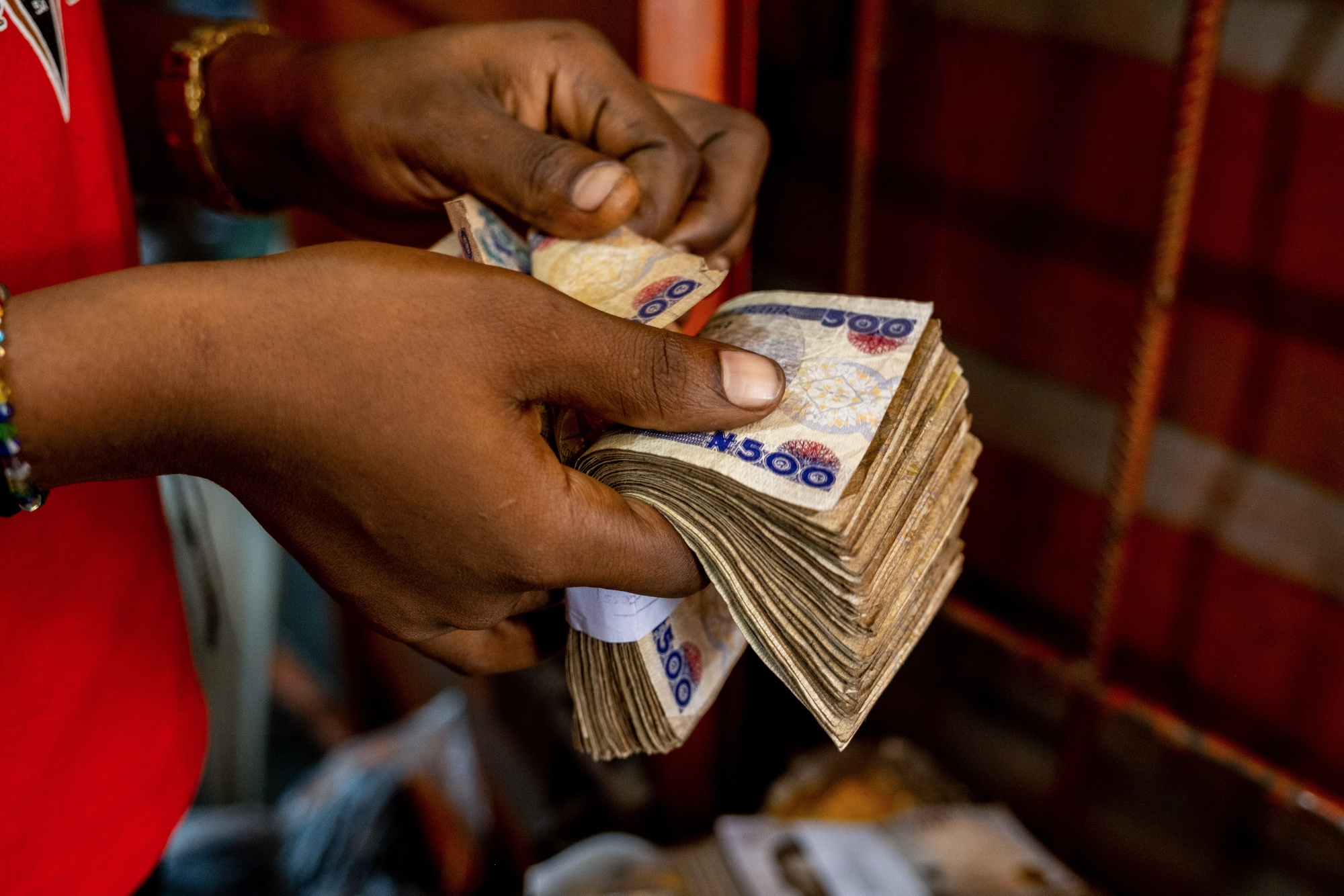
He represents the millions of Nigerian small business owners who, according to Minister of Youth Development in September 2025, collectively spend an estimated $22 billion every year on over 60 million small generators with an estimated 42GWh to augment a peak daily grid energy distribution of about 5,800 megawatts.
That amount rivals the federal government’s entire annual capital budget for 2026 of about $22.95 billion.
For Mexico, Indonesia, Nigeria, and Turkey, the four economies grouped under the MINT label by economist Jim O’Neill in 2014, energy is not one development factor among many, but rather, the factor. Every mechanism through which large, young, urbanising populations convert demography into prosperity, from industrialisation and manufacturing to digital services and agricultural mechanisation, depends on reliable, affordable, and progressively clean energy.
Also Read
The MINT economies collectively house about 745 million people, and what they do with their energy endowments over the next decade will largely determine whether their demographic dividend becomes growth or frustration.
Each MINT nation navigates what energy economists call the trilemma differently, and the differences shape the destination of their demographic dividends.
The energy trilemma refers to the near-impossibility of simultaneously achieving energy security, energy equity, and environmental sustainability. For developing economies with large populations, pressing development needs, and constrained public finances, the trade-offs are particularly heightened.
Energy security demands investment in domestic production or import diversification that governments often cannot finance alone. Energy equity demands subsidised prices that deter private investment.
Environmental sustainability demands a shift away from the fossil fuels that currently underpin both security and affordable supply, a shift whose costs fall disproportionately on economies that did not cause the climate problem their citizens increasingly live with.
Mexico’s formal electrification rate stands at 99.7% with approximately up to 470,000 residents across many remote communities without direct access to the national grid. Mexico possesses extraordinary natural advantages for clean energy: solar irradiation across the Sonoran Desert, powerful wind systems along both coasts, and productive geothermal fields.
Its renewable energy auctions of 2016 and 2017 produced some of the world’s lowest-ever solar tariffs, as low as $33 per megawatt-hour. That momentum was systematically dismantled by President López Obrador between 2018 and 2024 as renewable auctions were cancelled, ageing state-owned, Comisión Federal de Electricidad (CFE), gas plants took priority over cheaper private solar and wind power, and legal challenges against independent power producer contracts created a regulatory environment that investors could not trust.
His successor, Claudia Sheinbaum, who took office in October 2024 with a doctorate in energy engineering, has committed to installing at least 27,000 megawatts (27 GWh) of new renewable capacity during her administration, targeting a rise in renewables’ share from 22% to 45% by 2030, with 6 GW of new capacity planned in 2026 alone. Mexico’s nearshoring opportunity, the wave of manufacturing investment flowing from companies restructuring supply chains away from China, will evaporate if industrial electricity becomes unreliable or uncompetitive. The energy pendulum needs, finally, to stop swinging.
Indonesia is the world’s largest coal exporter, and its domestic electricity mix remains approximately 61% coal as of 2025, the highest fossil fuel share (82%) among the MINT economies. This reflects the extraordinary political economy of the coal sector, which employs hundreds of thousands of workers, generates billions in export revenues, and has deep connections to the country’s business and political elite.
Indonesia’s formal electrification rate now exceeds 99% (UNDP, 2025), but quality-adjusted access for the millions of residents of the outer islands of Kalimantan, Sulawesi, Maluku, and Papua remains significantly lower, with erratic outages and barged-in diesel generation as everyday realities for communities that the national utility has reached on paper but not yet in reliable practice. The international community attempted to accelerate the energy transition with a Just Energy Transition Partnership (JETP) pledge raised to $21.4 billion in 2025 even after the United States withdrew and Germany and Japan assumed co-leadership.
As of May 2026, only around $3.1 billion of that commitment had been formally approved for disbursement. The gap between commitment and implementation remains wide.
Nigeria’s energy paradox is the starkest in the MINT group
According to World Bank data in 2025, Nigeria is the nation with the highest number of unelectrified people globally (over 86 million citizens). With a deposit of Africa’s largest oil reserves and the world’s ninth-largest natural gas reserves, the average citizen receives much fewer than four hours of grid electricity per day.
In 2024, Nigeria recorded the second-largest (after Iran) increase in gas flaring globally, burning over 300 billion standard cubic feet (BSCF) of gas valued at over $1 billion, enough to generate over 30,000 megawatts and ease the chronic blackouts that suffocate millions of homes and motivate factories to move to neighbouring countries.
At a Nigerian household consumption average of around 750 kWh per year, 30,000 GWh could power about 37.5 million households (out of around 45 million) continuously for one full year. This is not to mention the “generator economy” as a whole. At Nigeria’s own Vision 30:30:30 target (30,000 MW by 2030 with minimum 30% as renewable energy, 50% capacity factor), amount required is about 130,000 GWh which coincides with IEA access thresholds.
The truth is that when South Africa’s per-capita level is applied to Nigeria population, the need is more than 760,000 GWh which is over 20 times Nigeria’s current level.
The power sector’s dysfunction is partly structural as below-cost tariffs render distribution companies financially unviable, which means they cannot pay generation companies, translating into gas suppliers’ insufficient incentive to invest in supply infrastructure.
This payment cascade failure has maintained a stable equilibrium of dysfunction for decades. With Nigeria flaring more gas than most countries produce yet cannot consistently power its lights, the energy crisis here is not about resources but about institutions. Solar mini-grids deployed by private developers with multilateral financing are bringing energy to communities the national grid may never reliably reach.
Solar panel costs dropped 90% since 2010 (IRENA, 2024)
This makes distributed solar highly competitive with diesel generation. The shift mirrors how mobile phones bypassed fixed-line infrastructure two decades ago. The corruption angle is a lot more difficult to fix needing extra level of government doggedness as a lot of rentiers seem to have ganged up to sponsor darkness perpetually in Nigeria. Nigeria’s problem is the most basic of the MINT economies: making stable light, of any source, available to a majority for longer period daily.
Turkey’s energy transformation is the most impressive in the MINT group and among the least widely discussed internationally with formal electrification rate at 100%.
In 2010, renewables accounted for 26% of electricity generation, almost entirely hydropower. By 2024, that share had risen to 47% (Ember Electricity Review 2025), driven by wind, solar, and additional hydro capacity. Turkey had over 15,900 megawatts of installed wind capacity by end-2025 (TWEA, 2026), and solar grew 39% year-on-year in 2024; wind and solar together surpassed domestic coal for the first time, marking the country’s lowest fossil fuel share since 1993.
Turkey’s energy import bill peaked at $97 billion in 2022 as post-Ukraine war gas prices reached historic highs but by 2024, it had fallen to $65.6 billion, with wind and solar alone saving an estimated $12 billion in import costs.
The Akkuyu Nuclear Power Plant, being constructed by Rosatom under a build-own-operate arrangement, is targeting commissioning of its first reactor unit in 2026, with the full 4,800-megawatt capacity expected by 2028. For Turkey, every renewable megawatt is simultaneously a climate commitment, a current account improvement, and a reduction in geopolitical exposure to the price decisions of suppliers in Russia, the UAE, and Azerbaijan.
Across all four nations, energy subsidies designed to protect poor households have in practice been regressive as universal subsidies are largest for the highest consumers. Indonesia’s energy subsidies reached $23 billion in 2022, roughly $85 per person, with benefits flowing disproportionately to higher-income households.
Nigeria’s petrol subsidy, which reached $10 billion annually before its removal in May 2023, disproportionately benefited fuel importers, retailers and wealthy car owners. Nigeria’s removal about tripled pump prices virtually overnight, with the promised compensating cash transfer programme slower, not surprisingly, to materialise than the price shock itself.
Across all four countries, the same lesson holds: subsidy reform must be sequenced carefully, communicated honestly, and paired with visible compensating measures for those most exposed.
Firstly, policy stability is the precondition for private investment: Mexico’s repeated oscillation between liberalisation and re-nationalisation has deterred precisely the capital its energy transition requires, and Sheinbaum’s administration must demonstrate through sustained action that commitments will be honoured.
Secondly, for Indonesia, the JETP must translate from pledge to disbursed capital. $3.1 billion approved out of $21.4 billion pledged is not a transition, and a credible plan to absorb coal-dependent workers and communities as well as revenue loss is a political prerequisite transition, not an optional add-on.
Thirdly, Nigeria must address the gas supply constraint and the payment cascade failure that keep its power sector in permanent dysfunction, while expanding off-grid solar for communities that cannot wait for grid reform. Nigeria should declare emergency in the energy sector. The fact that government (ministries, barracks, etc) does not directly bear all the costs, deceptively masks the magnitude of a problem that should be seen as cancerous, at least at the level of subsidy removed.
Fourthly, Turkey must continue its renewable buildout and invest in the hydrogen and transit infrastructure that could transform it from a vulnerable energy importer into a strategic regional hub.
The difference between the optimistic and pessimistic versions of the MINT energy story is not fate. It is policy, institution-building, financing, and the political will to make necessary but difficult decisions.
The MINT economies have the populations, the resources, and in most cases the technical knowledge to build energy systems commensurate with their ambitions. The light that flickers on in a Lagos workshop, a Jakarta apartment, an Ankara factory, or a Guadalajara data centre is not just electricity. It is the infrastructure of possibility, and whether it burns steadily depends on choices that governments, investors, and citizens are making right now.
Akinola Morakinyo (Ph. D) writes on MINT economies from the Department of Economics, Finance & Quantitative Analysis, Kennesaw State University, GA, USA

“The difference between the optimistic and pessimistic versions of the MINT energy story is not fate. It is policy, institution-building, financing, and the political will to make necessary but difficult decisions.” Your penultimate paragraph summed it up perfectly.
The Nigerian power sector is a sad tale given the level of resources at the country’s disposal. The average electrification rate in Mexico, Indonesia and Turkey is around 90% while that of Nigeria is barely above 50%. That is abysmal.
The perpetual corruption in the sector, coupled with years of wasteful spending and terrible government policies are a direct albatross. How can we reverse this???? We are still living in the dark eras in 21st century in the country. Electricity just like food and housing should be basic.
My last line which remains unpopular is, I quite agree that government is culpable and highly inefficient in its management of the country’s electrification affairs. But the question remains, are we ready to pay the price of achieving 100% electrification rate in the country????