Follow Us on Google Discover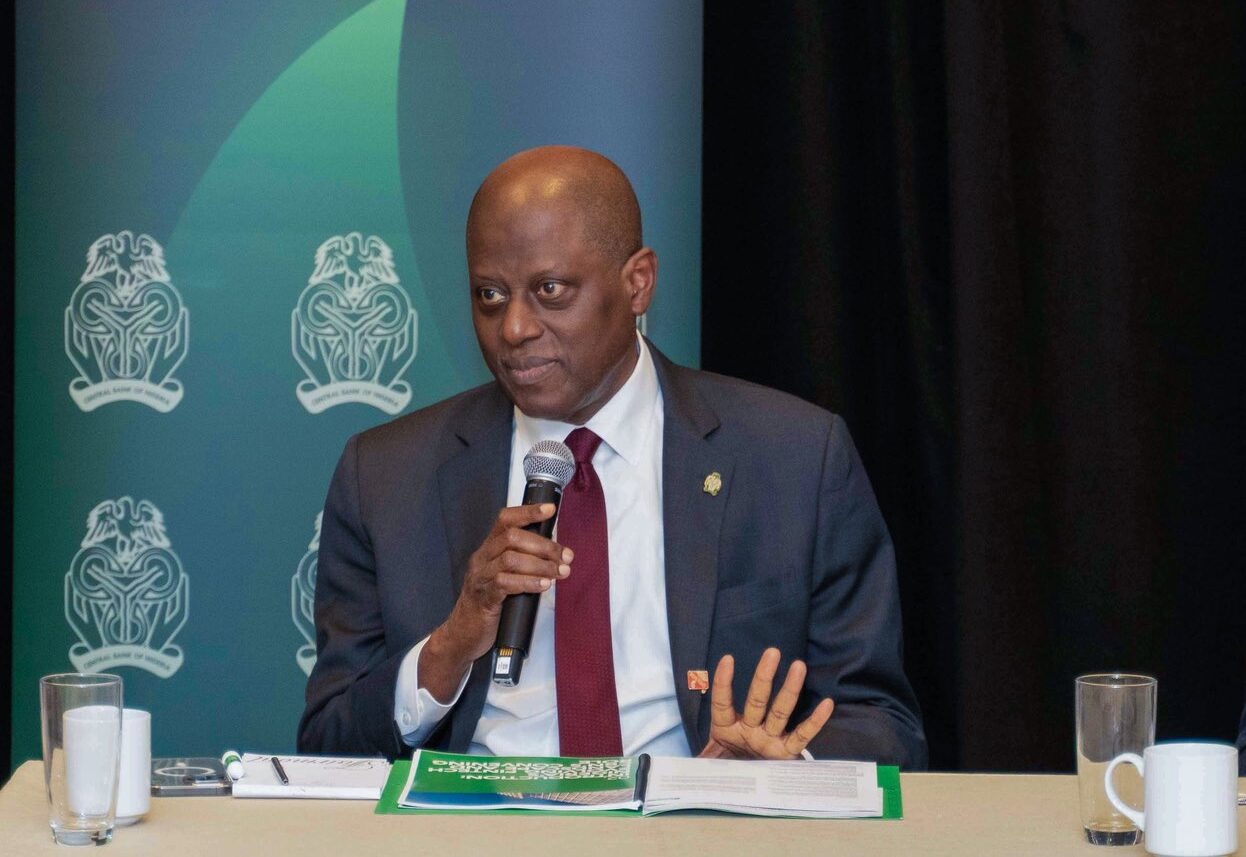
Nigeria’s gross external reserves rose to $49.49 billion as of May 15, 2026, marking a rebound from $48.35 billion recorded at the end of March 2026.
The Governor of the Central Bank of Nigeria (CBN), Olayemi Cardoso, disclosed this on Wednesday at the end of the Monetary Policy Committee (MPC) meeting.
The latest increase signals easing pressure on monetary authorities as they continue balancing exchange rate stability, liquidity management, and external obligations.
What they are saying
Speaking after the MPC meeting, Cardoso said the country’s current reserve level remains strong enough to cover more than nine months of imports for goods and services.
Also Read
- “Gross external reserve remained robust at $49.49 billion as of May 15, 2026, compared with $48.35 billion at the end of March 2026, sufficient to cover 9.04 months of imports for goods and services.”
- “This strong buffer continues to reinforce investor confidence in the Nigerian economy and support exchange rate stability,” Cardoso stated.
He added that the reserve position reflects improving confidence in Nigeria’s foreign exchange management framework.
Get up to speed
Nigeria’s external reserves had faced sustained pressure in recent weeks before the latest rebound.
Data from the CBN showed that reserves declined by about $855 million within five weeks, dropping from $49.18 billion on April 1, 2026, to $48.33 billion as of May 7, 2026.
- The reserves fell from $49.133 billion on April 2 to $48.940 billion on April 7, before declining further to $48.675 billion on April 15.
- External reserves weakened to $48.541 billion on April 20 and later dropped to $48.364 billion by April 30.
- By May 7, reserves had settled at $48.325 billion, raising concerns about the sustainability of FX inflows amid rising demand pressures.
Despite the decline recorded during the period, reserve levels remained significantly higher than the position recorded during the same period in the previous year.
More insights
Cardoso had earlier dismissed concerns over the recent decline in reserves, insisting that the fluctuations were not unusual in the current market environment.
Speaking during a press briefing at the end of the International Monetary Fund (IMF) Spring Meetings in April, the CBN governor said Nigerians often overreact to relatively minor movements in reserve figures.
- “In fact, what concerns me is not so much the decline in reserves, but the reaction to relatively small swings in the numbers, which in today’s market environment should not trigger anxiety,” Cardoso said at the time.
He stressed that Nigeria remains in a comfortable reserve position, well above the International Monetary Fund’s benchmark of three to six months of import cover.
According to him, the country’s foreign exchange buffers remain adequate to support macroeconomic stability and investor confidence.
Cardoso also linked the reserve performance to ongoing reforms in the foreign exchange market aimed at improving transparency and boosting inflows.
What you should know
Nairametrics previously reported that reserves declined from above $50.08 billion on March 12 to $49.61 billion by March 23, 2026.
In January 2026, reserves increased by about $509 million within the first 22 days, reflecting improved foreign exchange inflows at the time.
Nigeria’s external reserves have strengthened significantly over the past year following foreign exchange reforms introduced by the Central Bank of Nigeria under President Bola Ahmed Tinubu’s administration.
Analysts have linked the broader improvement in reserves to policy reforms, stronger investor confidence, and increased FX market activity.
The reserves remain a critical buffer for managing exchange rate pressures, supporting imports, and maintaining confidence in Nigeria’s economy.