Follow Us on Google Discover
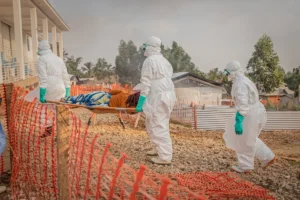
Nigeria Centre for Disease Control and Prevention (NCDC) has said that the country has not recorded any confirmed case of Ebola Virus Disease (EVD), despite growing concerns over the ongoing outbreak of the rare Bundibugyo Ebola strain in parts of Central Africa.
This was contained in a statement released on Sunday, May 17, and signed by Jide Idris, NCDC Director General.
The confirmation is coming just hours after the World Health Organization declared the new Bundibugyo Ebola virus outbreak a Public Health Emergency of International Concern (PHEIC), effectively categorising it as a global health emergency because of the increasing cross-border risk associated with the outbreak.
What NCDC is saying
While maintaining that no Ebola case has been detected in Nigeria, the NCDC said it was fully aware of the ongoing outbreak in the Democratic Republic of the Congo and the recently confirmed imported case in Uganda linked to the outbreak in DR Congo.
The agency explained that health authorities in both DR Congo and Uganda, working alongside international partners, had already activated emergency public health response measures, including enhanced surveillance systems, laboratory testing, infection prevention protocols, case management, contact tracing and risk communication activities.
The NCDC also disclosed that it had heightened its own surveillance and preparedness efforts because of increasing movement across African borders.
- “Also, due to increasing regional movement across countries, NCDC is closely monitoring the situation and working with relevant stakeholders including the Port Health Service (Federal Ministry of Health and Social Welfare), to ensure continued vigilance and preparedness within the public health system,” the statement said.
Get up to speed
Earlier on Sunday, the WHO declared the ongoing Ebola outbreak linked to the rare Bundibugyo virus strain a global health emergency, warning that there is currently no approved vaccine or targeted treatment for the variant spreading across parts of Central Africa.
- The global health agency specifically warned that unlike the more common Ebola-Zaire strain, there are presently no approved Bundibugyo virus-specific vaccines or therapeutics, making the outbreak particularly concerning for health authorities.
- As of May 16, health officials had recorded eight laboratory-confirmed Ebola cases, 246 suspected infections and 80 suspected deaths across several health zones in Ituri Province in eastern DR Congo, including Bunia, Rwampara and Mongbwalu.
The outbreak also crossed international borders after two separate laboratory-confirmed cases, including one death, were reported in Kampala, Uganda, within a 24-hour period on May 15 and 16.
More insights
Responding to the growing regional threat posed by the outbreak, the NCDC said it had intensified several preparedness and surveillance strategies aimed at preventing the virus from entering Nigeria.
- The agency said it was currently strengthening event-based surveillance systems, maintaining coordination with state governments and health stakeholders, supporting laboratory and diagnostic readiness, and reinforcing infection prevention and control awareness across healthcare facilities.
- The NCDC also disclosed that it was expanding risk communication and community engagement activities while closely monitoring global and regional developments related to the outbreak.
The agency advised Nigerians to remain calm, avoid spreading misinformation and maintain regular hand hygiene practices.
It also warned citizens against contact with bodily fluids of sick persons, as well as contact with dead animals or bushmeat from unknown sources.
- The NCDC urged Nigerians to promptly report unusual illnesses to the nearest health facility and rely only on updates from official public health authorities.
- Healthcare workers were also advised to maintain a high level of suspicion for Ebola in patients presenting compatible symptoms and relevant travel history.
According to the agency, healthcare professionals should strictly adhere to infection prevention and control measures, including early isolation of suspected cases, proper use of personal protective equipment, hand hygiene and prompt reporting through established channels.
What you should know
In September last year, when another Ebola outbreak was reported in DR Congo, the NCDC similarly issued a public statement assuring Nigerians that no Ebola case had been recorded in the country.
Although Nigeria has historically recorded only limited Ebola outbreaks, DR Congo has remained one of the major epicentres of the deadly disease for decades, battling multiple outbreaks over the last half century.
Bundibugyo ebolavirus is regarded as one of the rarest Ebola species known to infect humans and has only caused two previously documented outbreaks — one in Uganda in 2007 and another in eastern DR Congo in 2012.
Most Ebola vaccines and antibody-based treatments currently available today were specifically developed to target the more common and deadlier Ebola-Zaire strain following the devastating West African Ebola epidemic between 2014 and 2016 that killed more than 11,000 people across the region.