Follow Us on Google Discover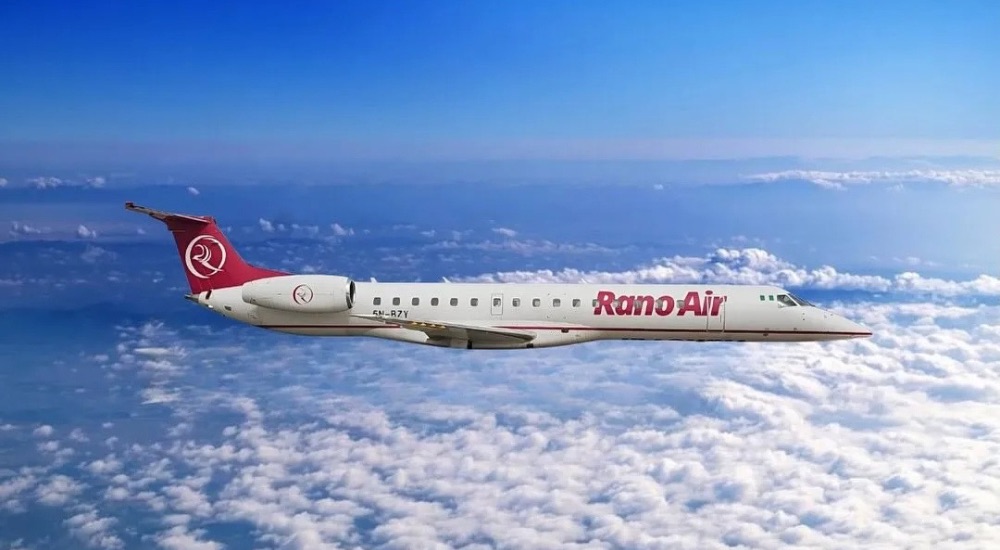
Rano Air has temporarily suspended some flight routes following a sharp rise in Jet A1 aviation fuel prices, which has significantly increased operating costs.
The airline announced this in a statement on Friday, saying the fuel price surge has made certain routes commercially unsustainable, forcing a reduction in operations until conditions improve.
The development comes as Air Peace also reduced its Abuja–London flights to three weekly services due to ongoing Jet A1 supply constraints, affecting a key international route.
What they are saying
Rano Air said the suspension decision came after careful evaluation of the growing financial burden caused by escalating fuel prices.
The airline noted that the sharp rise in Jet A1 costs has significantly strained flight operations, making it increasingly difficult to maintain some services profitably.
- “Rano Air wishes to inform the general public and our valued passengers that, due to the unprecedented escalation in the cost of Jet A1 aviation fuel by over 300%, the operational cost of sustaining some of our routes has become extremely challenging and commercially unsustainable.”
- Passengers on affected routes were advised to contact the airline for refunds, rescheduling, or rerouting assistance.
- The airline said its customer service team remains available to support affected travelers.
- Rano Air assured customers that suspended services would resume once operating conditions improve.
The move reflects wider distress in Nigeria’s aviation market, where fuel costs continue to erode route profitability.
Get up to speed
Nigeria’s Jet A1 crisis has worsened in recent weeks as fuel price spikes and supply shortages continue to disrupt airline operations nationwide.
Aviation fuel prices reportedly surged from approximately N900 per litre in late February to over N3,000 per litre by April, according to the Airline Operators of Nigeria.
- Air Peace earlier reduced the frequency of its Abuja–London operations to three weekly flights due to fuel supply constraints.
- Nigerian airlines had threatened a nationwide operational shutdown from April 20, 2026, citing unsustainable fuel expenses.
- President Bola Tinubu approved a 30% reduction in certain statutory aviation fees to provide temporary relief.
- The Federal Government also introduced capped Jet A1 pricing and a proposed 30-day credit window for airlines.
While these interventions may ease short-term pressure, airlines continue to struggle with elevated operating costs.
What you should know
Fuel marketers who spoke to Nairametrics, including Adeyinka Adewole, MD/CEO of Raven Energy Nigeria, said the Federal Government’s intervention may offer temporary relief but does not address the structural drivers of Jet A1 price volatility.
They explained that aviation fuel pricing is largely determined by international Platts benchmarks and the naira-dollar exchange rate, meaning global oil trends and currency pressures remain the key cost drivers.
- Adewole noted that the highest Jet A1 price he sold in Lagos was closer to N2,500 per litre, while other stakeholders who spoke to Nairametrics also denied selling as much as N3,000 per litre among legitimate marketers, adding that prices have since moderated.
- Marketers argued that direct price controls conflict with deregulation principles and are unlikely to be sustainable.
- They called for structural reforms, including tax reliefs, improved access to financing, naira-based domestic fuel transactions, and stronger support for local refining, including sales from the Dangote Refinery in naira to reduce dollar exposure.
- They also questioned the feasibility of the proposed 30-day credit window for airlines without stronger risk-sharing mechanisms.
They maintained that without deeper reforms across the aviation fuel supply chain, current interventions will likely provide only short-term relief while price instability persists.