Follow Us on Google Discover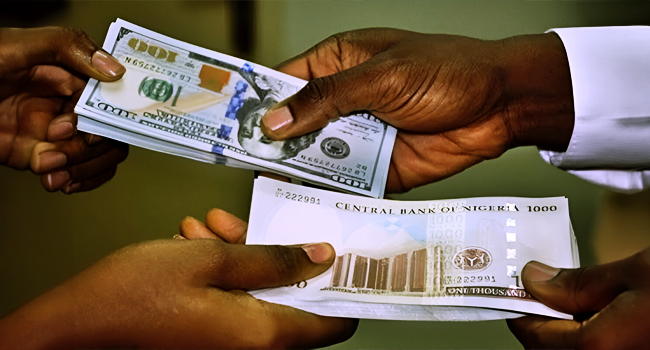
The naira appreciated to N1,367.5/$ on 4 May 2026, extending gains recorded in April.
Data from the Central Bank of Nigeria (CBN) showed the currency strengthened in the first trading session of May after closing April at N1,374/$.
Nairametrics reported that this is the first time since 2024 that the naira closed April with a gain.
The development reflects improving stability in the foreign exchange market, even as global currency pressures persist.
The development comes amid mixed global currency movements, as safe-haven demand continues to support the U.S. dollar due to ongoing geopolitical tensions.
What the data is saying
CBN data indicates that the naira recorded modest appreciation at the start of May, supported by relatively stable trading conditions. The currency traded within a narrow range, suggesting reduced volatility.
- It closed April at N1,374/$, marking a month-on-month gain
- Intraday trading ranged between N1,362/$ and N1,374.5/$
- The average exchange rate stood at N1,365.89/$
The performance also reflects an improvement from early April levels when the currency traded at N1,376/$, following a March close of N1,387/$.
More Insights
The naira’s April performance represents a shift from previous trends, as the currency had recorded consistent declines during the same period in recent years.
- The currency had weakened at the start of April before gradually strengthening
- Gains were sustained into early May, indicating improved market sentiment
- Reduced volatility and improved liquidity supported the appreciation
- Nigeria’s external reserves also declined during the period, falling to N48.36 billion as of April 30, 2026, from N49.18 billion recorded at the start of April, highlighting underlying pressures on foreign exchange supply.
Global currency markets, however, remain volatile.
The Japanese yen held steady amid lingering market concerns following suspected intervention by Tokyo, while the U.S. dollar strengthened on safe-haven demand linked to the Middle East conflict.
The euro traded at $1.1693, while the British pound stood at $1.353, and the dollar index remained firm at 98.452 after rising in the previous session. Meanwhile, the Australian dollar hovered around $0.7168 ahead of a policy decision by the Reserve Bank of Australia, where further rate hikes are expected.
What you should know
Earlier in March, CBN Governor Olayemi Cardoso stated that the country’s gross external reserves climbed to $50.45 billion as of February 2026, supported by stronger oil earnings and increased foreign inflows.
Cardoso said ongoing monetary and foreign-exchange reforms are aimed at strengthening market confidence and improving liquidity.
Nairametrics reported earlier that Nigeria’s external reserves declined by about $731 million within the first three weeks of April 2026.
Despite the recent dip, the CBN maintains an optimistic outlook for the country’s external reserves.
- The apex bank had previously projected that reserves could reach $51 billion by the end of 2026 as part of its broader macroeconomic stabilization and confidence-restoration agenda.
Nairametrics reported earlier that traders have said the CBN had maintained restrictions on Bureau De Change (BDC) operators’ access to the official foreign exchange market, citing concerns over control and past abuses.